Key Takeaways
- Portable ventilators require dependable backup power to ensure uninterrupted patient care.
- Rechargeable LiFePO₄ batteries offer superior safety, longer service life, and lower maintenance requirements than traditional battery technologies.
- Hospitals can significantly reduce total ownership costs by minimizing battery replacements and maintenance labor.
- LiFePO₄ batteries provide stable voltage output, lightweight construction, and extended runtime for portable ventilators.
- Ambulance services, ICU departments, emergency response teams, and home healthcare providers can all benefit from upgrading to LiFePO₄ battery systems.
Why Portable Ventilator Battery Reliability Matters
Portable ventilators play a critical role in modern healthcare. They are widely used in ambulances, emergency departments, intensive care units (ICUs), disaster response operations, patient transportation, and home healthcare programs. Unlike stationary ventilators connected to a facility’s electrical infrastructure, portable ventilators rely heavily on battery power to maintain continuous operation.
For healthcare providers, battery failure is not simply an equipment issue—it can directly impact patient safety and clinical outcomes. As healthcare systems continue to invest in mobile medical equipment, procurement departments are increasingly focused on finding battery solutions that deliver reliability, longevity, and cost efficiency.
Choosing the right battery technology can influence everything from equipment uptime and maintenance schedules to long-term operating budgets. This is why many hospitals are now transitioning from traditional battery technologies to Lithium Iron Phosphate (LiFePO₄) batteries.
Challenges Associated with Traditional Ventilator Batteries
Many portable ventilators still utilize sealed lead-acid (SLA) batteries or older lithium battery chemistries. While these technologies have been used for years, they present several limitations that can increase operational costs and reduce equipment performance.
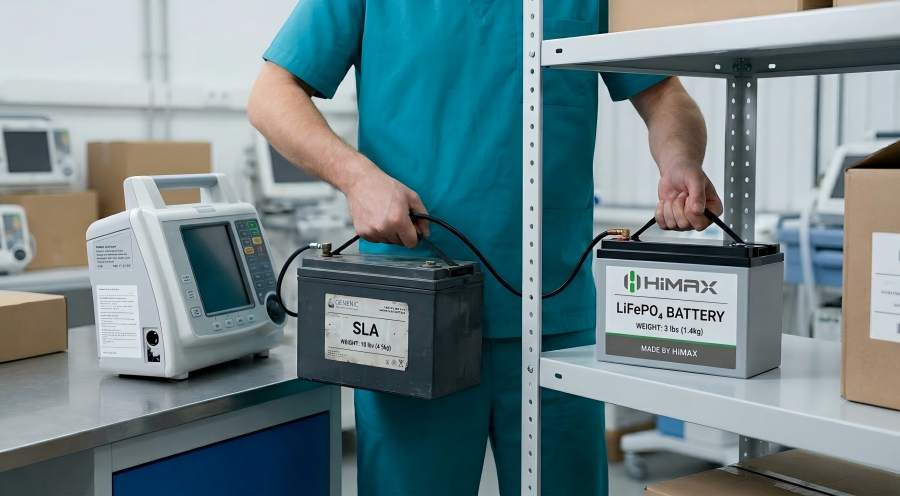
- Heavy Weight Limits Mobility
Portable medical equipment should be easy to transport during emergencies. Traditional SLA batteries are often bulky and heavy.
A typical SLA battery pack capable of powering a portable ventilator for several hours may weigh between 5 and 10 pounds. This additional weight can make equipment transportation more difficult for healthcare workers and emergency responders.
Heavier battery systems can lead to:
- Reduced portability
- Increased operator fatigue
- More challenging patient transport situations
- Higher shipping and logistics costs
- Limited Cycle Life
Most SLA batteries provide approximately 300 to 500 charge cycles before their performance begins to decline significantly.
For hospitals operating portable ventilators daily, this often means battery replacement every two to three years, creating ongoing procurement expenses and maintenance demands.
- Maintenance Requirements
Traditional batteries frequently require:
- Routine inspections
- Capacity testing
- Scheduled replacement programs
- Additional maintenance labor
These activities increase operational complexity and consume valuable staff resources.
- Runtime Degradation
As conventional batteries age, available capacity decreases, reducing runtime and making battery performance less predictable. For critical medical equipment, inconsistent runtime can create unnecessary risks.
Why LiFePO₄ Batteries Are the Ideal Solution for Portable Ventilators
Lithium Iron Phosphate technology has become one of the fastest-growing battery solutions in medical equipment applications. It offers several advantages that align closely with the needs of healthcare organizations.
Enhanced Safety Performance
Safety remains the highest priority in healthcare environments.
LiFePO₄ batteries are known for:
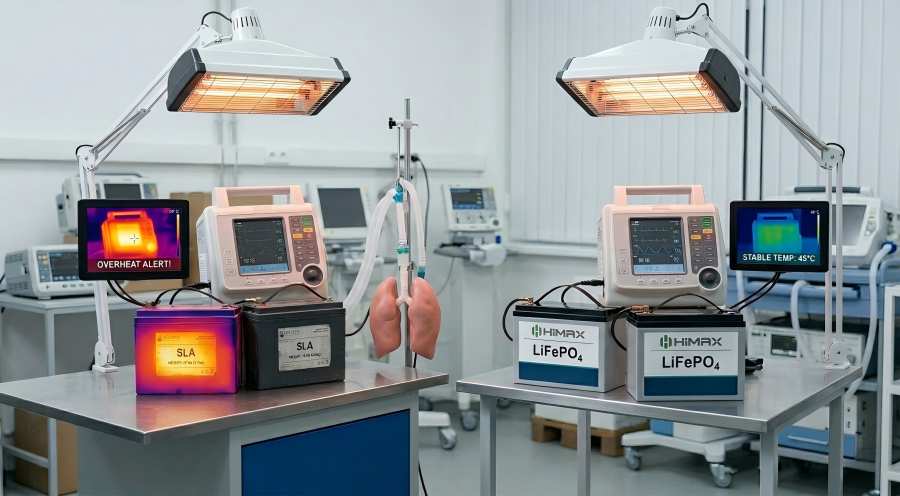
- Excellent thermal stability
- High resistance to overheating
- Low risk of thermal runaway
- Superior chemical stability
Compared with many traditional lithium-ion chemistries, LiFePO₄ batteries are widely recognized as one of the safest rechargeable lithium battery technologies available today.
Extended Service Life
One of the most attractive features of LiFePO₄ batteries is their long cycle life.
A high-quality LiFePO₄ battery typically delivers:
- 2,000 to 6,000 charge cycles
- 5 to 10 years of service life
This can dramatically reduce battery replacement frequency and lower long-term procurement costs.
Lightweight Design
LiFePO₄ batteries can weigh 40% to 70% less than comparable lead-acid battery systems.
Benefits include:
- Improved equipment mobility
- Easier transportation
- Better ergonomics for healthcare workers
- Lower shipping expenses
Fast Charging Capability
Healthcare equipment often needs to be redeployed quickly.
LiFePO₄ batteries support faster charging rates than traditional lead-acid batteries, helping reduce downtime and improve equipment availability.
Stable Power Delivery
Portable ventilators require consistent voltage to operate effectively.
LiFePO₄ batteries provide a relatively flat discharge curve, ensuring:
- Stable performance throughout discharge cycles
- Predictable runtime
- Reliable operation during critical patient care situations
Healthcare Applications Examples
The advantages of LiFePO₄ batteries become even more apparent when examining practical healthcare scenarios.
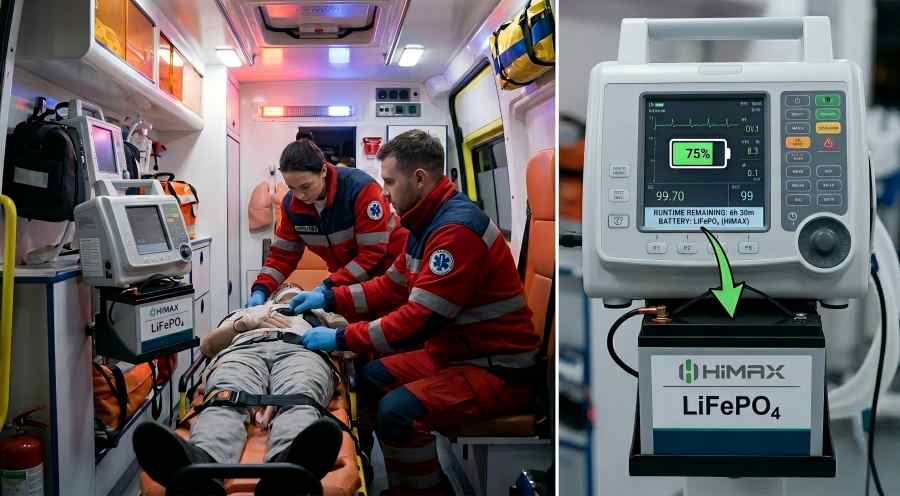
Scenario 1: Emergency Ambulance Ventilator System
Application:
Portable ventilator installed inside an advanced life support ambulance.
Equipment Specifications:
- Operating Voltage: 12V
- Average Power Consumption: 45W
- Required Runtime: 8 Hours
Recommended Battery:
12.8V 40Ah Rechargeable LiFePO₄ Battery Pack
Battery Parameters:
- Energy Capacity: 512Wh
- Weight: Approximately 4.8kg
- Cycle Life: More than 4,000 cycles
- Charging Time: 3–4 hours
Benefits:
Compared with an equivalent SLA battery system, the ambulance operator reduced battery weight by approximately 55% while extending battery service life by more than six times.
Scenario 2: Hospital ICU Emergency Backup Fleet
Application:
A regional hospital maintains a fleet of portable ventilators for emergency backup during power interruptions.
Equipment Specifications:
- Operating Voltage: 24V
- Average Power Consumption: 60W
- Required Runtime: 10 Hours
Recommended Battery:
25.6V 30Ah Rechargeable LiFePO₄ Battery Pack
Battery Parameters:
- Capacity: 768Wh
- Cycle Life: Up to 5,000 cycles
- Design Life: 8–10 years
- Maintenance Requirement: Minimal
Benefits:
The hospital projected a reduction of more than 60% in battery replacement expenses over a ten-year equipment lifecycle.
Scenario 3: Home Healthcare Respiratory Support Program
Application:
Portable ventilators used by chronic respiratory patients receiving treatment at home.
Equipment Specifications:
- Operating Voltage: 12V
- Average Power Consumption: 35W
- Daily Runtime: 6–8 Hours
Recommended Battery:
12.8V 20Ah Rechargeable LiFePO₄ Battery Pack
Battery Parameters:
- Energy Capacity: 256Wh
- Weight: Less than 3kg
- Expected Service Life: More than 7 years
Benefits:
Patients benefited from lighter equipment, improved mobility, and fewer battery replacement concerns.
Scenario 4: Mobile Emergency Medical Response Unit
Application:
Portable ventilators deployed in disaster response trailers and temporary field hospitals.
Equipment Specifications:
- Operating Voltage: 24V
- Average Power Consumption: 55W
- Required Runtime: 12 Hours
Recommended Battery:
25.6V 50Ah Rechargeable LiFePO₄ Battery Pack
Battery Parameters:
- Capacity: 1,280Wh
- Weight: Approximately 11kg
- Cycle Life: Over 4,000 cycles
Benefits:
Extended runtime and dependable operation support patient care in locations where utility power may be unavailable for extended periods.
Key Factors Hospital Procurement Teams Should Consider
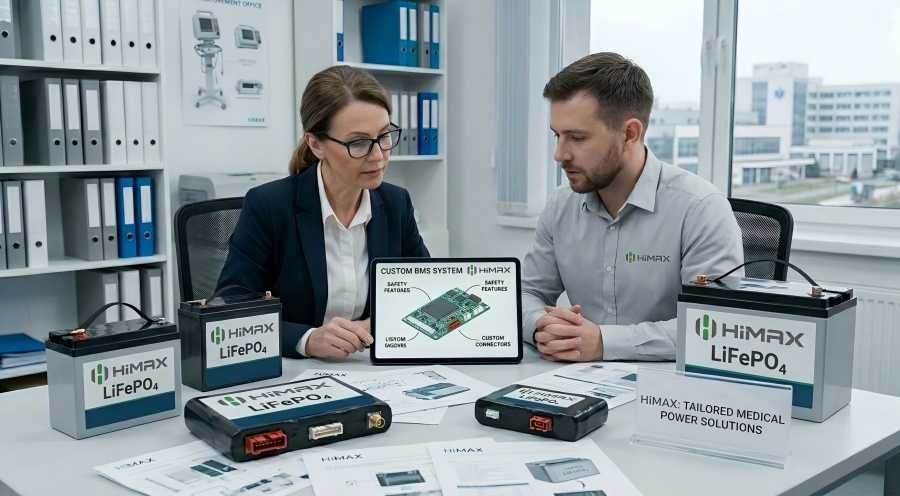
When selecting a rechargeable LiFePO₄ battery solution for portable ventilators, procurement professionals should evaluate the following specifications:
- Battery Capacity
Common capacity options include:
- 10Ah
- 20Ah
- 30Ah
- 40Ah
- 50Ah
The required capacity depends on ventilator power consumption and desired runtime.
- Nominal Voltage
Typical medical equipment battery voltages include:
- 8V
- 6V
- 4V
Voltage compatibility is essential for safe and reliable operation.
- Battery Management System (BMS)
An advanced BMS should provide:
- Overcharge protection
- Over-discharge protection
- Overcurrent protection
- Short-circuit protection
- Temperature monitoring
- Customization Capability
Medical equipment manufacturers often require custom battery configurations to meet unique product designs and regulatory requirements.
Partnering with an experienced battery manufacturer can simplify integration and accelerate product development.
Try HiMAX for Portable Ventilator Battery Solutions
HiMAX is a trusted custom battery manufacturer specializing in advanced rechargeable battery solutions for medical, industrial, and mission-critical applications.
Our engineering team develops customized LiFePO₄ battery packs designed specifically for portable ventilators, patient monitoring systems, infusion pumps, emergency medical devices, and other healthcare equipment.
HiMAX advantages include:
- Premium Grade A LiFePO₄ cells
- Custom voltage and capacity options
- Intelligent BMS integration
- OEM and ODM manufacturing support
- Strict quality control procedures
- Long-cycle, maintenance-free battery designs
- Global logistics and delivery capabilities
Whether you are a hospital procurement department, medical device manufacturer, healthcare distributor, or equipment integrator, HiMAX can help you develop a safer, longer-lasting, and more cost-effective portable ventilator power solution.
Find articles related to LiFePO4 Batteries
- Emergency Flashlight Battery Buying Guide
- 2026 Online Buying Guide for Camping Lanterns Batteries
- 2026 Online Buying Guide for Electric Sightseeing Vehicle Batteries
- How to Choose the Right Battery Solution for Electric Boat
- The Forestry Agencies’ Secret: Why It’s Finally Time to Switch to LiFePO4 Batteries for Forest Monitoring Systems