18650 Battery Welding Practical Guide: Common Problems, Solutions, and Key Process Tips
Key Takeaways
- Spot welding is the preferred method for connecting nickel strips to 18650 lithium-ion cellsbecause it minimizes heat transfer and helps protect cell performance.
- Common welding defects include weak welds, burn-through, excessive heat generation, and inconsistent weld quality.
- Proper control of welding current, pulse duration, electrode pressure, and nickel strip thickness is essential for reliable battery pack manufacturing.
- Routine quality inspections, pull-force testing, and resistance measurements can significantly reduce production defects.
- Optimized welding processes improve battery pack safety, cycle life, electrical performance, and manufacturing efficiency.
The quality of a battery pack depends on more than just the battery cells inside it. Even premium 18650 lithium-ion cells can suffer from poor performance, shortened lifespan, or safety issues if the welding process is not properly controlled. For battery manufacturers, engineers, and OEM product developers, understanding the fundamentals of 18650 battery welding is critical to producing reliable and durable battery packs.
This practical guide explores the most common 18650 battery welding problems, their root causes, proven solutions, and key process tips that can help improve production quality and reduce manufacturing costs.
Understanding the 18650 Spot Welding Process
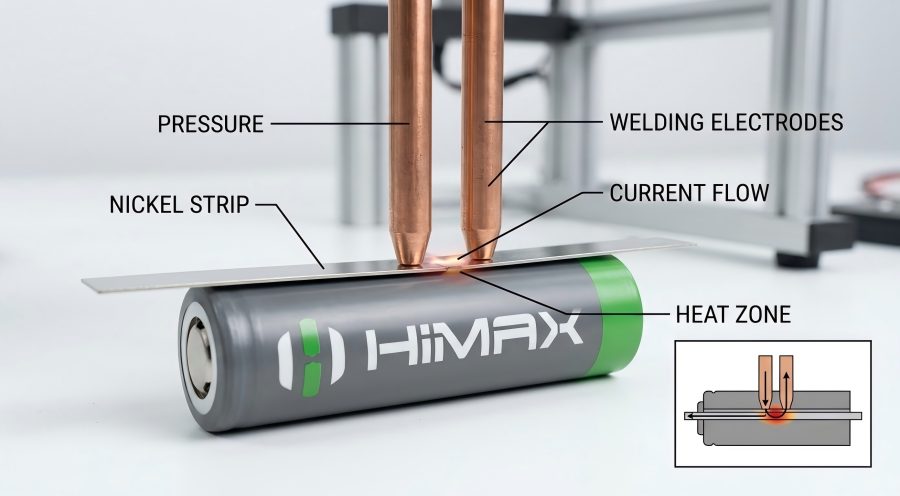
Most battery manufacturers use resistance spot welding to connect nickel strips to 18650 battery terminals.
During the welding process, two electrodes apply pressure to a nickel strip positioned on the battery terminal. A high electrical current flows through the contact area for a very short period, generating localized heat that creates a permanent bond.
Compared with traditional soldering, spot welding offers several advantages:
- Faster production speed
- Lower heat exposure to battery cells
- Better consistency
- Improved manufacturing efficiency
- Reduced risk of damaging cell chemistry
Typical Spot Welding Parameters
| Parameter | Typical Range |
| Nickel Strip Thickness | 0.10 mm – 0.30 mm |
| Welding Current | 800 A – 2500 A |
| Pulse Duration | 2 ms – 20 ms |
| Electrode Pressure | 2 N – 8 N |
| Weld Diameter | 0.8 mm – 2.0 mm |
Common 18650 Battery Welding Problems and Solutions
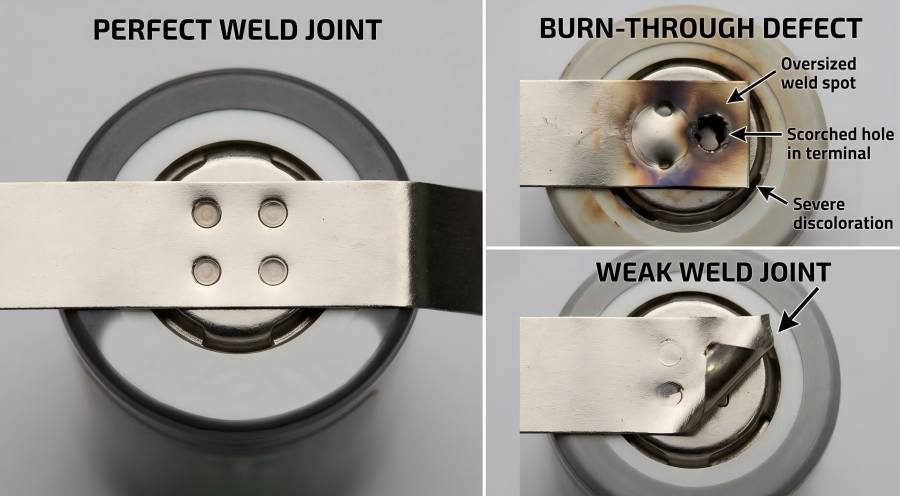
- Weak Weld Connections
Weak welds are among the most common defects in battery pack assembly.
Symptoms
- Nickel strips peel off easily
- Poor mechanical strength
- High contact resistance
- Unstable electrical performance
Common Causes
- Insufficient welding current
- Short pulse duration
- Worn welding electrodes
- Dirty battery terminals
- Oxidized nickel strips
Solutions
- Increase welding current gradually
- Extend pulse duration within safe limits
- Replace worn electrodes
- Clean battery terminals before welding
- Use high-quality nickel materials
A properly welded connection should withstand pull-force testing without separation.
- Battery Terminal Burn-Through
Excessive welding energy can damage battery terminals and negatively impact battery performance.
Symptoms
- Visible holes in the terminal surface
- Burn marks
- Discoloration around weld points
- Cell deformation
Common Causes
- Excessive welding current
- Long pulse duration
- Excessive electrode pressure
- Multiple weld attempts in the same location
Solutions
- Reduce welding energy
- Optimize pulse timing
- Calibrate welding equipment regularly
- Avoid repeated welding on the same spot
Maintaining proper welding parameters is essential for preventing permanent cell damage.
- Excessive Heat During Welding
Although spot welding generates less heat than soldering, excessive heat can still occur if the process is poorly controlled.
Symptoms
- Elevated battery temperature
- Reduced production efficiency
- Potential cell degradation
Common Causes
- Improper parameter settings
- Poor electrode contact
- Excessive weld repetitions
Solutions
- Monitor cell temperature during production
- Use automated welding systems
- Improve electrode maintenance
- Optimize welding sequences
Many manufacturers aim to keep temperature increases below 10°C during the welding process.
- Inconsistent Weld Quality
Inconsistent weld quality often leads to unpredictable battery pack performance.
Common Causes
- Uneven electrode wear
- Poor fixture alignment
- Variations in nickel strip thickness
- Unstable power supply
Solutions
- Implement routine equipment inspections
- Use precision welding fixtures
- Standardize material sourcing
- Monitor process parameters continuously
Consistency is often more important than maximizing welding strength.
Key Process Tips for High-Quality 18650 Battery Welding
- Choose the Right Nickel Strip Material
The nickel strip serves as the electrical conductor between cells. Material selection has a direct impact on welding quality and pack performance.
Common options include:
- Pure Nickel (99.6%+ purity)
- Nickel-Plated Steel
- Multi-Layer Nickel Structures
Pure nickel generally offers better conductivity, corrosion resistance, and weldability, making it a preferred choice for high-performance battery packs.
- Maintain Electrode Condition
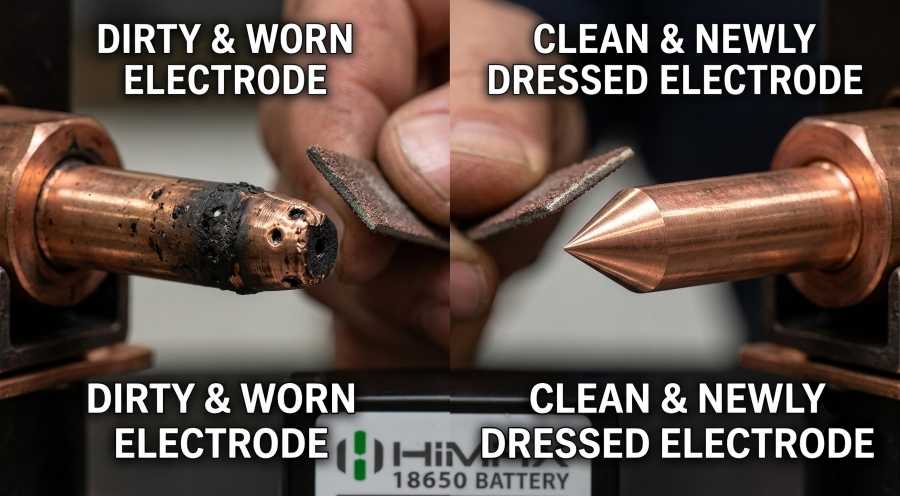
Electrodes experience gradual wear during production.
Best practices include:
- Inspecting electrodes daily
- Replacing worn tips promptly
- Maintaining consistent tip geometry
- Cleaning electrode surfaces regularly
Proper electrode maintenance improves welding consistency and reduces defect rates.
- Optimize Welding Parameters Through Testing
There is no universal welding setting suitable for every battery pack.
Manufacturers should perform:
- Weld strength testing
- Resistance testing
- Thermal analysis
- Production validation runs
Small adjustments to current, pressure, or pulse duration can significantly improve overall quality.
Implement Pull-Force Testing
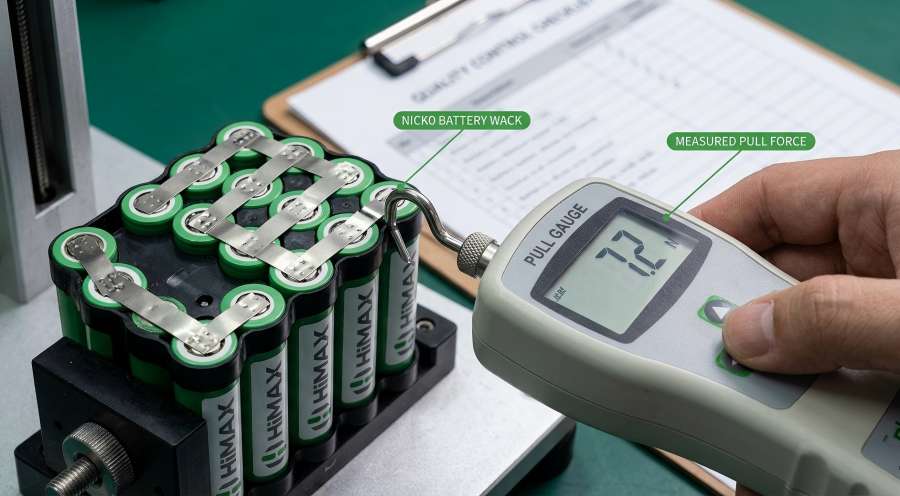
Pull-force testing provides objective data about weld quality.
Benefits include:
- Early defect detection
- Improved process validation
- Better product reliability
- Reduced customer complaints
Testing should be performed regularly throughout production rather than only during final inspection.
Application Exploration
E-Bike Battery Pack Manufacturing
Project Specifications
- Battery Pack: 48V 20Ah
- Cell Configuration: 13S8P
- Total Cells: 104
- Nickel Thickness: 0.15 mm
- Continuous Current: 30A
Challenge
A manufacturer experienced approximately 6.8% weld-related rejection during final inspection.
Solution
Engineers increased welding current from 1250A to 1550A and adjusted pulse duration from 6 ms to 9 ms.
Results
- Defect rate reduced to 1.1%
- Production yield increased by 12%
- Warranty claims decreased significantly
Portable Medical Equipment Battery Pack
Project Specifications
- Battery Pack: 24V 12Ah
- Cell Configuration: 7S4P
- Total Cells: 28
- Nickel Thickness: 0.10 mm
- Operating Temperature Range: -10°C to 50°C
Challenge
Excessive welding heat occasionally damaged battery cells.
Solution
The production team implemented dual-pulse welding and reduced peak welding current by 15%.
Results
- Temperature rise reduced from 13°C to 6°C
- Production consistency improved
- Yield exceeded 99%
Industrial Robotics Battery System
Project Specifications
- Battery Pack: 36V 30Ah
- Cell Configuration: 10S12P
- Total Cells: 120
- Continuous Discharge Current: 60A
- Peak Discharge Current: 100A
Challenge
The battery pack exhibited elevated connection resistance during heavy-load operation.
Solution
Engineers upgraded from standard 0.15 mm nickel strips to reinforced multi-layer nickel structures and optimized welding energy.
Results
- Connection resistance reduced by 22%
- Operating temperatures decreased
- Battery lifespan improved significantly
Quality Control Checklist for 18650 Battery Welding
Before shipping battery packs, manufacturers should verify the following:
- Weld appearance is consistent
- Nickel strips are securely attached
- No burn-through or terminal damage exists
- Pull-force testing meets specifications
- Electrical resistance remains within limits
- Cell temperatures remain acceptable during welding
- Production parameters are documented and traceable
A standardized quality control process helps reduce failures in the field and strengthens customer confidence.
Why Choose HiMAX for Custom Battery Pack Solutions
At HiMAX, we understand that every reliable battery pack starts with precision manufacturing. Our engineering and production teams apply strict quality standards throughout the entire battery assembly process, from cell selection and spot welding to testing and final inspection.
We specialize in custom lithium battery solutions for a wide range of industries, including energy storage systems, industrial equipment, medical devices, robotics, marine applications, electric mobility products, and portable electronics. By combining advanced manufacturing technology, premium battery cells, and extensive engineering expertise, HiMAX delivers battery packs that meet demanding performance, safety, and reliability requirements.
Find articles related to 18650 Battery