Key Takeaways
- Forest monitoring systems need stable, long-lasting battery power because many stations operate in remote, off-grid locations.
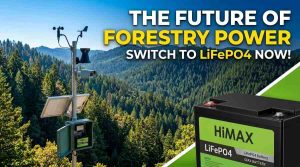
- LiFePO4 batteries are a strong fit for forestry agencies because they offer long cycle life, stable discharge performance, and improved safety compared with many traditional battery options.
- Solar-powered forest monitoring stations, wildfire detection sensors, trail cameras, weather stations, and environmental data loggers can all benefit from lithium iron phosphate battery technology.
- For forestry teams, the real value of switching to LiFePO4 batteries is not just longer runtime. It is fewer field visits, lower maintenance pressure, more reliable data collection, and better year-round monitoring.
- HiMAX provides dependable LiFePO4 battery solutions for professional outdoor, industrial, and remote monitoring applications.
Why Forest Monitoring Systems Need Better Battery Power
Forestry agencies, environmental contractors, land management teams, and wildfire prevention groups all depend on accurate field data. They need to know what is happening in the forest before a small problem becomes a costly emergency. Temperature, humidity, wind speed, rainfall, soil moisture, air quality, fuel moisture, camera footage, and sensor alerts can all help teams make better decisions.
But there is one part of the system that often gets less attention than it deserves: the battery.
A forest monitoring system can have advanced sensors, a rugged enclosure, a solar panel, and a smart communication module. However, if the battery fails, the entire station becomes silent. No data. No alerts. No visibility. For agencies monitoring remote forests, mountain ridges, wildfire-prone zones, conservation areas, and timberland, battery failure is not a small inconvenience. It can mean missed warning signs, extra field labor, and gaps in long-term environmental records.
That is why more forestry teams are rethinking their power systems and switching from traditional lead-acid or standard lithium-ion batteries to LiFePO4 batteries. Also known as lithium iron phosphate batteries or LFP batteries, LiFePO4 technology is becoming one of the most practical choices for remote forest monitoring systems.
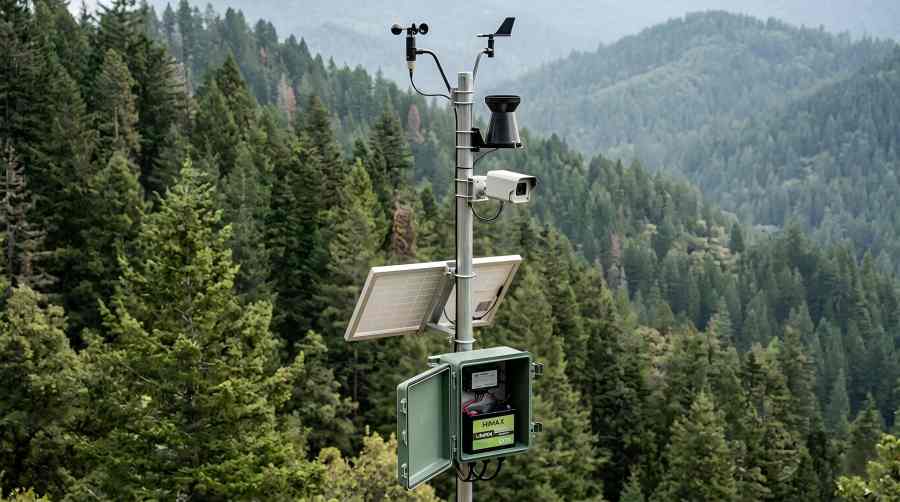
The Hidden Cost of Traditional Batteries in Forest Monitoring
Many outdoor monitoring systems were originally powered by sealed lead-acid batteries or other conventional rechargeable batteries. These options may seem affordable at first, but their real cost becomes clear after months of field operation.
Forestry teams often place monitoring equipment in difficult terrain. Some stations are installed on fire roads, ridgelines, shaded forest edges, remote watersheds, or protected habitat areas. A technician may need a pickup truck, ATV, hiking route, or snow access plan just to reach one site. If the battery needs frequent replacement, the labor cost can quickly exceed the battery cost itself.
Traditional batteries may also struggle under repeated charge and discharge cycles. In solar-powered forest monitoring systems, the battery is charged during the day and discharged at night. During cloudy weeks, winter storms, heavy canopy shade, or high sensor activity, the battery may experience deeper discharges. Over time, this reduces performance and increases the risk of unexpected shutdowns.
For a forestry agency managing dozens or hundreds of stations, battery maintenance is not just a technical issue. It becomes an operational burden.
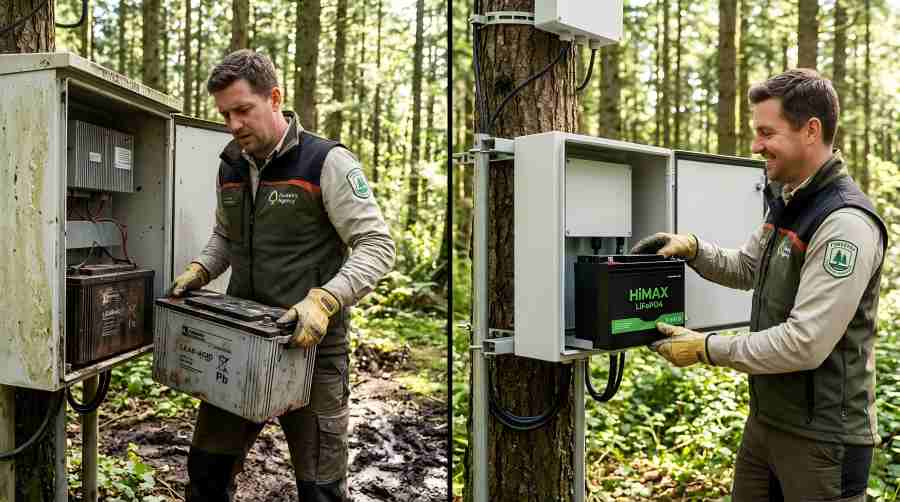
Why LiFePO4 Batteries Are a Better Match for Forestry Agencies
LiFePO4 batteries are designed for applications where reliability, safety, and long service life matter. For forest monitoring systems, these advantages are especially important.
- First, LiFePO4 batteries generally offer a much longer cycle life than many traditional rechargeable battery chemistries. This means they can handle more charge and discharge cycles before capacity drops significantly. In remote monitoring, that helps reduce replacement frequency and supports longer deployment periods.
- Second, LiFePO4 batteries provide stable voltage output. Forest monitoring equipment often includes sensors, GPS modules, data loggers, wireless transmitters, cellular modems, LoRa gateways, satellite communication units, and camera modules. These electronics need dependable voltage to function properly. A stable battery helps keep the system running smoothly, especially during overnight operation or low-sunlight periods.
- Third, LiFePO4 batteries are known for strong thermal and chemical stability. In forestry applications, this matters because equipment may be exposed to heat, cold, vibration, dust, moisture, and long outdoor service intervals. A safer battery chemistry gives agencies more confidence when deploying power systems in remote and sensitive environments.
- Fourth, LiFePO4 batteries work well with solar charging systems. Many forest monitoring stations rely on solar panels because utility power is unavailable. A properly designed solar + LiFePO4 battery system can support continuous operation for weather stations, wildfire detection cameras, wildlife sensors, and environmental data loggers.
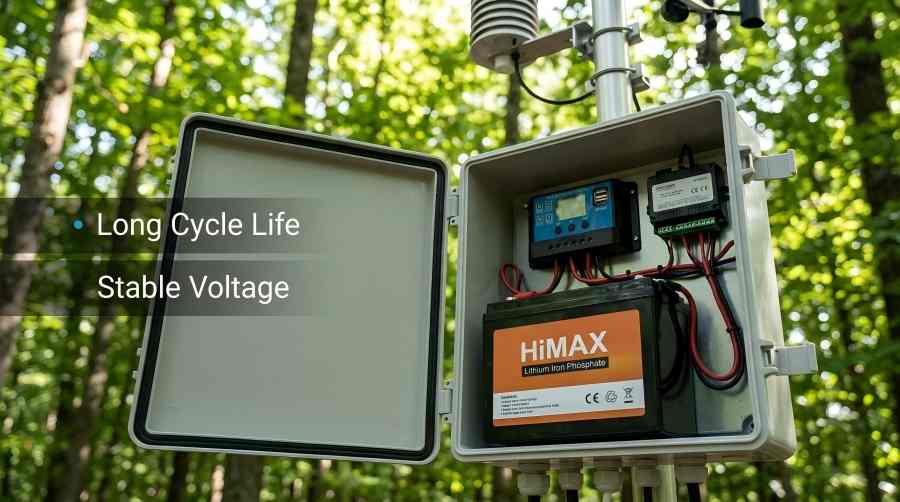
Where LiFePO4 Batteries Fit in Forest Monitoring Systems
LiFePO4 batteries can be used in many types of forestry and environmental monitoring equipment.
They are suitable for remote automated weather stations that collect temperature, humidity, wind, rainfall, and solar radiation data. They can power wildfire detection camera systems that monitor smoke or flame risk in high-value forest areas. They can support soil moisture and watershed sensors used for drought research, reforestation planning, and habitat protection. They can also power wildlife trail cameras, acoustic monitoring systems, air quality sensors, and remote communication gateways.
For forestry agencies, the battery is not just an accessory. It is the foundation that keeps the data network alive.
Exploring Scenarios
Scenarios 1: Wildfire Risk Monitoring in Northern California
A county fire prevention team in Northern California installs 40 remote monitoring stations across dry mixed-conifer forest zones. Each station includes a temperature and humidity sensor, wind sensor, solar panel, 12.8V LiFePO4 battery pack, and LTE-M communication module. The system sends data every 15 minutes during fire season.
With traditional batteries, the team previously scheduled battery checks every 3 to 4 months. After switching to LiFePO4 batteries, the stations maintain stronger overnight performance and require fewer emergency maintenance visits. For the agency, this means less time driving into remote areas and more time analyzing fire risk data.
This is exactly where LiFePO4 batteries create value: not only in runtime, but in labor savings and data continuity.
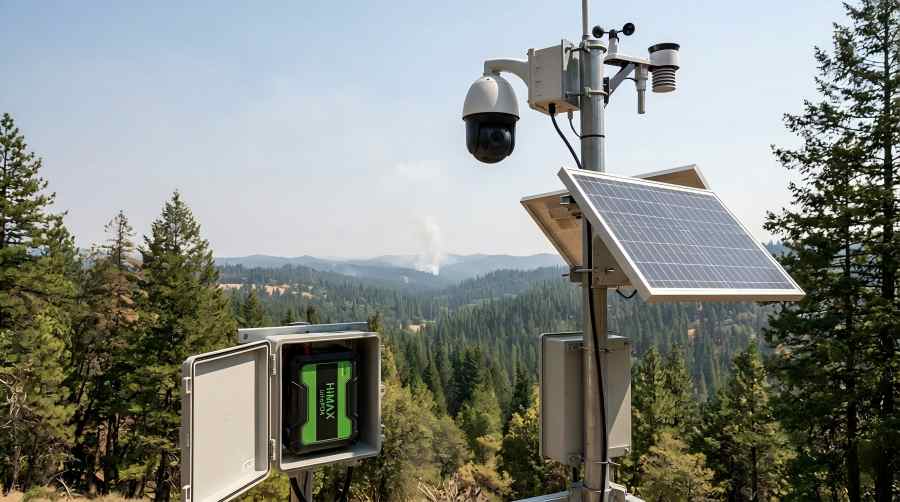
Scenarios 2: Solar-Powered Forest Weather Stations in Colorado
A forestry research group in Colorado deploys weather stations at elevations between 7,500 and 9,000 feet. Each station monitors wind speed, rainfall, air temperature, relative humidity, and solar radiation. The site uses a 30W solar panel and a 12.8V 20Ah LiFePO4 battery to support night operation and cloudy weather backup.
In this environment, temperature swings can be significant. The battery system must support long unattended operation, especially when snow or difficult road conditions make access limited. A LiFePO4 battery provides a practical balance of long service life, stable voltage, and compatibility with solar charging.
For research teams collecting multi-season forest climate data, fewer power interruptions mean cleaner datasets and more reliable trend analysis.
Scenarios 3: Wildlife Camera Networks in Oregon Timberland
A private timberland manager in Oregon uses a network of 120 wildlife cameras and motion-triggered monitoring units across 18,000 acres. Each camera system includes infrared imaging, a low-power controller, a wireless transmission module, and a rechargeable LiFePO4 battery pack.
The goal is to monitor elk movement, protected species activity, and unauthorized access near sensitive habitat zones. Because many cameras are placed far from main access roads, battery replacement is expensive and time-consuming.
By using LiFePO4 batteries, the manager can extend service intervals and reduce the number of field trips. The result is a more practical monitoring program that supports both operational security and environmental stewardship.
Scenarios 4: Remote Watershed Monitoring in the Appalachian Region
A conservation organization in the Appalachian region installs water level, soil moisture, and rainfall sensors across forested watershed areas. Each node sends data twice per hour through a low-power wireless network. The system uses a compact 12V LiFePO4 battery with solar charging to maintain operation during wet seasons and shaded conditions.
For watershed monitoring, consistent data is critical. A battery failure can create gaps in rainfall runoff analysis, soil saturation trends, and flood risk modeling. LiFePO4 batteries help provide the dependable backup power needed for long-term environmental research.
For organizations with limited staff, reliable batteries allow small teams to monitor larger areas without constant site visits.
Scenarios 5: Forest Carbon and Climate Research Stations in Maine
A university-led forest carbon research project in Maine operates several long-term climate monitoring stations. The equipment tracks air temperature, humidity, barometric pressure, soil temperature, soil moisture, and light conditions. Each station needs to run through spring rain, summer humidity, fall leaf cover, and winter cold.
The project team chooses LiFePO4 batteries because the system needs long cycle life and dependable solar energy storage. The stations are designed for multi-year operation, so reducing battery replacement frequency is important for both budget control and data quality.
For forest carbon studies, power reliability affects more than hardware uptime. It affects the quality of the scientific record.
How to Choose a LiFePO4 Battery for Forest Monitoring Systems
When selecting a LiFePO4 battery for forestry applications, agencies should not look at capacity alone. The right battery depends on the complete power profile of the system.
- Start with the system voltage. Many monitoring systems use 12V or 12.8V battery packs, but some larger stations may require 24V or custom configurations.
- Next, calculate daily energy consumption. A small sensor node may only use a few watt-hours per day, while a camera system with cellular transmission may require much more energy. Communication frequency also matters. Sending data every 5 minutes consumes more power than sending data once per hour.
- Then consider backup days. In remote forest areas, a system may need to survive 3 to 7 days of cloudy weather without full solar charging. This backup requirement affects battery capacity and solar panel size.
- Temperature range is also important. Forestry equipment may be exposed to hot summers, freezing winters, and rapid daily temperature changes. The battery pack, BMS, enclosure, and charging design should all be selected for the expected environment.
- Finally, consider maintenance access. If a station is hard to reach, it is usually worth choosing a more robust battery solution with a longer service life.
Why the Switch Is Happening Now
Forestry agencies are under growing pressure to monitor more land with fewer resources. Wildfire seasons are more demanding. Conservation projects require better data. Timberland managers need stronger visibility. Research teams want long-term datasets. Public agencies need systems that can operate reliably with limited field maintenance.
At the same time, remote monitoring equipment is becoming more power-efficient and more connected. Low-power sensors, solar panels, LTE-M modules, LoRaWAN gateways, satellite communication devices, and AI-enabled cameras are becoming more common in outdoor monitoring networks.
This creates the perfect moment for LiFePO4 batteries. The technology supports the direction forestry monitoring is already moving: more remote, more automated, more data-driven, and more dependent on reliable off-grid power.
Common Questions About LiFePO4 Batteries for Forest Monitoring
Are LiFePO4 batteries good for solar-powered forest monitoring systems?
Yes. LiFePO4 batteries are a strong option for solar-powered forest monitoring systems because they support repeated cycling, stable voltage output, and long service life. They are commonly used in off-grid applications where reliable energy storage is required.
Can LiFePO4 batteries power wildfire detection systems?
Yes. LiFePO4 batteries can power wildfire detection sensors, weather stations, smoke detection cameras, and communication modules when properly sized. The battery capacity should be based on sensor load, camera activity, transmission frequency, and backup power requirements.
Are LiFePO4 batteries better than lead-acid batteries for remote monitoring?
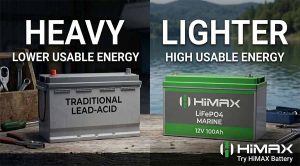
For many remote monitoring applications, LiFePO4 batteries offer advantages over lead-acid batteries, including longer cycle life, lighter weight, deeper usable capacity, and lower long-term maintenance needs. Although the initial cost may be higher, the total operating cost can be lower when fewer field replacements are needed.
What voltage is commonly used for forest monitoring batteries?
Many small and mid-size forest monitoring systems use 12V or 12.8V battery packs. Larger systems with cameras, gateways, or higher energy demands may use 24V or custom battery configurations.
How should forestry agencies size a LiFePO4 battery?
Battery sizing should be based on daily power consumption, solar charging capacity, backup days, operating temperature, communication frequency, and site access difficulty. A professional battery supplier can help calculate the right capacity for each monitoring system.
Power Your Forest Monitoring Systems with HiMAX LiFePO4 Batteries
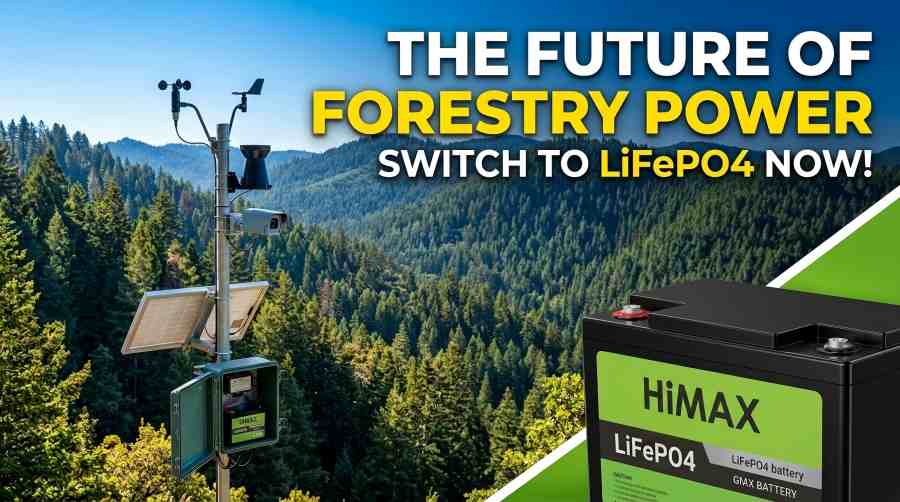
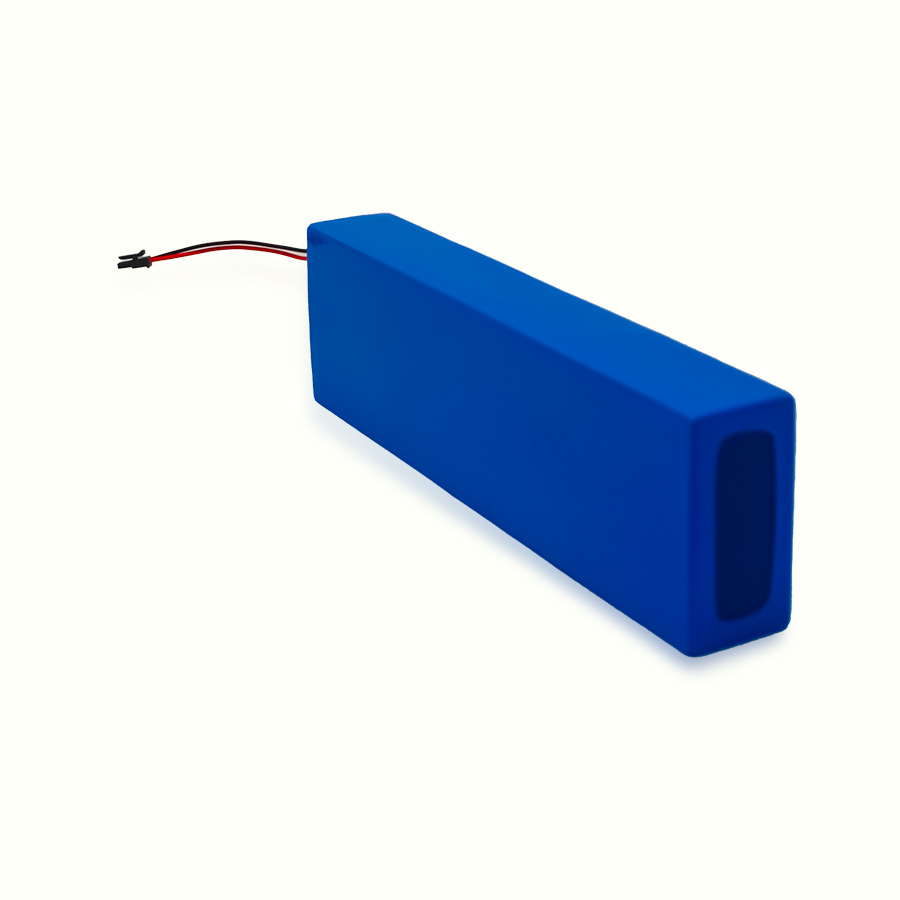
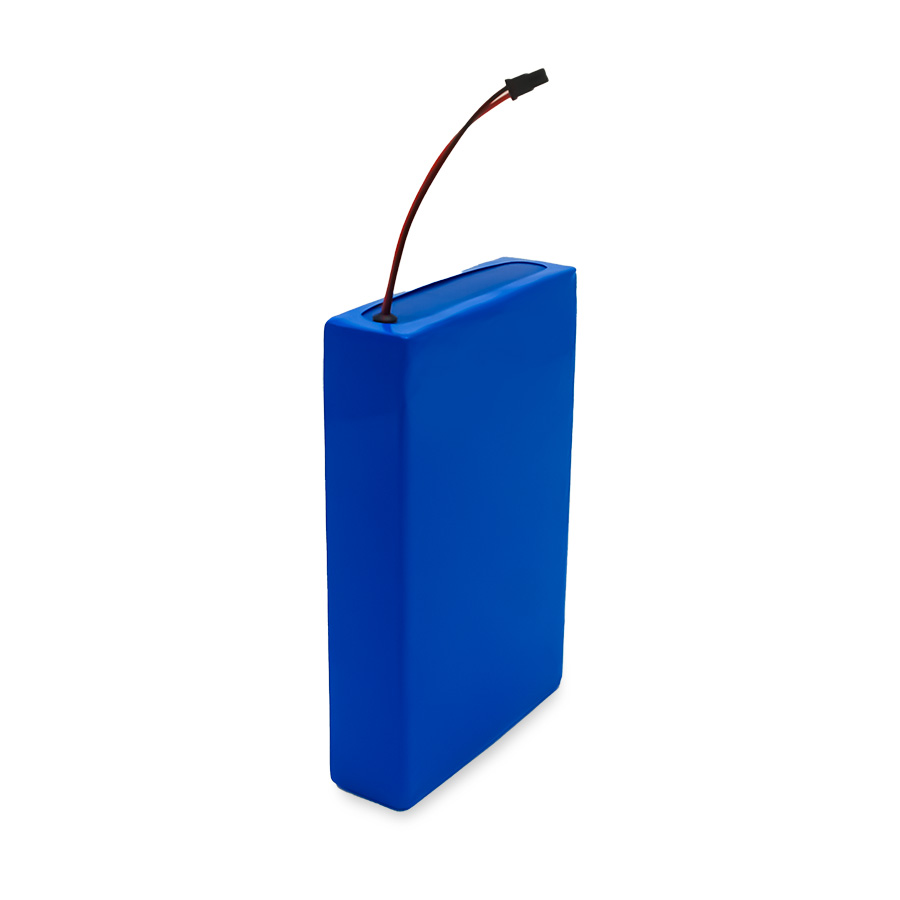
HiMAX is a trusted global battery manufacturer providing reliable battery solutions for outdoor, industrial, and remote monitoring applications. Our LiFePO4 battery packs are designed to support stable performance, long service life, and dependable energy storage for demanding field environments.
Whether you are building solar-powered forest weather stations, wildfire monitoring systems, wildlife camera networks, environmental data loggers, or remote IoT sensor platforms, HiMAX can help you choose the right battery solution for your project.
With professional engineering support, customizable battery pack options, and experience in advanced rechargeable battery technology, HiMAX helps forestry agencies and system integrators build monitoring systems that stay powered, stay connected, and stay reliable in the field.
Find articles related to LiFePO4 Battery