Key Takeaways
- Choosing the right Electric Sightseeing Vehicle Batterydirectly impacts vehicle range, uptime, and total operating cost.
- LiFePO4 batteries are rapidly replacing lead-acid due to higher energy density, longer lifespan, and faster charging.
- Key specs to evaluate include voltage, capacity (Ah), cycle life, discharge rate, and environmental durability.
- Real-world usage scenarios—such as resorts, campuses, and parks—require tailored battery solutions.
- Partnering with a reliable manufacturer ensures consistent performance, safety compliance, and long-term ROI.
Introduce
As electric sightseeing vehicles continue to gain traction across resorts, campuses, theme parks, and urban tourism, battery performance has become a defining factor for operational efficiency. A poorly chosen battery can lead to frequent downtime, reduced range, and increased maintenance costs—issues no operator can afford in a competitive environment.
In 2026, advancements in battery technology are making it easier to optimize fleet performance. However, the variety of options also makes selection more complex. Understanding the nuances of an Electric Sightseeing Vehicle Battery is essential for making an informed purchase decision.
Types of Electric Sightseeing Vehicle Batteries
- Lead-Acid Batteries (Traditional Option)
Lead-acid batteries have long been the industry standard due to their low upfront cost. However, they come with several limitations:
- Lower energy density
- Shorter cycle life (300–500 cycles)
- Longer charging times (8–10 hours)
- Regular maintenance requirements
While still viable for low-frequency use, they are gradually being replaced by more advanced solutions.
- LiFePO4 Batteries (Modern Standard)
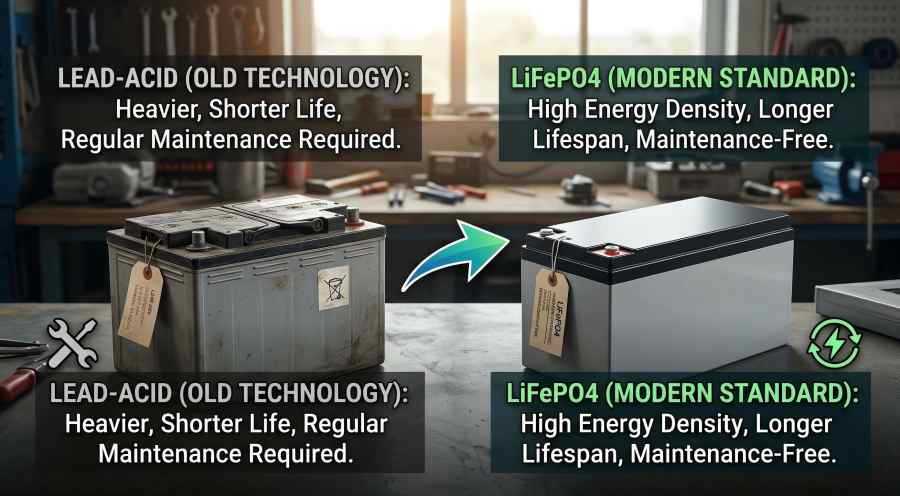
LiFePO4 batteries are now the preferred choice for most operators. Benefits include:
- High energy density (more power in less space)
- Longer lifespan (2,000–4,000 cycles)
- Fast charging (2–4 hours)
- Maintenance-free operation
For businesses aiming to scale or improve efficiency, upgrading to a LiFePO4 Battery is often the smartest move.
Key Specifications to Consider
Voltage (V)
Most electric sightseeing vehicles operate on 48V, 60V, or 72V systems. Choosing the correct voltage ensures compatibility and optimal performance.
Capacity (Ah)
Battery capacity determines how far your vehicle can travel on a single charge. For example:
- 100Ah: Suitable for short routes (10–20 miles)
- 200Ah+: Ideal for extended operations (30–50 miles)
Cycle Life
Cycle life refers to how many charge-discharge cycles a battery can complete before its capacity drops significantly. A high-quality Electric Sightseeing Vehicle Battery should offer at least 2,000 cycles for commercial use.
Charging Time
Fast-charging batteries reduce downtime and improve fleet utilization. LiFePO4 batteries typically charge 2–3 times faster than lead-acid alternatives.
Environmental Durability
Consider batteries with:
- IP65 or higher protection rating
- Wide temperature tolerance (-20°C to 60°C)
- Built-in Battery Management System (BMS)
These features ensure reliability in diverse operating environments.
Use Cases
Case 1: Resort Shuttle Fleet in Orlando, Florida
A luxury resort operates a fleet of 12 electric sightseeing vehicles transporting guests across a 150-acre property.
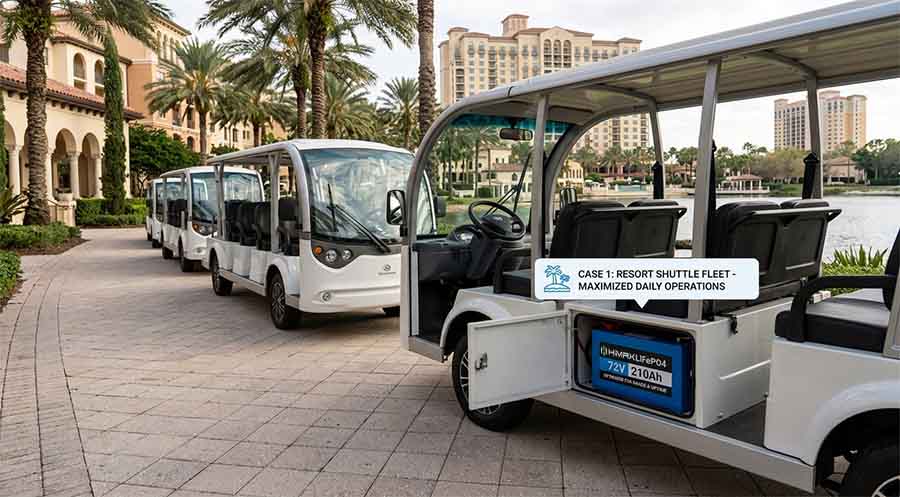
Battery Configuration:
- Voltage: 72V
- Capacity: 210Ah
- Range: ~45 miles per charge
- Charging Time: 3 hours
Outcome:
By switching to LiFePO4-based Electric Sightseeing Vehicle Battery systems, the resort reduced daily charging downtime by 40% and eliminated maintenance costs associated with lead-acid batteries.
Case 2: University Campus Transport in California
A large university campus uses electric vehicles for student transportation and campus tours.
Battery Configuration:
- Voltage: 60V
- Capacity: 150Ah
- Daily Usage: 30–35 miles
- Cycle Life: 3,000 cycles
Outcome:
The upgraded battery system supports all-day operation without mid-day charging, improving service reliability and reducing operational interruptions.
Case 3: National Park Tours in Arizona
A national park service operates sightseeing vehicles for guided tours across rugged terrain and varying temperatures.
Battery Configuration:
- Voltage: 48V
- Capacity: 180Ah
- Temperature Range: -10°C to 50°C
- Protection Rating: IP67
Outcome:
The durable Electric Sightseeing Vehicle Battery ensures consistent performance even in extreme weather, significantly reducing breakdown incidents.
How to Choose the Right Battery Supplier
Selecting the right supplier is just as important as choosing the battery itself. Look for manufacturers that offer:
- Certified quality standards (UL, CE, UN38.3)
- Custom battery solutions tailored to your vehicle specs
- Strong after-sales support and warranty (2–5 years)
- Proven experience in commercial EV battery applications
A trusted supplier will not only provide a reliable Electric Sightseeing Vehicle Battery, but also help optimize your fleet performance over time.
Cost vs. Long-Term Value
While lithium batteries have a higher upfront cost, they deliver significantly better ROI:
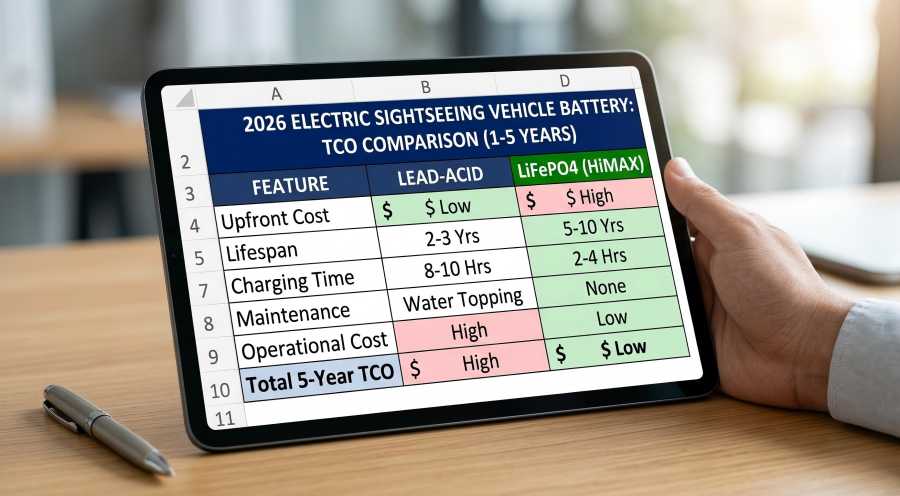
| Factor | Lead-Acid Battery | LiFePO4 Battery |
| Lifespan | 1–2 years | 4–5 years |
| Maintenance Cost | High | None |
| Charging Efficiency | Low | High |
| Total Cost (5 years) | Higher | Lower |
In most commercial scenarios, investing in a high-quality Electric Sightseeing Vehicle Battery pays off within the first 1–2 years.
HiMAX’s Electric Sightseeing Vehicle Batteries
At HiMAX, we specialize in delivering high-performance LiFePO4 battery solutions tailored for commercial electric vehicles. Our batteries are engineered to meet the demanding requirements of modern sightseeing operations.
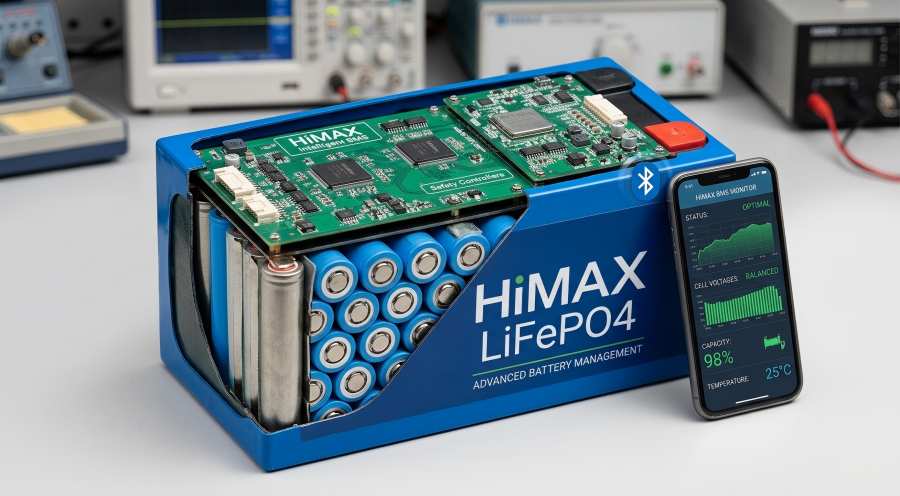
What Sets HiMAX Apart:
- Advanced LiFePO4 technology with up to 4,000+ cycle life
- Customizable voltage and capacity configurations
- Built-in intelligent BMS for safety and efficiency
- Fast charging capability to maximize uptime
- Compliance with global certifications (UL, CE, UN38.3)
Whether you’re operating a resort fleet, campus shuttle system, or tourism service, HiMAX provides reliable Electric Sightseeing Vehicle Battery solutions designed to enhance performance, reduce costs, and support long-term growth.
Find articles related to Electric Sightseeing Vehicle Batteries