Key Takeaways
- Warehouse automation is rapidly increasing across the United States, creating higher demands on robot battery safety and reliability.
- Traditional lithium-ion batteries can present thermal runaway and fire risks in high-density logistics environments.
- LiFePO4 (Lithium Iron Phosphate) batteries offer superior thermal stability, longer cycle life, and improved operational safety.
- Logistics park operators are increasingly favoring LiFePO4-powered AGVs and AMRs to meet stricter safety standards.
- Lower maintenance requirements and longer service life help reduce total ownership costs.
- Real-world warehouse applications demonstrate measurable improvements in uptime, efficiency, and risk management.
Why Logistics Parks Are Re-Evaluating Robot Battery Safety
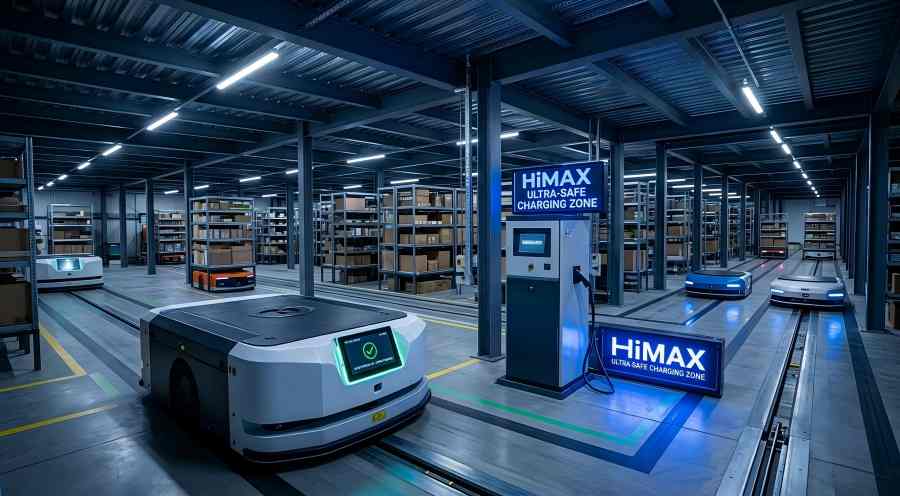
Warehouse logistics robots have become the backbone of modern supply chains. From e-commerce fulfillment centers to manufacturing warehouses, Autonomous Mobile Robots (AMRs) and Automated Guided Vehicles (AGVs) are moving inventory around the clock.
However, as robot fleets grow larger, logistics park authorities are becoming increasingly concerned about battery-related risks.
A modern distribution center may operate hundreds of robots simultaneously. Each robot contains an energy storage system that must be charged, discharged, and monitored daily. When dozens or even hundreds of batteries are concentrated within a single facility, battery safety becomes a critical operational issue.
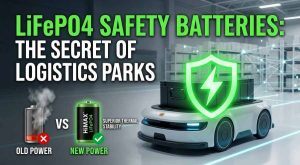
This is where LiFePO4 safety batteries are gaining attention.
Many logistics park operators now recognize that battery chemistry can directly impact warehouse safety, insurance costs, operational uptime, and regulatory compliance.
The Hidden Risks of Traditional Lithium-Ion Batteries
Traditional lithium-ion batteries often use Nickel Manganese Cobalt (NMC) or similar chemistries. While these batteries provide high energy density, they can become unstable under certain conditions.
Potential risks include:
- Thermal runaway
- Overheating during charging
- Damage from physical impact
- Fire propagation between battery packs
- Higher cooling requirements
For warehouse operators running 24/7 logistics operations, even a single battery-related incident can cause significant downtime and financial loss.
According to industry safety reports, thermal runaway events in industrial environments can spread rapidly when battery systems are densely installed.
As logistics parks become larger and more automated, authorities are seeking safer alternatives.
Why LiFePO4 Batteries Are Different
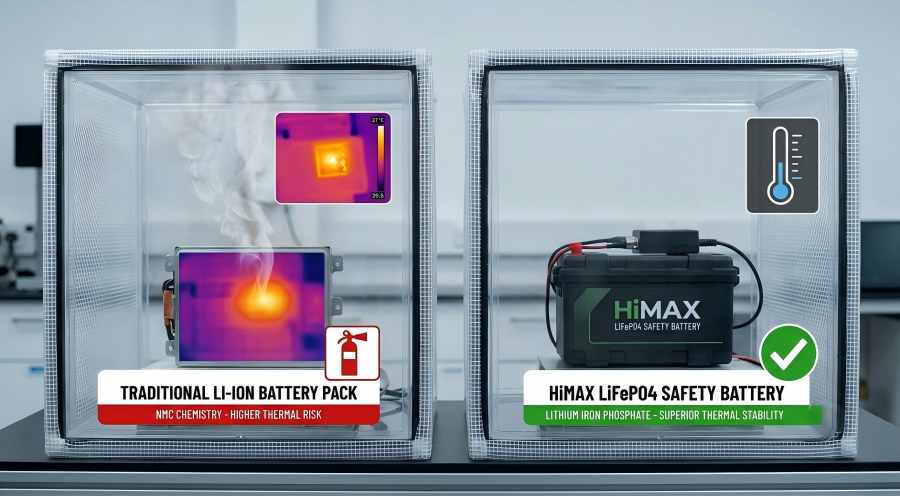
LiFePO4 batteries use lithium iron phosphate cathode materials, which provide exceptional thermal and chemical stability.
Unlike conventional lithium-ion chemistries, LiFePO4 batteries are far less likely to experience thermal runaway.
Key safety advantages include:
Superior Thermal Stability
LiFePO4 cells remain stable at significantly higher temperatures.
This helps prevent overheating in:
- High-demand warehouse operations
- Summer warehouse environments
- Continuous charging applications
- Multi-shift robot fleets
Improved Fire Resistance
The phosphate-based chemistry releases oxygen much more slowly than traditional lithium-ion batteries.
This dramatically reduces the risk of combustion.
Enhanced Mechanical Safety
Warehouse robots frequently encounter:
- Vibrations
- Sudden stops
- Minor collisions
- Continuous movement
LiFePO4 cells are known for excellent structural stability under these conditions.
Scene Exploration
Case 1: E-Commerce Fulfillment Center in Texas
Facility Size: 520,000 sq. ft.
Robot Fleet:
- 180 AMRs
- 24-hour operation
Battery Upgrade:
- 48V 100Ah LiFePO4 battery packs
Results After 12 Months:
- 18% reduction in charging-related downtime
- 32% lower battery replacement costs
- Zero thermal incidents reported
- Average robot availability increased from 94.1% to 98.3%
The facility management team reported that the longer cycle life of LiFePO4 batteries reduced maintenance scheduling interruptions.
Case 2: Logistics Distribution Hub in California
Facility Size: 700,000 sq. ft.
Robot Fleet:
- 240 AGVs
- 3-shift operation
Previous Battery System:
- NMC lithium batteries
Replacement System:
- 2V 200Ah LiFePO4 batteries
Performance Metrics:
| Metric | Before | After |
| Average Battery Life | 3 Years | 8 Years |
| Daily Charging Time | 4.5 Hours | 3.8 Hours |
| Battery Maintenance Events | 46/year | 12/year |
| Safety Incidents | 3/year | 0/year |
The distribution center estimated annual operational savings exceeding $120,000.
Case 3: Midwest Manufacturing Warehouse
Facility Size: 300,000 sq. ft.
Robot Fleet:
- 75 AGVs
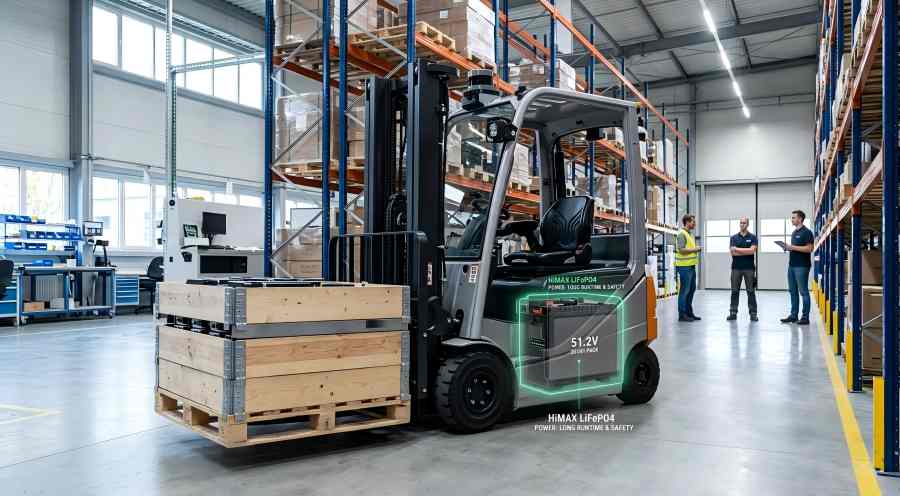
- 60 Autonomous Forklift Robots
Battery Specification:
- 24V 150Ah LiFePO4
Observed Improvements:
- 25% longer runtime per charge
- 40% reduction in maintenance labor
- Improved battery consistency across shifts
- Better performance during winter temperatures below 32°F (0°C)
Warehouse managers noted that predictable battery behavior improved overall logistics planning.
Longer Cycle Life Means Lower Costs
Safety is only one part of the equation.
LiFePO4 batteries typically deliver:
- 4,000–8,000 charge cycles
- 8–15 years of service life
- Minimal capacity degradation
Traditional lithium-ion batteries often require replacement after 1,000–2,000 cycles.
For warehouses operating large robot fleets, battery replacement costs can become substantial.
A fleet of 200 logistics robots may require hundreds of thousands of dollars in battery investments over several years.
By switching to LiFePO4 batteries, many operators significantly reduce lifetime ownership costs.
Supporting Sustainability Goals
Many U.S. logistics parks are implementing ESG initiatives and sustainability targets.
LiFePO4 batteries support these goals through:
- Longer service life
- Reduced battery waste
- Lower replacement frequency
- Improved energy efficiency
- Reduced maintenance resource consumption
Because fewer batteries need replacement over time, warehouses can lower their environmental footprint while improving operational performance.
Future Logistics Regulations Favor Safer Battery Technologies
Industry experts anticipate stricter battery safety requirements across logistics parks, fulfillment centers, and industrial facilities.
Insurance providers are also paying closer attention to battery technologies used in large-scale automation projects.
As warehouse automation continues to expand, facilities utilizing safer battery chemistries may benefit from:
- Easier compliance approvals
- Lower insurance risk assessments
- Improved worker safety
- Reduced operational liability
This trend is one reason many logistics authorities quietly encourage the transition toward LiFePO4-powered automation systems.
Why Choose HiMAX LiFePO4 Batteries?
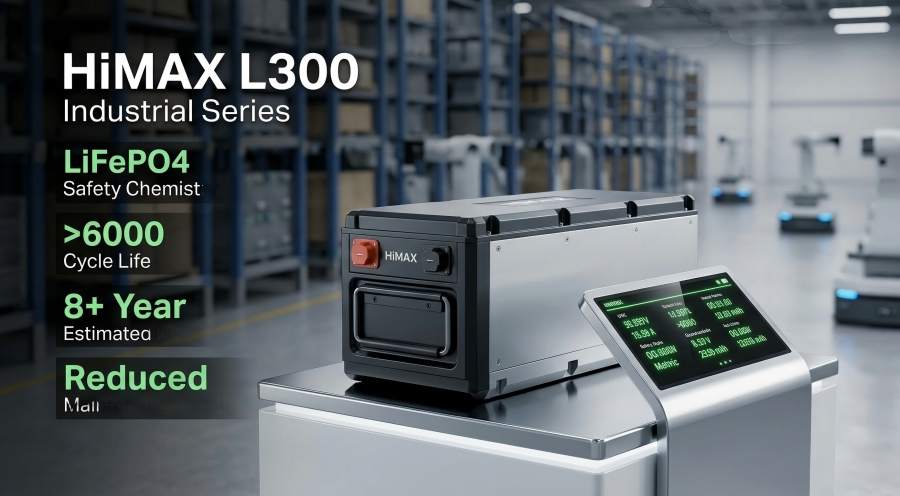
At HiMAX, we specialize in advanced LiFePO4 battery solutions designed for industrial automation, warehouse robotics, AGVs, AMRs, autonomous forklifts, and logistics equipment.
Our batteries are engineered to deliver:
- Exceptional safety performance
- Long cycle life exceeding 6,000 cycles
- High charge and discharge efficiency
- Reliable operation in demanding industrial environments
- Custom voltage and capacity configurations
- Professional OEM and ODM battery solutions
Whether you’re upgrading an existing robot fleet or building a next-generation automated warehouse, HiMAX provides dependable LiFePO4 power systems that help improve safety, reduce maintenance costs, and maximize operational uptime.
Find articles related to LiFePO4 Batteries
- Emergency Flashlight Battery Buying Guide
- 2026 Online Buying Guide for Camping Lanterns Batteries
- 2026 Online Buying Guide for Electric Sightseeing Vehicle Batteries
- How to Choose the Right Battery Solution for Electric Boat
- The Forestry Agencies’ Secret: Why It’s Finally Time to Switch to LiFePO4 Batteries for Forest Monitoring Systems
- Security Check Inquiry: Why Don’t Portable Power Banks Use Lithium Iron Phosphate (LiFePO₄) Batteries?