Key Takeaways
- LiFePO4 batteries deliver longer cycle life and lower maintenance costs than traditional lead-acid marine batteries.
- Marine fleet operators can significantly reduce fuel consumption and downtime by upgrading to lithium iron phosphate battery systems.
- Faster charging, lighter weight, and higher energy efficiency improve vessel performance and operational flexibility.
- LiFePO4 technology offers improved safety and thermal stability for demanding marine environments.
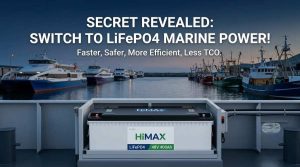
- Commercial fishing fleets, passenger ferries, tugboats, and recreational charter operators are increasingly adopting LiFePO4 power systems to reduce total ownership costs.
Introduction
For decades, traditional lead-acid batteries were the standard choice for marine power systems. They were affordable, widely available, and familiar to fleet operators. However, modern marine operations are changing rapidly. Rising fuel costs, stricter environmental regulations, and increasing maintenance expenses are pushing fleet managers to look for more efficient alternatives.
That is where LiFePO4 batteries come in.
Lithium Iron Phosphate (LiFePO4) batteries are becoming the preferred power solution for commercial marine fleets across the United States. From coastal fishing boats in Alaska to passenger ferries in Florida, operators are discovering that switching to LiFePO4 batteries can dramatically improve operational efficiency and reduce long-term costs.
Unlike lead-acid batteries, LiFePO4 batteries provide stable voltage output, deeper discharge capability, faster charging speeds, and significantly longer lifespan. These benefits make them ideal for modern marine applications that demand reliability and consistent power.
What Makes LiFePO4 Batteries Ideal for Marine Applications?
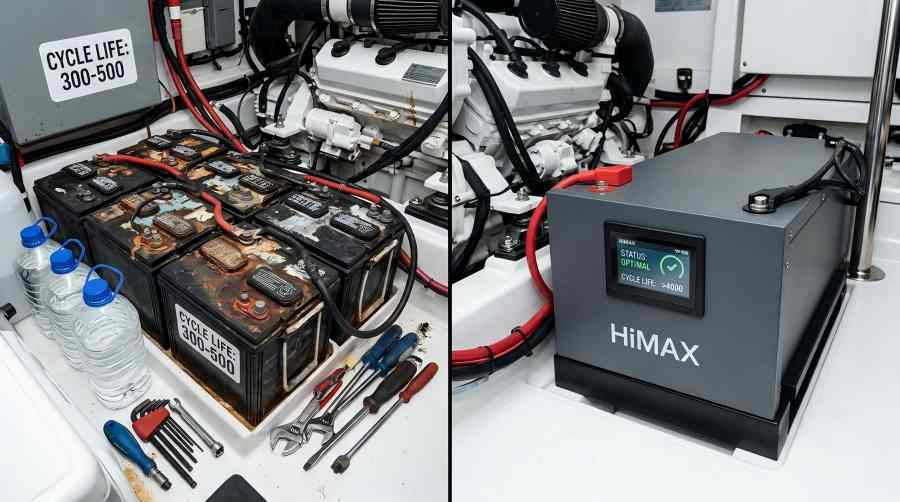
Marine environments are harsh. Saltwater exposure, vibration, humidity, temperature swings, and continuous operation can quickly degrade traditional battery systems. LiFePO4 batteries are engineered to handle these demanding conditions better than conventional alternatives.
- Longer Cycle Life
A standard marine lead-acid battery may last between 300 and 500 charge cycles. In contrast, a high-quality LiFePO4 marine battery can deliver 4,000 to 6,000 cycles under proper operating conditions.
For fleet operators, this means fewer battery replacements, reduced labor costs, and less downtime.
Example:
- Lead-acid battery lifespan: 2–3 years
- LiFePO4 battery lifespan: 8–10 years
Over the lifetime of a commercial vessel, the savings become substantial.
- Faster Charging Reduces Downtime
Time is money in marine operations. Whether operating fishing fleets, harbor vessels, or sightseeing boats, every hour spent charging is lost revenue.
LiFePO4 batteries can charge up to 4 times faster than lead-acid systems.
Example:
A commercial passenger ferry operating in Seattle uses:
- 48V 400Ah LiFePO4 battery bank
- Charging current: 200A
- Full recharge time: approximately 2.5 hours
A comparable lead-acid system would require 8–10 hours for a full recharge.
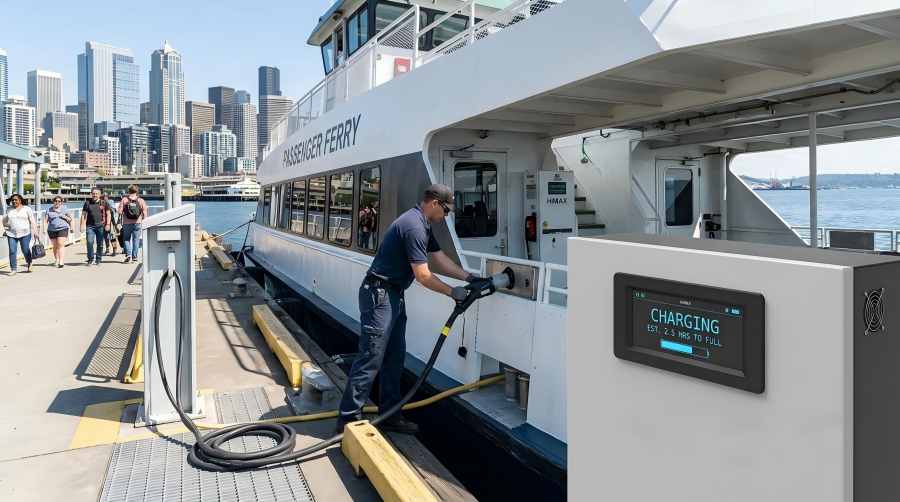
This faster turnaround allows vessels to complete more trips per day while reducing generator runtime and fuel consumption.
- Significant Weight Reduction
Weight matters on the water. Heavy batteries reduce fuel efficiency and vessel performance.
LiFePO4 batteries are typically 50% to 70% lighter than equivalent lead-acid batteries.
Example
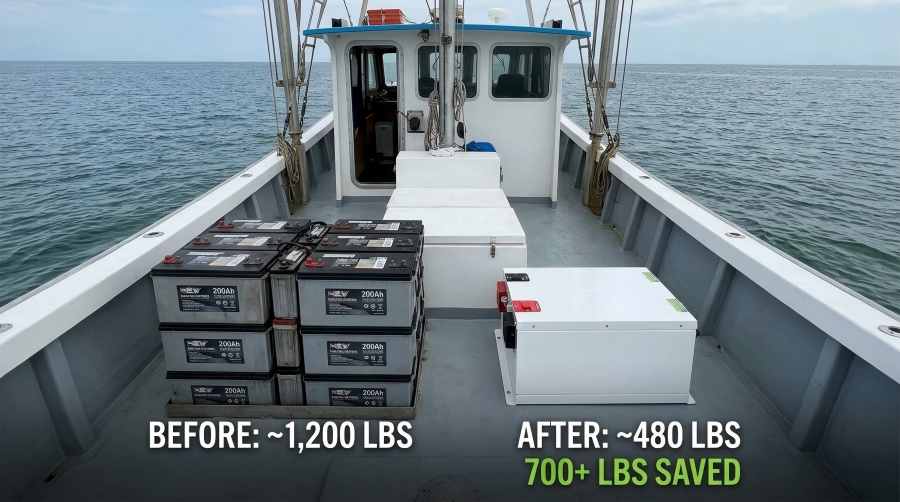
A Gulf Coast commercial fishing vessel upgraded from:
- 8 × 12V 200Ah AGM batteries
- Total system weight: approximately 1,200 lbs
to:
- 48V 400Ah LiFePO4 battery system
- Total system weight: approximately 480 lbs
The vessel reduced overall battery weight by more than 700 lbs, improving fuel efficiency by approximately 8% during a six-month operating period.
For fleets operating dozens or hundreds of vessels, those fuel savings add up quickly.
- Improved Safety for Marine Operations
Safety is one of the most important reasons marine operators are switching to LiFePO4 technology.
Compared to other lithium chemistries, LiFePO4 batteries are highly stable and resistant to thermal runaway. This makes them much safer for enclosed marine engine rooms and battery compartments.
Marine operators also benefit from:
- Lower fire risk
- Better thermal performance
- Improved vibration resistance
- Stable operation in humid environments
For vessels operating offshore or carrying passengers, these safety improvements are critical.
Marine Fleet Operators’ Biggest Hidden Cost: Maintenance
Many fleet operators underestimate how much maintenance traditional battery systems actually require.
Lead-acid batteries demand:
- Regular inspections
- Water refilling
- Corrosion cleaning
- Voltage balancing
- Frequent replacements
LiFePO4 batteries eliminate most of these issues.
Modern LiFePO4 systems include integrated Battery Management Systems (BMS) that automatically protect against:
- Overcharging
- Over-discharging
- Short circuits
- Overheating
- Cell imbalance
This automation dramatically reduces manual maintenance requirements.
Explore Case Studies: Harbor Tugboat Fleet in Louisiana
A tugboat operator managing 12 vessels switched from flooded lead-acid batteries to 24V 300Ah LiFePO4 systems.
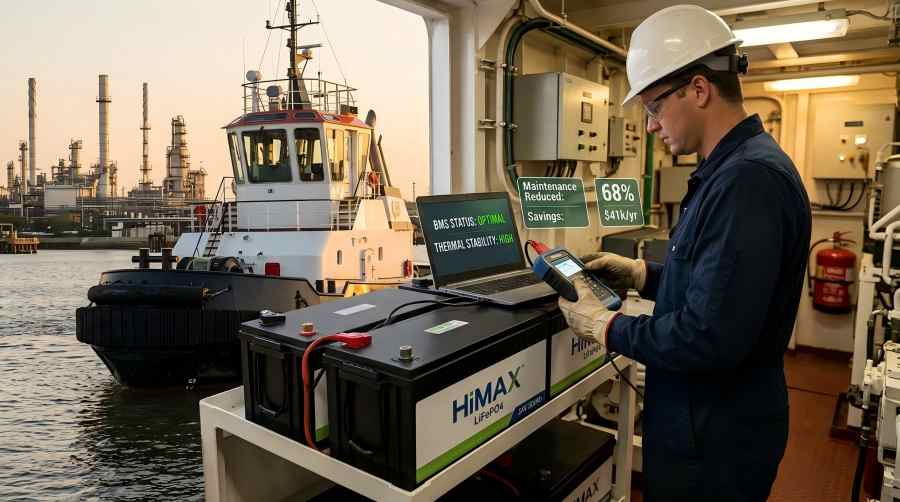
Results after 12 months:
- Battery-related maintenance hours reduced by 68%
- Annual replacement costs reduced by $41,000
- Generator fuel usage reduced by 11%
- Emergency service incidents reduced from 14 to 3
For commercial operators, reliability is not just convenient — it directly impacts profitability.
Total Cost of Ownership: LiFePO4 vs Lead-Acid
At first glance, LiFePO4 batteries may appear more expensive than lead-acid alternatives. However, experienced fleet operators focus on total ownership cost rather than initial purchase price. The data below presents a comparison of costs over a five-year period.
Lead-Acid Marine Battery System
- Initial installation: $8,000
- Replacements during 5 years: 2
- Maintenance costs: $4,500
- Fuel inefficiency costs: $6,000
- Total estimated cost: $26,500
LiFePO4 Marine Battery System
- Initial installation: $16,000
- Replacements during 5 years: 0
- Maintenance costs: $1,200
- Fuel savings: -$4,000
- Total estimated cost: $13,200
Although the upfront investment is higher, the long-term savings are often dramatic.
Why Marine Operators Choose HiMAX LiFePO4 Batteries
At HiMAX, we understand that marine operations demand reliability, durability, and long-term performance. Our advanced LiFePO4 battery solutions are engineered specifically for challenging marine environments.
HiMAX marine battery systems offer:
- High energy density for compact installations
- Marine-grade waterproof protection
- Intelligent BMS protection systems
- Fast charging capability
- Long cycle life up to 6,000+ cycles
- Custom voltage and capacity configurations
- OEM and fleet-scale battery solutions
Whether you operate fishing vessels, ferries, tugboats, electric boats, or hybrid marine fleets, HiMAX provides customized lithium battery solutions designed to improve operational efficiency and reduce total ownership costs.
Find articles related to LiFePO4 Batteries