Key Takeaways
Choosing the right battery solution for projectors depends on three core factors: power demand, runtime expectations, and usage environment.
A small portable projector used for backyard movie nights may only need a compact lithium-ion battery pack, while a commercial projector for outdoor events, mobile classrooms, or field presentations may require a higher-capacity LiFePO4 battery system.
To select the right solution, users should calculate projector wattage, required operating hours, voltage compatibility, battery capacity, safety protection, charging speed, and long-term cycle life.
For brands, system integrators, and OEM projector manufacturers, working with a professional battery manufacturer helps ensure stable performance, safer operation, and better product-market fit.
Why Projectors Need the Right Battery Solution
Projectors are no longer limited to fixed conference rooms or home theaters. Today, they are used in backyards, classrooms, RVs, camping sites, outdoor events, churches, pop-up retail spaces, mobile offices, and emergency response environments. As projector usage becomes more mobile, the need for a reliable projector battery solution becomes more important.
Unlike smartphones or tablets, projectors consume much more power. A compact LED projector may use 30W to 80W, while a brighter portable projector may require 100W to 250W or more. If the battery is too small, the projector may shut down before the movie, lesson, or presentation is finished. If the battery output is unstable, the projector may flicker, restart, overheat, or fail to operate properly.
That is why choosing the right portable projector power supply is not just about buying the biggest battery. It is about matching the battery chemistry, voltage, capacity, output power, protection system, and charging design to the actual projector application.
Step 1: Understand the Projector’s Power Consumption
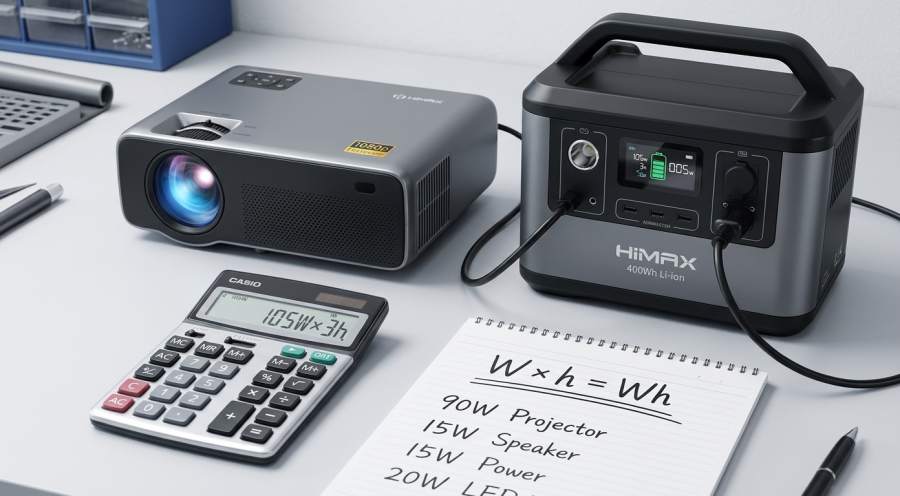
The first step is to check the projector’s power rating. This is usually listed on the product label, power adapter, or user manual.
Common projector power ranges include:
- Mini LED projector: 30W–60W
- Portable home projector: 60W–120W
- Outdoor movie projector: 120W–250W
- Professional event projector: 250W–500W+
For example, if a projector consumes 100W and the user wants it to run for 3 hours, the basic energy requirement is:
100W × 3 hours = 300Wh
However, real-world battery systems are not 100% efficient. Inverter loss, heat, cable resistance, and conversion efficiency can reduce usable energy. A practical calculation should add 15%–30% extra capacity.
So, for a 100W projector running 3 hours, a safer battery size would be:
300Wh × 1.25 = 375Wh
In this case, a 400Wh battery solution would be more suitable than a 300Wh one.
Step 2: Choose the Right Battery Chemistry
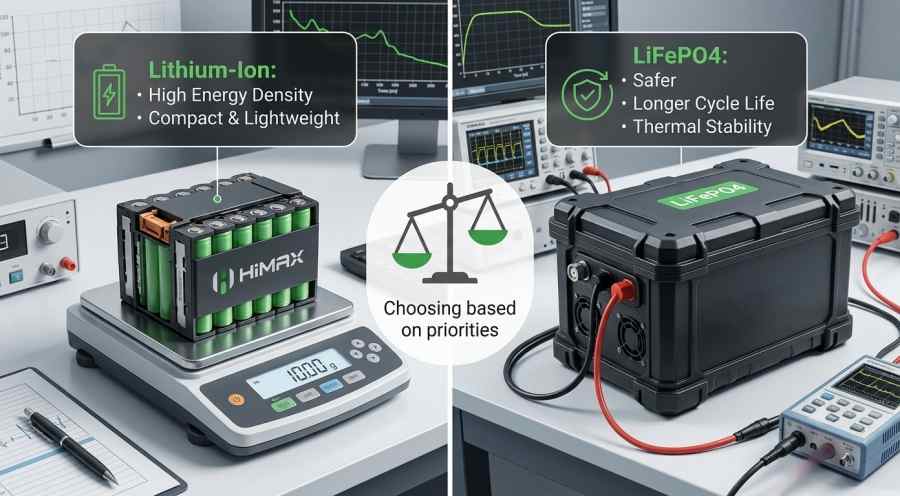
The two most common battery chemistries for projector applications are lithium-ion batteries and LiFePO4 batteries.
Lithium-Ion Battery Solutions
Lithium-ion batteries are widely used in portable electronics because they offer high energy density. This means they can store more energy in a smaller and lighter package. For compact projectors, travel projectors, and consumer-level portable power products, lithium-ion is often a practical choice.
Best for:
- Lightweight portable projectors
- Travel projector battery packs
- Compact consumer electronics
- Applications where size and weight matter most
LiFePO4 Battery Solutions
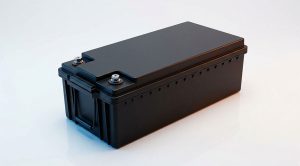
LiFePO4 batteries, also known as lithium iron phosphate batteries, are known for safety, long cycle life, and thermal stability. They are often preferred for larger projector power systems, outdoor power stations, commercial installations, and long-term use cases.
Best for:
- Outdoor movie setups
- RV projector systems
- Mobile classrooms
- Commercial projector power backup
- High-cycle applications
- Safer long-term energy storage
If the projector solution needs to be used frequently, charged and discharged many times, or operated in demanding environments, a LiFePO4 projector battery solution is often a better long-term choice.
Step 3: Match Voltage and Output Requirements
Battery capacity is important, but output compatibility is equally critical. A projector may require AC power through a standard wall plug, or it may accept DC input such as 12V, 19V, 24V, or USB-C PD.
Before selecting a battery, check:
- Required input voltage
- Required current
- AC or DC input type
- Peak startup power
- Continuous power requirement
- Connector type
- Whether inverter output is needed
For example, a projector rated at 19V / 4.74A requires around 90W. A battery pack with only 65W USB-C output may not be enough, even if the total battery capacity looks large. The projector may not start or may shut down under load.
For OEM and custom projector battery projects, voltage matching should be designed carefully at the battery pack level, including the BMS, DC output module, connector, and charging port.
Step 4: Calculate Runtime Based on Real Usage
Runtime is one of the most important buying concerns for projector users. However, many users only look at battery capacity without calculating real power consumption.
A simple formula is:
Battery capacity Wh ÷ projector wattage = estimated runtime
For example:
A 500Wh battery powering a 100W projector:
500Wh ÷ 100W = 5 hours
After accounting for energy loss, the real runtime may be closer to 4–4.5 hours.
If the projector also powers speakers, streaming sticks, cooling fans, or Wi-Fi devices, those loads should also be included.
Example:
- Projector: 120W
- Bluetooth speaker: 20W
- Streaming device: 5W
- Total load: 145W
- Desired runtime: 3 hours
Energy needed:
145W × 3 = 435Wh
With efficiency loss:
435Wh × 1.25 = 544Wh
In this situation, a 550Wh–600Wh battery solution would be more realistic.
Scenario 1: Backyard Movie Night in California
A family in San Diego wants to use a 1080p portable projector for backyard movie nights. The projector consumes 90W, and they usually watch a 2.5-hour movie. They also connect a 15W portable speaker.
Total load:
- Projector: 90W
- Speaker: 15W
- Total: 105W
Runtime requirement:
105W × 2.5 hours = 262.5Wh
With 25% extra capacity:
262.5Wh × 1.25 = 328Wh
Recommended solution:
A 350Wh–400Wh lithium-ion or LiFePO4 battery pack would be suitable. If the family uses it only occasionally and wants a lightweight option, lithium-ion may be enough. If they use it every weekend and want longer battery life, LiFePO4 would be more durable.
Scenario 2: Mobile Classroom Projector in Texas
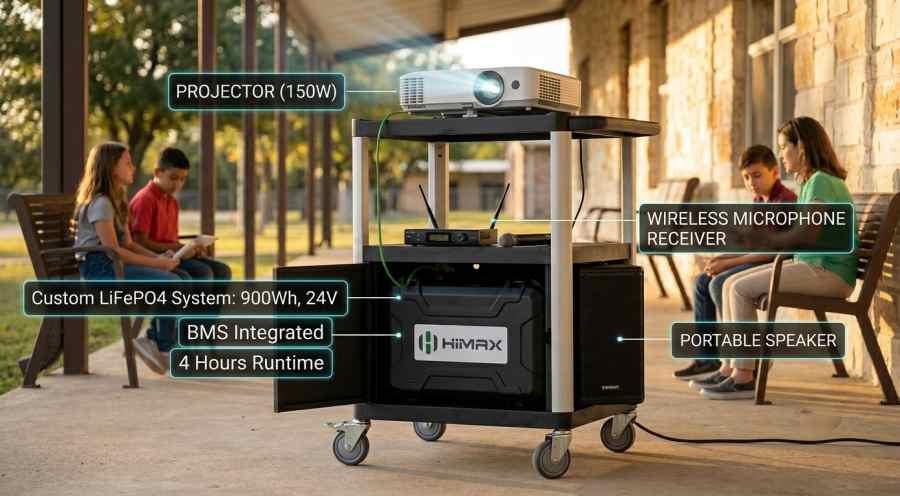
A training company in Austin uses a projector for mobile education sessions. The projector consumes 150W, and each session lasts 4 hours. The system also powers a 10W wireless microphone receiver and a 20W speaker.
Total load:
- Projector: 150W
- Microphone receiver: 10W
- Speaker: 20W
- Total: 180W
Energy requirement:
180W × 4 hours = 720Wh
With 25% extra capacity:
720Wh × 1.25 = 900Wh
Recommended solution:
A 900Wh–1,000Wh LiFePO4 battery system would be a strong choice. Since this is a professional use case, cycle life, safety, and stable output are more important than simply choosing the lightest battery. A LiFePO4 solution can support frequent use and longer service life.
Scenario 3: RV Projector Setup for Weekend Travel
An RV owner in Colorado wants to power a projector for camping trips. The projector uses 80W, and the user wants 3 hours of runtime each night for two nights without recharging.
Daily energy:
80W × 3 hours = 240Wh
Two-night energy:
240Wh × 2 = 480Wh
With 25% extra capacity:
480Wh × 1.25 = 600Wh
Recommended solution:
A 600Wh–700Wh LiFePO4 battery pack is a good fit. If the RV has solar charging, the battery system should support solar input or work with a compatible solar charge controller. For outdoor use, temperature protection, durable housing, and stable DC/AC output are also important.
Scenario 4: Pop-Up Retail Projection Display in New York
A fashion retailer in Brooklyn uses a projector for visual merchandising during pop-up events. The projector consumes 200W and needs to operate for 6 hours. The setup also includes a media player using 10W.
Total load:
- Projector: 200W
- Media player: 10W
- Total: 210W
Energy requirement:
210W × 6 hours = 1,260Wh
With 25% extra capacity:
1,260Wh × 1.25 = 1,575Wh
Recommended solution:
A 1.6kWh or higher LiFePO4 battery system would be more appropriate. For commercial events, the battery should also include a high-quality BMS, overload protection, temperature monitoring, and reliable AC output. If the projector has a high startup surge, the inverter should be rated above the continuous load.
Step 5: Consider Safety and Battery Management
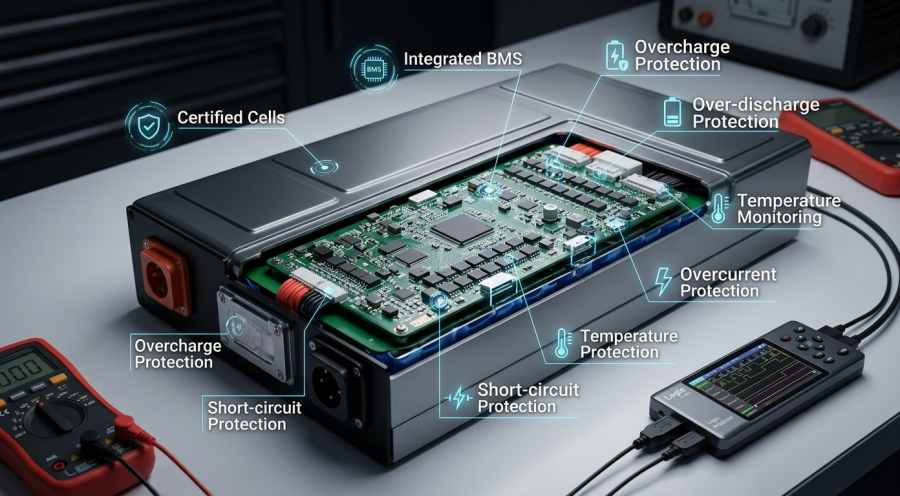
A projector battery solution should not only provide power. It should also protect the device, the user, and the battery pack itself.
Important safety features include:
- Overcharge protection
- Over-discharge protection
- Overcurrent protection
- Short-circuit protection
- Temperature protection
- Cell balancing
- Stable voltage output
- Certified battery cells
- Reliable Battery Management System
For OEM projector brands and commercial equipment manufacturers, the BMS design is especially important. A poor-quality battery pack may reduce projector performance, shorten product life, or create safety risks.
Step 6: Think About Charging Speed and Portability
The right battery solution should also match the user’s charging habits. A battery for occasional home use may only need standard charging. A commercial projector system may need faster charging, solar charging, vehicle charging, or swappable battery packs.
Key questions include:
- How long does the battery take to recharge?
- Can it be charged by solar panels?
- Can it be charged in a vehicle?
- Is the battery easy to carry?
- Does it need a handle, enclosure, or mounting design?
- Will the user carry it outdoors or install it inside equipment?
For compact consumer projectors, portability may be the priority. For commercial or industrial projector systems, reliability and runtime may be more important.
Step 7: Choose a Custom Battery Solution When Standard Packs Are Not Enough
Off-the-shelf power banks or portable power stations may work for simple projector use. However, many projector manufacturers, equipment brands, and system integrators need a custom battery solution.
A custom projector battery pack can be designed around:
- Specific voltage output
- Required runtime
- Projector housing space
- Charging method
- Cell chemistry
- BMS requirements
- Connector design
- Certifications
- Weight limits
- Outdoor or indoor usage
- Branding and enclosure design
For example, a projector brand developing a portable outdoor cinema product may need a built-in 24V LiFePO4 battery pack with 600Wh capacity, fast charging, temperature protection, and a custom enclosure. A standard consumer power bank would not be enough for that type of application.
HiMAX Custom Battery Solutions
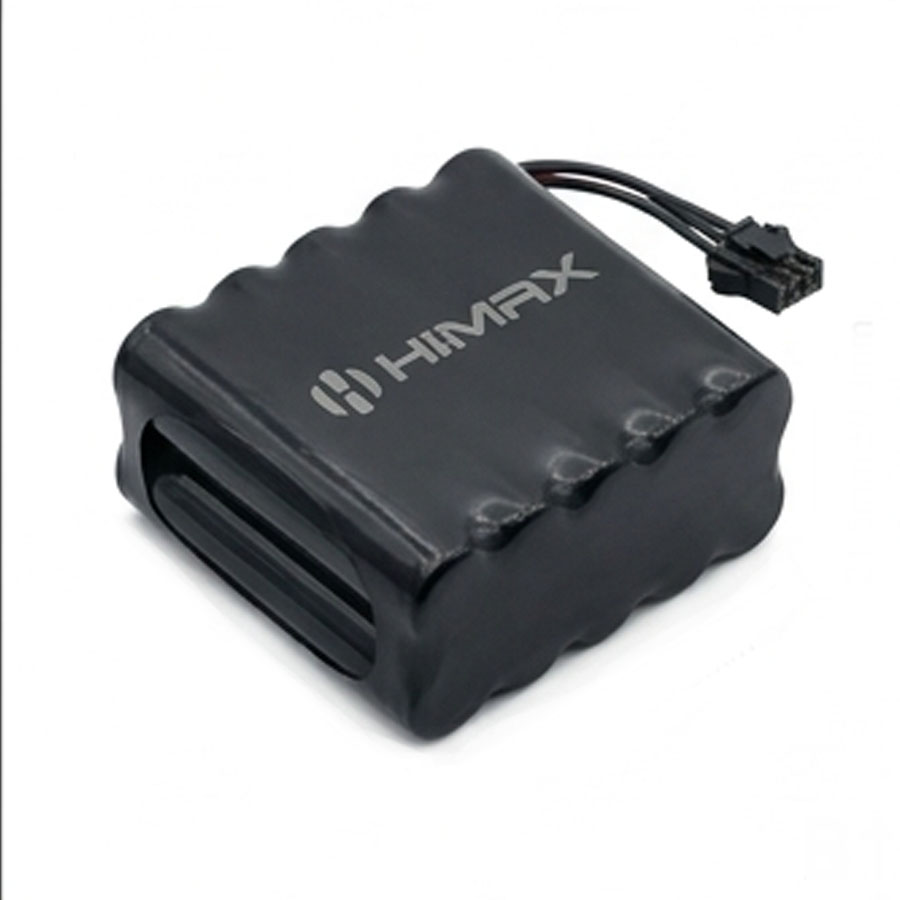
HiMAX is one of the world’s leading battery manufacturers, providing reliable lithium-ion and LiFePO4 battery solutions for a wide range of applications. From portable electronics and energy storage systems to custom battery packs for commercial and industrial equipment, HiMAX focuses on safety, performance, and long-term reliability. For projector brands, outdoor power equipment companies, and system integrators, HiMAX can support customized battery design, cell selection, BMS development, capacity planning, and scalable production to help create dependable power solutions for real-world projector applications.
Find articles related to LiFePO4 Battery