Key Takeaways
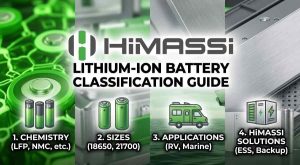
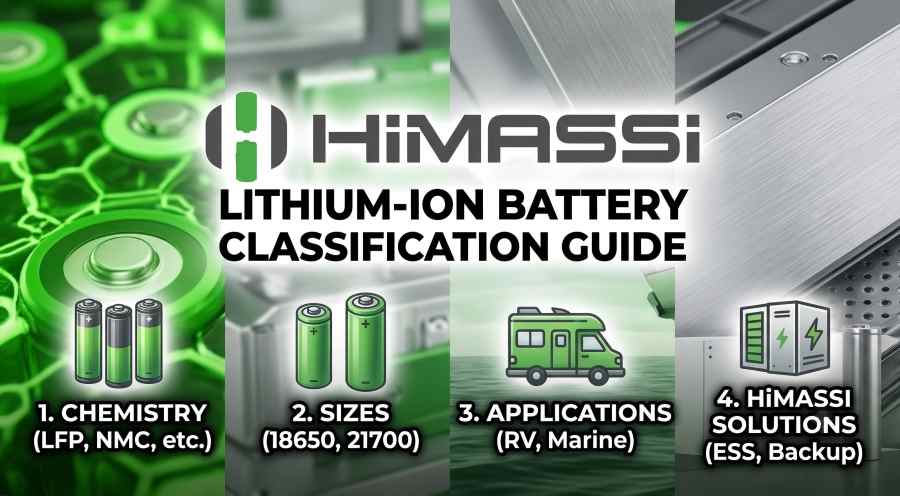
- Lithium-ion batteries can be classified by both chemical composition and physical size.
- The most common lithium battery chemistries include LiFePO4 (LFP), NMC, NCA, LCO, and LTO.
- Popular battery formats such as 18650, 21700, 26650, and prismatic cells serve different power and energy requirements.
- Choosing the right battery depends on application needs, including energy density, safety, cycle life, charging speed, and operating temperature.
- LiFePO4 batteries are widely preferred for energy storage, RV systems, marine applications, and backup power due to their long lifespan and excellent safety performance.
- Understanding battery classifications helps users make informed purchasing decisions and improve system efficiency.
What Is a Lithium-Ion Battery?
A lithium-ion battery is a rechargeable energy storage device that uses lithium ions to move between the anode and cathode during charging and discharging cycles. Since their commercial introduction in the 1990s, lithium-ion batteries have become the dominant power source for consumer electronics, electric vehicles, renewable energy storage systems, industrial equipment, and backup power applications.
Compared with traditional lead-acid batteries, lithium-ion batteries offer:
- Higher energy density
- Longer service life
- Faster charging capability
- Lower maintenance requirements
- Reduced weight and size
Lithium-Ion Battery Classification by Chemical Composition
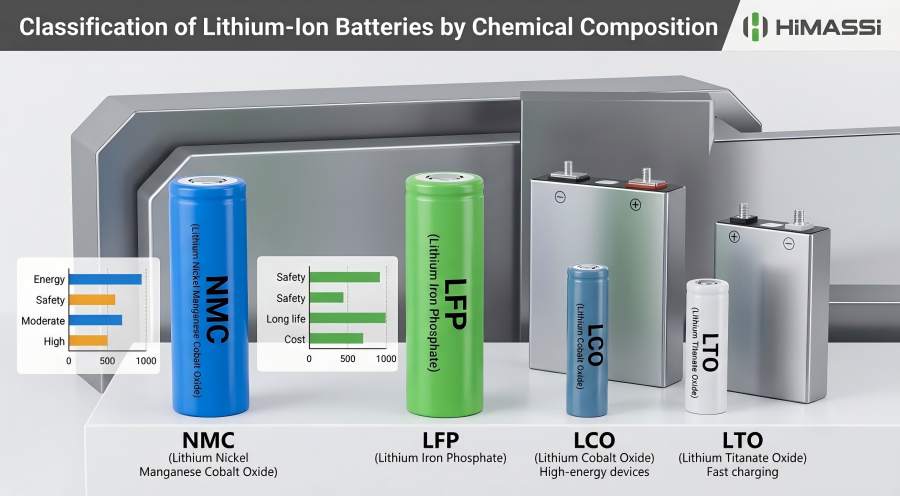
| Battery Chemistry | Nominal Voltage | Key Characteristics | Common Applications | Example Scenario |
| LiFePO4 / LFP | 3.2V per cell | High safety, excellent thermal stability, long cycle life, eco-friendly | RV systems, solar storage, marine batteries, home backup power, telecom backup | A 12.8V 100Ah LiFePO4 battery with a 400W solar panel powers an RV refrigerator, LED lights, water pump, and laptop charging station. |
| NMC | 3.6–3.7V per cell | High energy density, balanced power output, good cycle life | Electric vehicles, e-bikes, power tools, medical equipment | A 48V 20Ah NMC battery pack powers electric delivery scooters for up to 50 miles per charge. |
| NCA | 3.6–3.7V per cell | Very high energy density, lightweight, long-range potential | Premium EVs, aerospace systems, high-performance energy storage | A 75kWh NCA battery pack supports over 300 miles of EV driving range under normal highway conditions. |
| LCO | 3.6–3.7V per cell | Compact size, high energy density, limited cycle life, lower thermal stability | Smartphones, tablets, cameras, portable electronics | A 3.85V 5,000mAh LCO battery provides about 19Wh of energy for daily smartphone use. |
| LTO | 2.3–2.4V per cell | Ultra-fast charging, excellent cycle life, strong low-temperature performance | Grid storage, industrial equipment, public transportation, fast-charging systems | An LTO battery system can charge from 20% to 80% in under 15 minutes for municipal bus fleets. |
Lithium Battery Classification by Cell Size
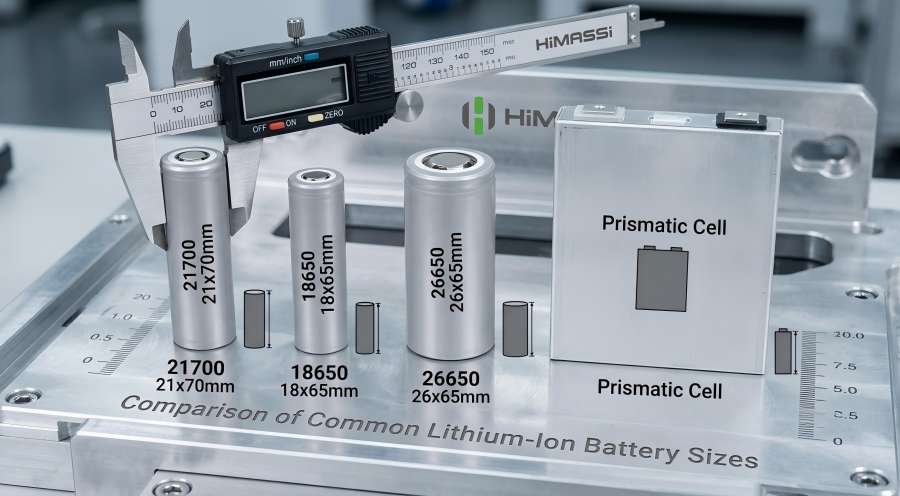
| Cell Size / Format | Dimensions | Typical Capacity Range | Key Advantages | Common Applications | Example Scenario |
| 18650 Battery | 18mm × 65mm | 2,000–3,600mAh | Mature technology, compact, widely available | Laptop packs, flashlights, portable electronics, backup systems | Used in compact battery packs where stable performance and small size are required. |
| 21700 Battery | 21mm × 70mm | 4,000–6,000mAh | Higher capacity than 18650, better runtime, improved efficiency | EVs, power tools, energy storage systems | A 20V cordless drill using 21700 cells delivers longer runtime and higher torque than 18650-based packs. |
| 26650 Battery | 26mm × 65mm | 4,000–6,500mAh | Higher energy storage, strong power output | Solar storage, high-output flashlights, backup power equipment | A 12.8V 3.3Ah LiFePO4 pack using 26650 cells powers remote security cameras overnight. |
| Prismatic Cell | Rectangular format | Varies by design | High packaging efficiency, larger capacity options, easy integration | EV packs, residential storage, commercial battery systems | Used in large-format energy storage systems where space efficiency is important. |
| Pouch Cell | Flexible laminated format | Varies by design | Lightweight, flexible shape, high energy density | Smartphones, drones, wearable devices | Used in thin, lightweight electronics where compact design and flexible packaging are needed. |
How to Choose the Right Lithium-Ion Battery
Selecting the best lithium battery requires evaluating several factors.
- Consider Safety Requirements
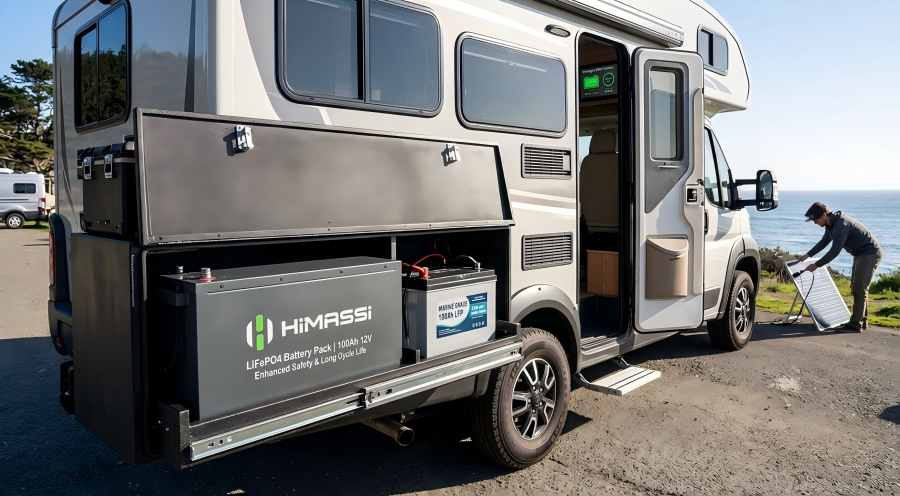
For applications involving homes, RVs, boats, or solar energy systems, LiFePO4 batteries are often the preferred choice due to superior thermal stability and low risk of thermal runaway.
- Consider Energy Density
When minimizing weight and maximizing runtime are priorities, NMC or NCA batteries may offer better performance.
- Consider Cycle Life
For daily cycling applications such as solar storage, LiFePO4 and LTO batteries typically provide the longest operational lifespan.
- Consider Environmental Conditions
Applications exposed to extreme temperatures should prioritize chemistries designed for enhanced thermal performance and reliability.
Conclusion
Understanding lithium-ion battery classifications helps consumers, engineers, and businesses select the most suitable battery solution for their specific requirements. Whether comparing LiFePO4 vs NMC batteries, choosing between 18650 and 21700 cells, or evaluating battery performance for renewable energy systems, a solid understanding of battery chemistry and form factors leads to better decisions and more reliable results.
Why Choose HiMAX Lithium Batteries?
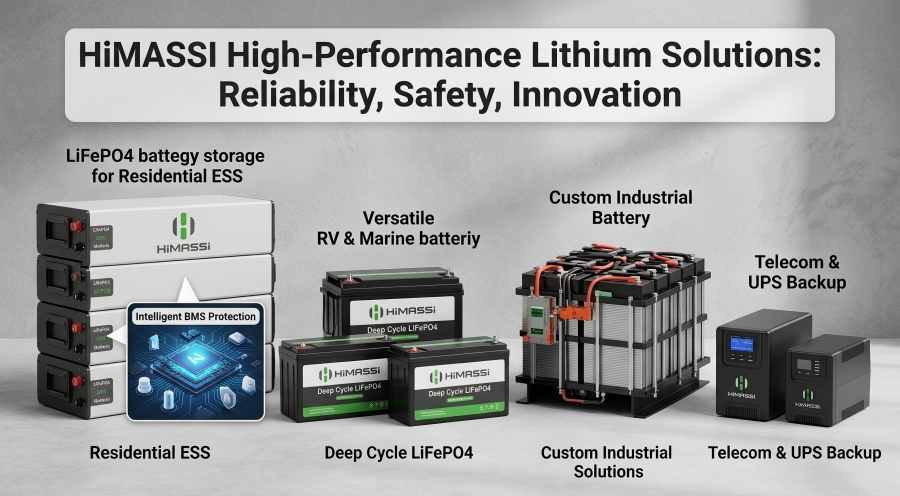
At HiMAX, we specialize in designing and manufacturing high-performance lithium battery solutions for residential, commercial, industrial, and renewable energy applications. Our product lineup includes advanced LiFePO4 battery packs, custom battery solutions, energy storage systems, and backup power products engineered for exceptional reliability, safety, and long-term performance.
Every HiMAX battery is built with premium-grade cells and intelligent Battery Management System (BMS) protection, helping safeguard against overcharging, over-discharging, overcurrent, and short circuits. With long cycle life, stable output, and dependable performance in demanding environments, HiMAX batteries provide trusted power for RVs, marine systems, solar installations, security equipment, telecommunications infrastructure, and countless other applications.
Whether you’re upgrading an off-grid energy system or developing a custom-powered solution, HiMAX delivers the quality, innovation, and expertise you can rely on. Power your future with confidence—choose HiMAX.
Find articles related to Lithium-ion Battery