Key Takeaways
- Summer heat accelerates battery aging and capacity loss.
- High temperatures can reduce charging efficiency and vehicle runtime.
- Poor thermal management increases the risk of battery swelling and failure.
- Heavy-duty sightseeing fleets operating in tourist areas are especially vulnerable.
- LiFePO4 battery systems with advanced BMS protection perform better in hot environments.
- Proper charging habits and battery storage can significantly extend battery lifespan.
Introduce
Electric sightseeing vehicles are widely used in resorts, amusement parks, campuses, airports, zoos, tourist attractions, and gated communities across the United States. During the summer months, these vehicles often operate for longer hours under intense heat and direct sunlight. While high temperatures may seem like a minor seasonal challenge, they can significantly reduce battery performance, shorten lifespan, and increase operating costs.
If your fleet experiences shorter driving range, slower charging, overheating, or sudden battery failures during summer, heat could be the hidden cause. In this guide, we will explain how summer temperatures affect electric sightseeing vehicle batteries and what fleet operators can do to protect their investment.
Why Summer Heat Is Harmful to Electric Sightseeing Vehicle Batteries
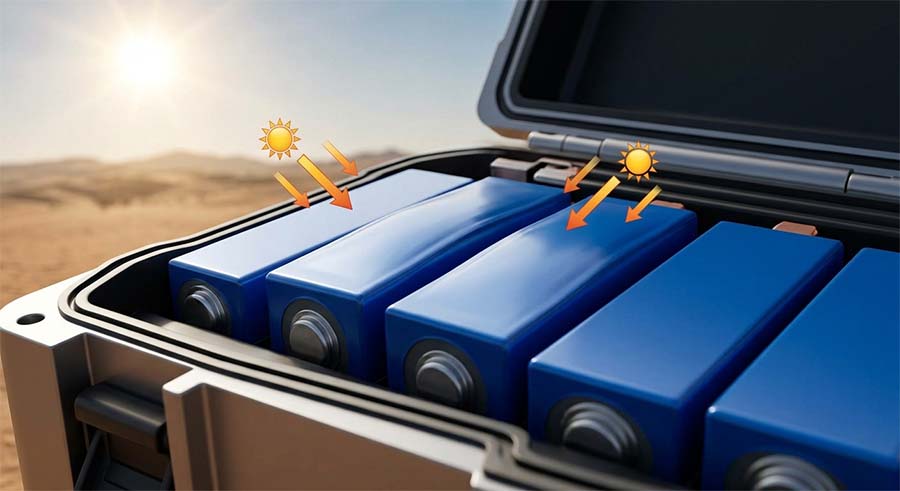
Battery systems generate heat naturally during charging and discharging. In summer, external temperatures combine with internal heat generation, creating additional stress on the battery cells.
For many sightseeing vehicle fleets in southern states like Florida, Texas, Arizona, and California, ambient temperatures can exceed 95°F (35°C) for several hours per day. Inside enclosed battery compartments, temperatures may rise even higher.
Excessive heat can cause:
- Faster chemical degradation
- Electrolyte breakdown
- Increased internal resistance
- Reduced cycle life
- Voltage instability
- Safety risks from thermal runaway
Over time, these issues reduce battery reliability and increase maintenance costs.
Common Signs of Heat Damage in Sightseeing Vehicle Batteries
Fleet operators should watch for the following warning signs during summer operation:
- Reduced Driving Range
Vehicles that normally operate for 8–10 hours may suddenly require recharging after only 5–6 hours.
- Longer Charging Time
Overheated batteries often charge less efficiently, especially during peak afternoon temperatures.
- Battery Swelling
Heat stress may cause physical swelling in LiFePO4 battery packs, which is a serious safety concern.
- Sudden Voltage Drops
Drivers may notice reduced acceleration or sudden power loss on hills or under heavy passenger loads.
- Frequent Battery Replacement
If your fleet requires battery replacement every 1–2 years instead of the expected service life, summer heat may be accelerating degradation.
Case Scenarios
Below are several real-world operational examples that demonstrate how summer temperatures affect sightseeing vehicle batteries in commercial environments.
Resort Fleet in Orlando, Florida
A resort operator used 48V 150Ah lead-acid batteries in a fleet of 20 electric sightseeing shuttles.
Operating Conditions
- Average daily temperature: 93°F (34°C)
- Daily runtime: 10 hours
- Passenger load: 6–8 people
- Charging schedule: Overnight charging only
Problems Encountered
- Battery runtime dropped by 30% after 8 months
- Charging time increased from 7 hours to 10 hours
- Multiple battery overheating incidents
Solution
The operator upgraded to HiMAX 48V 160Ah LiFePO4 battery packs with smart BMS thermal protection.
Results
- Runtime improved to 11 hours per charge
- Charging time reduced to 4.5 hours
- Battery temperature remained stable under heavy use
- Estimated battery lifespan increased to over 4,000 cycles
Tourist Attraction Fleet in Phoenix, Arizona
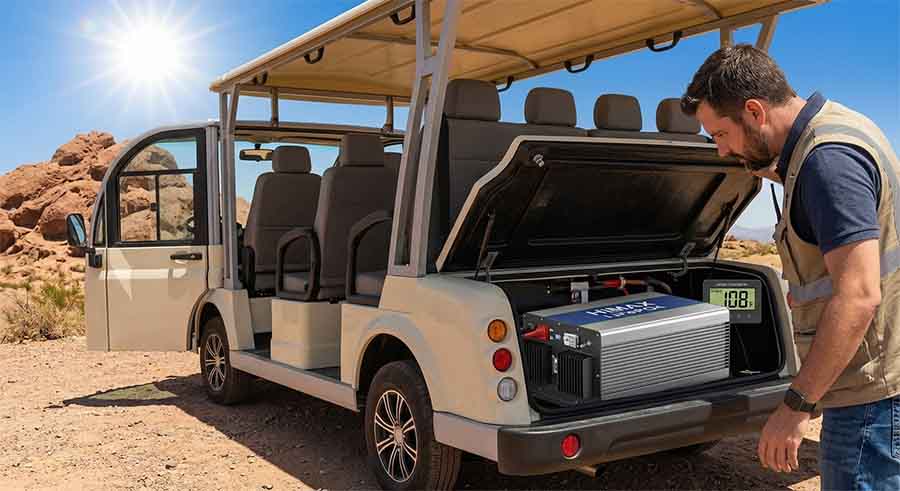
A desert sightseeing company operated electric shuttle vehicles in extremely hot outdoor conditions.
Operating Conditions
- Peak ambient temperature: 108°F (42°C)
- Daily travel distance: 45–60 miles
- Fast charging between shifts
Problems Encountered
- Battery compartment overheating
- Frequent shutdown protection events
- Reduced vehicle performance during afternoon hours
Solution
The company switched to custom HiMAX LiFePO4 battery systems with:
- Aluminum cooling structure
- High-temperature resistant cells
- Intelligent thermal monitoring
Results
- Stable operation during peak summer temperatures
- 25% reduction in fleet downtime
- Lower annual maintenance expenses
University Campus Shuttle System in Texas
A large university campus operated electric sightseeing vehicles for student transportation.
Fleet Specifications
- Vehicle voltage: 72V
- Battery capacity: 210Ah
- Daily operating hours: 12 hours
- Average speed: 15 mph
Summer Challenges
- Continuous stop-and-go operation generated excess heat
- Batteries degraded quickly during summer semesters
- High replacement costs impacted fleet budgets
HiMAX Recommendation
HiMAX engineers recommended:
- Opportunity charging during low-demand periods
- Smart chargers with temperature compensation
- LiFePO4 batteries with integrated cooling optimization
Outcome
The university reduced annual battery replacement costs by nearly 40%.
Why LiFePO4 Batteries Perform Better in Hot Weather
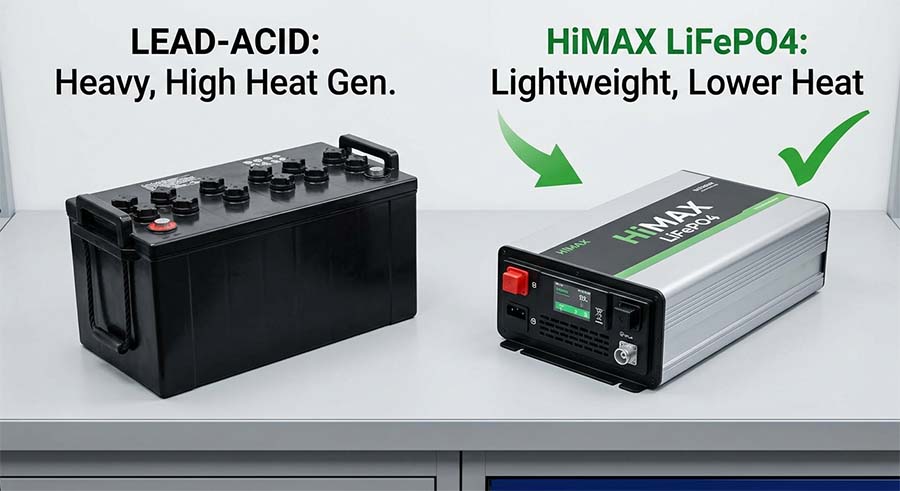
Compared with traditional lead-acid batteries, LiFePO4 batteries offer several advantages in high-temperature commercial environments.
- Lower Heat Generation
LiFePO4 batteries are more energy-efficient and generate less internal heat during operation.
- Faster Charging
Commercial operators can reduce charging downtime even during busy tourist seasons.
- Advanced Battery Management Systems
Modern LiFePO4 battery packs include intelligent BMS technology that can:
- Monitor cell temperature
- Prevent overcharging
- Balance voltage automatically
- Trigger thermal protection when necessary
- Longer Cycle Life
A high-quality LiFePO4 battery may last:
- 3–5 times longer than lead-acid batteries
- More than 4,000 charging cycles under proper conditions
This makes LiFePO4 technology ideal for high-usage sightseeing vehicle fleets.
Best Practices to Protect Your Batteries During Summer
- Avoid Charging Immediately After Operation
Hot batteries should cool down before charging begins.
Recommended cooldown time:
- 30–60 minutes after heavy use

- Park Vehicles in Shaded Areas
Direct sunlight dramatically increases battery compartment temperatures.
Covered parking structures can help reduce heat exposure.
- Improve Battery Ventilation
Proper airflow around the battery pack reduces heat accumulation.
- Use Smart Chargers
Temperature-compensated chargers help prevent overcharging in hot conditions.
- Monitor Battery Temperature Regularly
Fleet managers should track:
- Charging temperature
- Discharge temperature
- Peak operating temperature
Battery monitoring software can help detect issues early.
- Upgrade Aging Battery Systems
Older batteries are more vulnerable to heat-related performance decline.
Switching to newer LiFePO4 battery technology can improve efficiency and reliability.
How to Choose the Right Battery for Hot Climate Applications
Not all battery systems are designed for high-temperature environments.
When selecting batteries for electric sightseeing vehicles, commercial buyers should evaluate:
| Feature | Why It Matters |
| High-temperature resistance | Improves safety and stability |
| Smart BMS protection | Prevents overheating |
| Fast charging capability | Reduces downtime |
| Long cycle life | Lowers replacement costs |
| Waterproof and dustproof design | Supports outdoor operation |
| Custom voltage and capacity options | Matches fleet requirements |
Why More Fleet Operators Choose HiMAX Batteries
HiMAX is one of the world’s leading custom LiFePO4 battery manufacturers, providing advanced power solutions for commercial electric vehicles and industrial applications.
Our battery systems are widely used in:
- Electric sightseeing vehicles
- Golf carts
- Airport ground support equipment
- Electric utility vehicles
- Autonomous mobile platforms
- Outdoor tourism transportation systems
What Makes HiMAX Different?
- Advanced Thermal Protection
HiMAX batteries are engineered to operate reliably in high-temperature environments with intelligent heat management systems.
- Custom Battery Solutions
We provide:
- 24V / 36V / 48V / 72V battery systems
- Custom battery capacities
- CAN communication integration
- Waterproof IP-rated battery packs
- Long Cycle Life
HiMAX LiFePO4 batteries deliver:
- Up to 4,000+ cycles
- Lower maintenance costs
- Higher operational efficiency
- Professional Engineering Support
Our engineering team helps B2B customers optimize battery systems for:
- Fleet size
- Runtime requirements
- Charging infrastructure
- Environmental conditions
Find articles related to LiFePO4 Battery