Key Takeaways
Outdoor cameras need a reliable battery solution because they often work in changing weather, remote locations, and areas where wired power is difficult or expensive to install.
The right battery for an outdoor camera depends on several factors, including camera power consumption, recording frequency, Wi-Fi or cellular connection, weather conditions, installation location, expected runtime, and charging method.
Rechargeable LiFePO4 batteries are often a strong choice for outdoor security cameras because they offer high energy density, long cycle life, and better performance in compact designs.
Why Battery Choice Matters for Outdoor Cameras
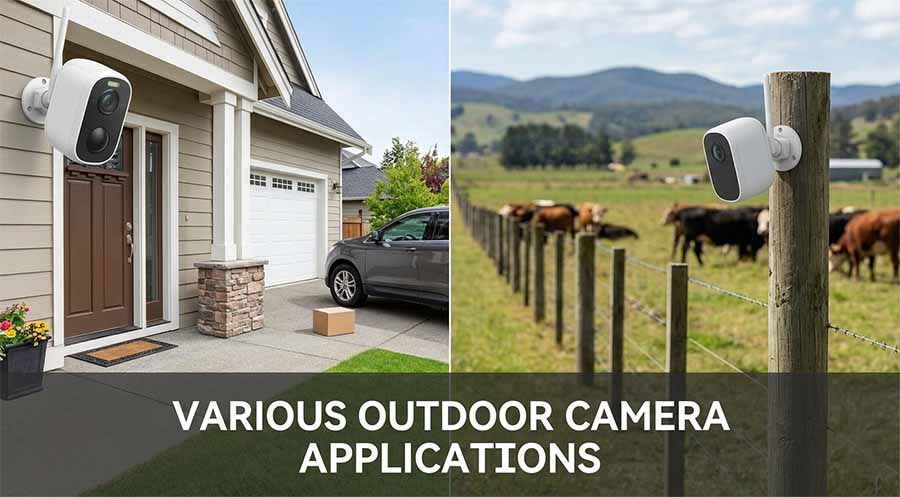
Outdoor cameras are often expected to work day and night, through heat, cold, rain, wind, and seasonal changes. Unlike indoor cameras, they are usually installed in places where power access is limited. Some are mounted on fences, garages, farms, driveways, construction sites, cabins, parking lots, or remote entrances. In these situations, the battery is not just an accessory. It directly affects whether the camera can record, send alerts, connect to the network, and protect the property.
A poor battery solution may lead to short runtime, frequent charging, unstable performance, missed recordings, or even complete power failure during critical moments. For homeowners, that can mean missing a package theft or suspicious activity. For businesses, it can mean gaps in surveillance coverage. For outdoor equipment brands, choosing the wrong battery can also increase customer complaints, returns, and after-sales costs.
That is why selecting the right battery solution for outdoor cameras requires more than simply checking the battery size. You need to understand how the camera will be used, where it will be installed, and what kind of power performance users expect.
Understand the Camera’s Power Consumption
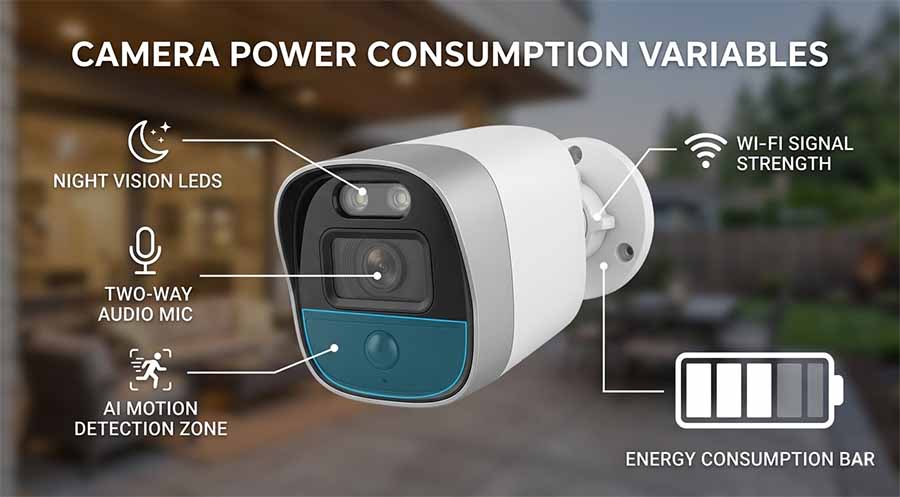
The first step is to understand how much power the outdoor camera uses. Different cameras consume different amounts of energy depending on their functions.
A basic motion-activated camera usually consumes less power than a 24/7 recording camera. A Wi-Fi camera may use less power than a cellular camera in some conditions, but weak Wi-Fi signals can also increase power demand because the device keeps trying to maintain a stable connection. Cameras with night vision, two-way audio, floodlights, sirens, AI detection, cloud upload, and high-resolution video usually require more battery capacity.
For example, a simple 1080p outdoor camera used mainly for motion detection may only need a moderate-capacity rechargeable battery. But a 4K camera with frequent recording, real-time alerts, and night vision may need a much higher-capacity LiFePO4 battery pack to maintain stable performance.
When choosing a battery solution, brands and product developers should calculate the average current draw, peak current draw, standby power consumption, and expected daily usage time. This helps determine the proper battery capacity and prevents underpowered designs.
Choose the Right Battery Chemistry
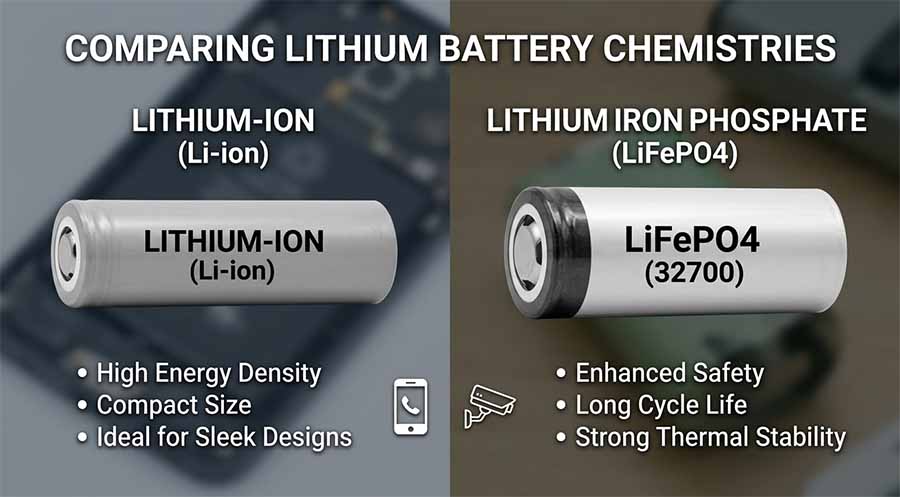
Battery chemistry plays a major role in performance. For outdoor cameras, lithium-based batteries are commonly used because they provide high energy density, lightweight design, and rechargeable convenience.
Lithium-ion batteries are widely used in smart cameras, home security devices, and connected electronics. They offer strong energy storage in a compact size, making them suitable for sleek camera designs.
Lithium polymer batteries are also popular when the product requires a thinner or more flexible battery shape. They can support custom battery pack designs and are often used in compact smart devices.
Lithium iron phosphate batteries may be considered for applications that need stronger thermal stability, longer cycle life, and enhanced safety, although they may have lower energy density compared with some lithium-ion options.
The right battery chemistry depends on the product’s size, target runtime, charging method, cost structure, and safety requirements.
Consider Outdoor Temperature Performance
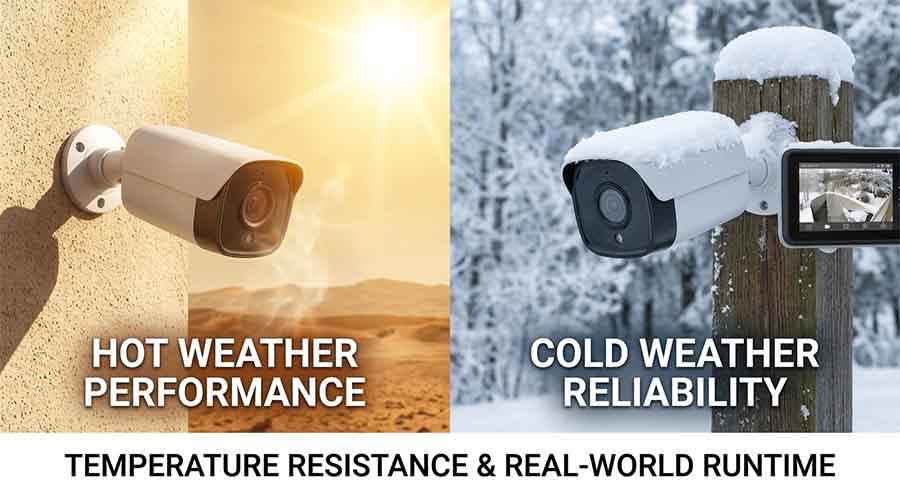
Outdoor cameras may face very different temperature conditions depending on location. A camera installed in Arizona may be exposed to intense summer heat, while a camera used in Minnesota may face freezing winter temperatures. Temperature can significantly affect battery performance.
In cold weather, batteries may lose available capacity, discharge more slowly, or shut down earlier than expected. In hot weather, long-term exposure to high temperatures can shorten battery life and affect safety. This is especially important for cameras mounted in direct sunlight or inside sealed housings.
For outdoor camera applications, the battery solution should be designed with suitable operating temperature ranges. Product teams should also consider thermal protection, battery management systems, enclosure ventilation, and placement recommendations.
A good outdoor camera battery should not only work in ideal lab conditions. It should perform reliably in real outdoor environments.
Match Battery Capacity to Real-World Runtime
Battery capacity is usually measured in milliamp-hours, or mAh, and watt-hours, or Wh. A higher capacity generally means longer runtime, but the actual result depends on how much power the camera uses.
For example, a 10,000mAh battery may last a long time in a low-power camera that only records motion events. However, the same battery may drain much faster in a camera that records continuously, uses cellular data, and runs infrared night vision every night.
When planning a battery solution, it is important to define the expected runtime clearly. Should the camera run for one week, one month, three months, or longer between charges? Will users accept frequent charging, or do they expect a low-maintenance device?
For consumer outdoor security cameras, many users prefer a battery that can last several weeks or months depending on activity level. For commercial or remote monitoring cameras, longer runtime may be more important because battery replacement or recharging can be inconvenient.
Think About Charging Options
Charging convenience is another key factor. Outdoor cameras may use removable rechargeable batteries, built-in rechargeable battery packs, USB-C charging, solar charging, or hybrid systems.
A removable battery is convenient because users can swap it without taking down the entire camera. This is useful for cameras mounted high on a wall or in hard-to-reach areas.
A built-in rechargeable battery can make the product design cleaner and more sealed against water and dust. However, users may need to remove the whole camera for charging unless the camera supports external charging.
Solar charging is an increasingly popular option for outdoor cameras. A solar panel can help extend battery life and reduce charging frequency. However, solar performance depends on sunlight exposure, installation angle, weather, and regional conditions. A solar-assisted camera still needs a reliable battery because the camera must continue working at night and during cloudy days.
For best results, the battery and charging system should be designed together rather than treated as separate components.
Pay Attention to Battery Safety
Battery safety is critical for outdoor camera applications. Since outdoor cameras may be exposed to heat, moisture, vibration, and long-term charging cycles, the battery pack should include proper protection features.
Important safety considerations include overcharge protection, over-discharge protection, short-circuit protection, over-current protection, temperature protection, and reliable battery cell selection.
A battery management system, often called BMS, helps monitor and protect the battery during charging and discharging. For smart outdoor cameras, this is especially important because the device may stay powered for long periods without user supervision.
Brands should work with experienced battery manufacturers to ensure the battery pack is designed according to the product’s real usage environment and safety requirements.
Consider Weather Resistance and Mechanical Design
The battery itself must work together with the camera’s outdoor housing. Even a high-quality battery can fail if the enclosure allows water, dust, or condensation to affect the internal components.
Outdoor cameras often require sealed structures, protective gaskets, stable connectors, and moisture-resistant design. If the battery is removable, the battery compartment must be especially well-designed to prevent water ingress.
The mechanical design should also reduce vibration risk and ensure stable contact between the battery and camera. This is important for cameras installed on gates, poles, trailers, farms, or construction equipment.
A reliable battery solution is not only about the cell. It also includes pack structure, wiring, connectors, protection circuit, and integration with the device.
Customer Use Cases
Scenario 1: Suburban Home Security in California
A homeowner in San Diego installs two outdoor cameras near the front door and driveway. The cameras are connected to Wi-Fi, record mainly when motion is detected, and send alerts to a mobile app.
Recommended battery solution: A rechargeable LiFePO4 battery pack with medium-to-high capacity, stable Wi-Fi standby performance, and USB-C charging.
Why it works: The weather is generally mild, but the cameras may receive strong sunlight. A reliable LiFePO4 battery with good heat tolerance and protection features can support daily home security use while keeping maintenance simple.
Scenario 2: Cold-Weather Camera Use in Minnesota
A family in Minneapolis installs outdoor cameras around a detached garage. Winter temperatures can drop well below freezing, and the cameras need to keep working during snow and low-light conditions.
Recommended battery solution: A cold-resistant LiFePO4 battery solution with strong low-temperature discharge performance and battery protection management.
Why it works: Cold weather can reduce battery capacity. A battery designed for wider temperature performance helps reduce shutdown risk and improves winter reliability.
Scenario 3: Remote Cabin Monitoring in Colorado
A cabin owner near the Rocky Mountains uses cellular outdoor cameras to monitor the property when no one is there. The camera records wildlife movement, driveway activity, and weather-related events.
Recommended battery solution: A high-capacity LiFePO4 battery pack paired with solar charging support.
Why it works: The location is remote, and frequent charging is inconvenient. A larger battery with solar assistance can extend runtime and reduce maintenance visits.
Scenario 4: Construction Site Security in Texas
A contractor in Dallas uses outdoor cameras to monitor tools, materials, and equipment after work hours. The cameras may record more frequently due to workers, vehicles, and motion around the site.
Recommended battery solution: A rugged high-capacity rechargeable battery pack with strong safety protection, durable connectors, and stable peak current output.
Why it works: Construction sites often create higher recording activity and harsher physical conditions. A stronger battery pack helps support frequent alerts, night vision, and reliable operation.
Scenario 5: Farm and Ranch Monitoring in Montana
A ranch owner installs cameras near gates, barns, and livestock areas. Some cameras are far from wired power and may rely on cellular connection.
Recommended battery solution: A long-runtime LiFePO4 battery system with optional solar panel compatibility and durable outdoor housing integration.
Why it works: Rural installations require longer battery life and dependable power. Solar charging can help, but the core battery must still support nighttime use and cloudy weather.
How Brands Should Evaluate Battery Suppliers
For outdoor camera brands, choosing the right battery supplier is just as important as choosing the right battery type. A professional battery manufacturer should be able to support product design, battery pack customization, safety testing, technical documentation, and stable production quality.
When evaluating a supplier, consider whether they can provide custom capacity options, cell selection guidance, battery management system design, certification support, sample testing, and consistent manufacturing standards.
A good supplier should understand that outdoor camera batteries are not one-size-fits-all. A smart doorbell camera, solar security camera, trail camera, cellular camera, and commercial surveillance device may all need different battery designs.
About HiMAX Battery
HiMAX is one of the world’s leading battery manufacturers, providing reliable and efficient battery solutions for outdoor cameras, security devices, smart home products, consumer electronics, medical devices, industrial equipment, and custom power applications. With strong engineering capabilities, advanced production standards, and experience in customized LiFePO4 battery solutions, HiMAX helps brands build products that require stable performance, long runtime, and dependable safety.
Find articles related to LiFePO4 Battery