How to Choose the Right Battery Solution for Electric Forklifts
Key Takeaways
- Choosing the right forklift battery directly impacts uptime, productivity, and total cost of ownership (TCO).
- The two most common options—lead-acid and LiFePO4—serve different operational needs.
- Key factors include shift patterns, charging infrastructure, maintenance capacity, and budget.
- LiFePO4 batteries offer fast charging, zero maintenance, and higher efficiency, while lead-acid remains cost-effective upfront.
- Real-world application scenarios and performance parameters should guide your decision—not just price.
Why Battery Selection Matters for Electric Forklifts
Electric forklifts are widely used across warehouses, manufacturing facilities, ports, and distribution centers throughout the United States. Unlike internal combustion forklifts, their performance depends almost entirely on the battery system. A poorly chosen battery can lead to frequent downtime, higher operational costs, and reduced productivity.
For businesses, the goal is not just to power equipment—but to optimize efficiency, reduce lifecycle costs, and ensure operational continuity.
Understanding Your Battery Options
- Lead-Acid Batteries
Lead-acid batteries have been the traditional choice for decades.
Advantages:
- Lower upfront cost
- Proven and widely available technology
- Suitable for single-shift operations
Limitations:
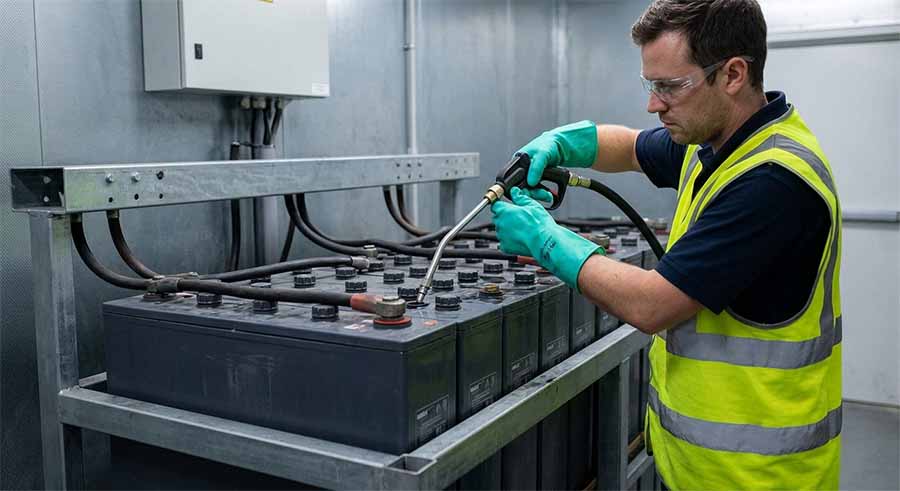
- Requires regular watering and maintenance
- Long charging time (8–10 hours + cooling time)
- Shorter lifespan compared to LiFePO4
- Needs dedicated charging rooms and ventilation
- LiFePO4 Batteries
LiFePO4 batteries are becoming increasingly popular in modern material handling operations.
Advantages:
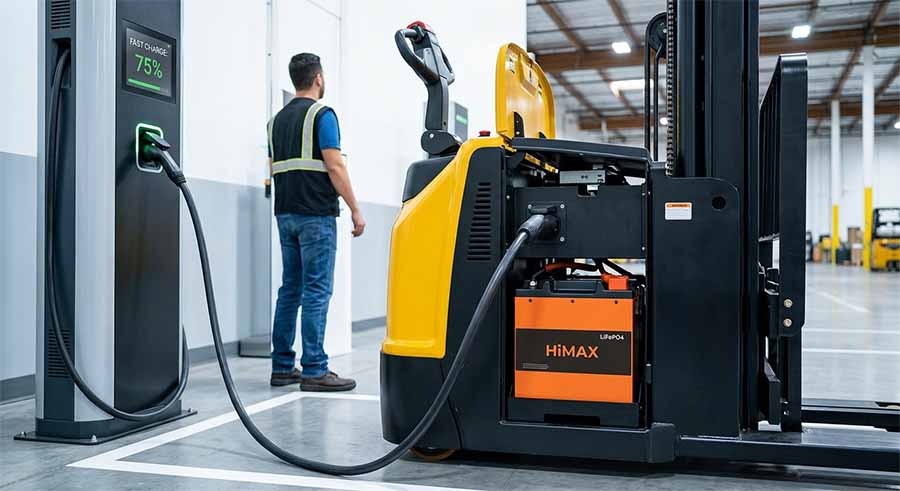
- Opportunity charging (can charge during breaks)
- Fast charging (1–3 hours)
- Maintenance-free
- Longer lifespan (2–4x lead-acid)
- Higher energy efficiency (up to 95%)
Limitations:
- Higher initial investment
- Requires compatible chargers and systems
Key Factors to Consider When Choosing a Forklift Battery
- Operational Intensity (Shift Patterns)
Your daily usage is one of the most critical factors.
- Single shift (8 hours):Lead-acid may be sufficient
- Multi-shift (16–24 hours):LiFePO4 is often more cost-effective due to reduced downtime
- Charging Infrastructure
Evaluate your facility:
- Do you have space for a battery room?
- Can you support ventilation and maintenance?
- Do you need flexible charging across the warehouse?
LiFePO4 systems eliminate the need for battery swapping and dedicated charging rooms.
- Total Cost of Ownership (TCO)
While LiFePO4 batteries have a higher upfront cost, they often deliver lower TCO due to:
- Reduced labor (no maintenance)
- Lower energy consumption
- Longer lifespan
- No need for replacement batteries
- Environmental and Safety Considerations
- Lead-acid batteries produce gas and require ventilation
- LiFePO4 batteries are sealed and cleaner
- OSHA compliance and workplace safety are important for U.S. operations
Application Scenarios
Case 1: E-commerce Warehouse (California)
- Fleet size:25 electric forklifts
- Operation:2 shifts (16 hours/day)
- Battery type used:LiFePO4 (48V 600Ah)
- Charging method:Opportunity charging during 30-minute breaks
Results:
- Increased uptime by 18%
- Eliminated battery swapping labor
- Reduced energy costs by ~12% annually
Why LiFePO4 worked: High utilization and need for continuous operation made fast charging essential.
Case 2: Manufacturing Facility (Ohio)
- Fleet size:10 forklifts
- Operation:Single shift (8 hours/day)
- Battery type used:Lead-acid (36V 750Ah)
- Charging method:Overnight charging
Results:
- Lower upfront investment
- Stable performance for moderate usage
Why lead-acid worked: Lower intensity operation didn’t justify higher LiFePO4 costs.
Case 3: Cold Storage Warehouse (Texas)
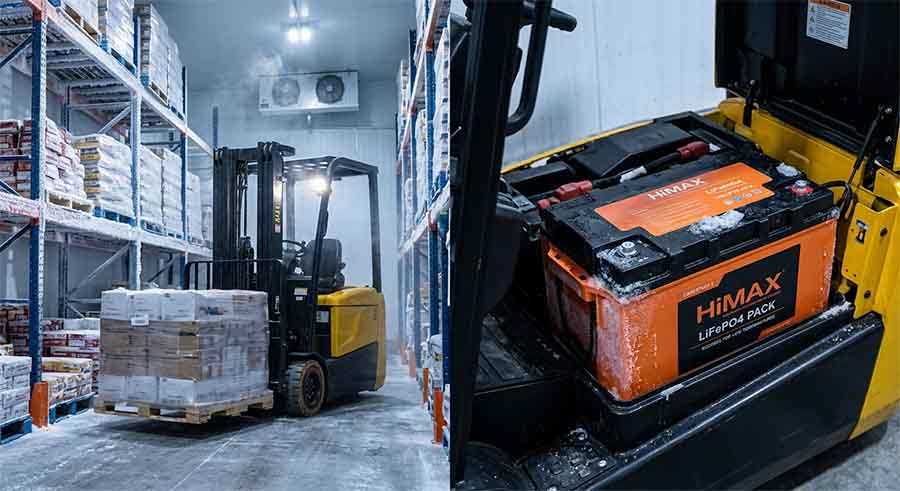
- Temperature:-4°F (-20°C)
- Fleet size:15 forklifts
- Battery type used:LiFePO4 with thermal management system (80V 400Ah)
Results:
- Consistent performance in low temperatures
- No voltage drop compared to lead-acid
- Reduced downtime
Key insight: LiFePO4 performs better in extreme environments when properly designed.
Comparing Lead-Acid vs LiFePO4 at a Glance
| Feature | Lead-Acid Battery | Lithium-Ion Battery |
| Initial Cost | Lower | Higher |
| Maintenance | High | None |
| Charging Time | 8–10 hours | 1–3 hours |
| Lifespan | 1,200–1,500 cycles | 3,000+ cycles |
| Efficiency | ~70–80% | ~90–95% |
| Best Use Case | Light duty | High utilization |
Overview
To choose the right battery solution, ask yourself:
- How many hours per day are forklifts in use?
- Is downtime costing your business money?
- Do you have the labor and space for battery maintenance?
- Are you planning to scale operations in the next 3–5 years?
If your answer leans toward high utilization, scalability, and efficiency—LiFePO4 is likely the better choice.
If budget constraints and low usage dominate—lead-acid remains viable.
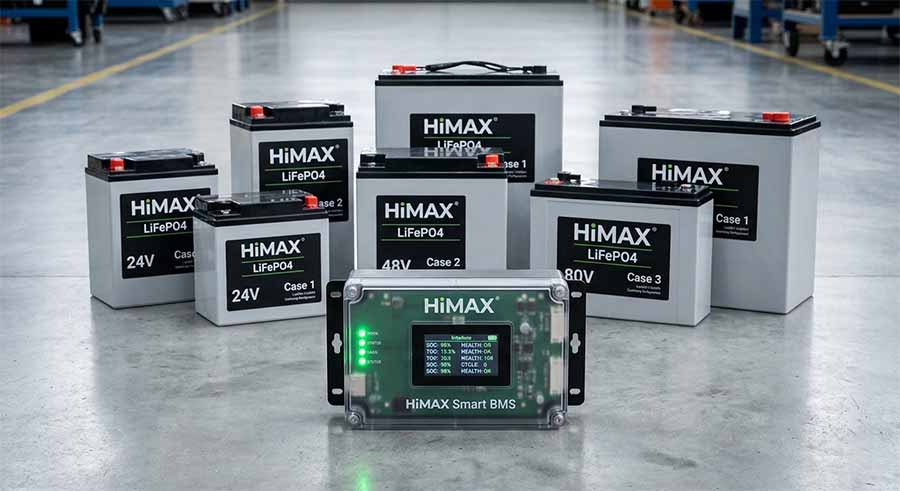
At HiMAX, we specialize in delivering high-performance battery solutions tailored for demanding industrial applications. As one of the world’s leading battery manufacturers, we understand the real challenges faced by B2B customers in logistics, warehousing, and manufacturing.
Our forklift battery solutions offer:
- Advanced LiFePO4 technology with high energy density
- Smart Battery Management Systems (BMS) for safety and performance
- Fast charging capabilities to maximize uptime
- Customizable configurations (24V, 36V, 48V, 80V systems)
- Reliable performance in extreme environments
Find articles related to LiFePO4 Battery