Key Takeaways
- Choosing the right battery for electric patrol vehicles directly impacts range, safety, uptime, and long-term cost.
- Lithium-ion batteries—especially LiFePO4—are becoming the preferred choice over lead-acid due to longer lifespan and faster charging.
- Key factors to evaluate include capacity (Ah), voltage (V), cycle life, charging speed, operating temperature, and safety certifications.
- Real-world use cases in the U.S. show that selecting the wrong battery can significantly reduce efficiency and increase maintenance costs.
- A tailored battery solution based on patrol environment (campus, city, industrial, or gated community) ensures optimal performance.
Introduce
Electric patrol vehicles are widely used across the United States in environments such as university campuses, gated communities, airports, industrial parks, and city security fleets. While these vehicles offer eco-friendly and cost-efficient transportation, their performance heavily depends on one critical component: the battery.
Choosing the right battery solution is not just about power—it’s about reliability, safety, cost efficiency, and long-term performance. In this guide, we’ll break down everything you need to know to make an informed decision.
Key Factors to Consider When Choosing a Battery
- Battery Type: Lead-Acid vs Lithium-Ion
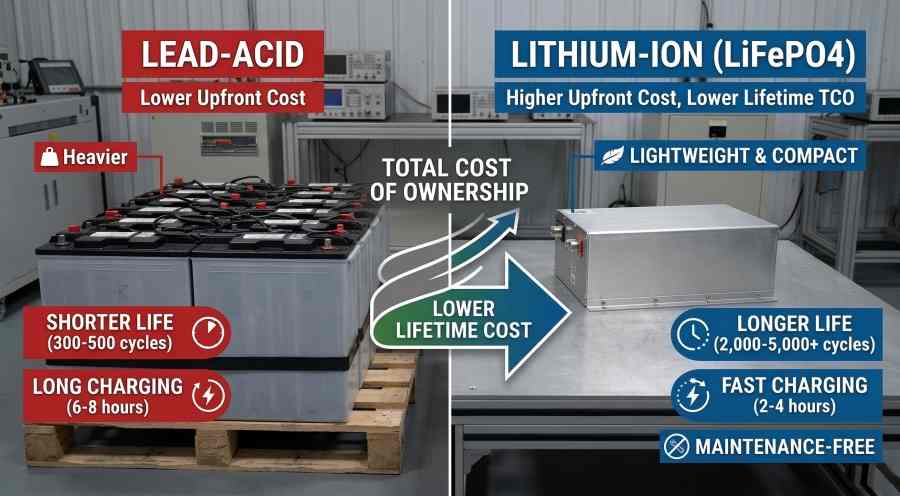
The first decision is choosing between traditional lead-acid batteries and modern lithium-ion batteries.
- Lead-Acid Batteries
- Lower upfront cost
- Heavier weight
- Shorter lifespan (300–500 cycles)
- Longer charging time
- Lithium-Ion Batteries (LiFePO4 Batteries)
- Higher upfront cost but lower lifetime cost
- Lightweight and compact
- Longer lifespan (2,000–5,000 cycles)
- Faster charging (2–4 hours)
- Maintenance-free
In the U.S. market, LiFePO4 batteries are quickly becoming the standard for electric patrol fleets.
- Capacity and Range (Ah & Miles)
Battery capacity determines how far a patrol vehicle can travel on a single charge.
- Typical patrol vehicle battery: 48V 100Ah–200Ah
- Estimated range: 40–80 miles per charge, depending on terrain and load
U.S. Use Case Example:
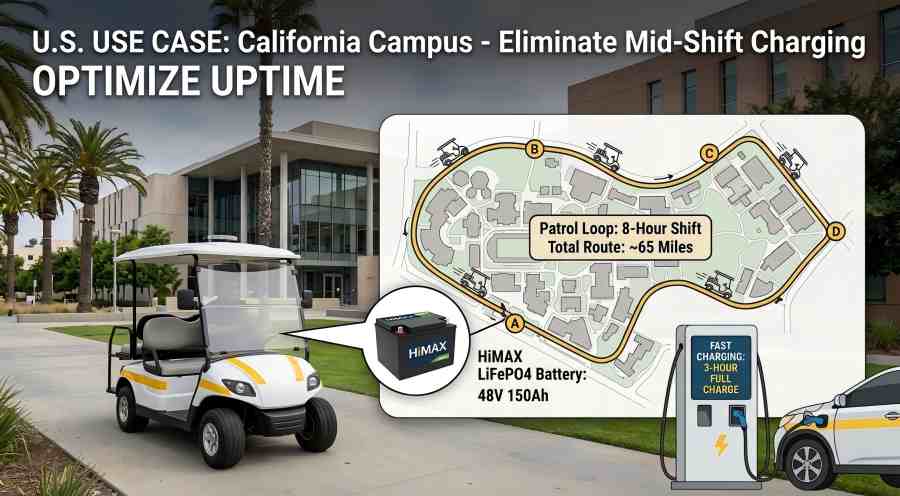
A security company in Los Angeles, CA operates patrol vehicles across a 5-mile campus loop, running 8-hour shifts. They selected a 48V 150Ah LiFePO4 battery, achieving ~65 miles per charge, eliminating mid-shift charging.
- Charging Time and Infrastructure
Fast charging is essential for high-frequency operations.
- Lead-acid: 6–8 hours
- Lithium-ion: 2–4 hours
Use Case:
A gated community in Miami, FL requires continuous patrol coverage across three shifts. By upgrading to lithium batteries with 3-hour fast charging, they reduced downtime by 40%.
- Cycle Life and Total Cost of Ownership
Cycle life determines how many times a battery can be charged and discharged.
- Lead-acid: ~400 cycles
- Lithium-ion: 2,000+ cycles
Although lithium batteries cost more upfront, they last 4–6 times longer, significantly reducing replacement costs.
Use Case:
A municipal fleet in Dallas, TX replaced lead-acid batteries every 12–18 months. After switching to lithium, replacement intervals extended to 5+ years, saving over $2,000 per vehicle.
- Safety and Certifications
Safety is critical for patrol operations.
Look for batteries with:
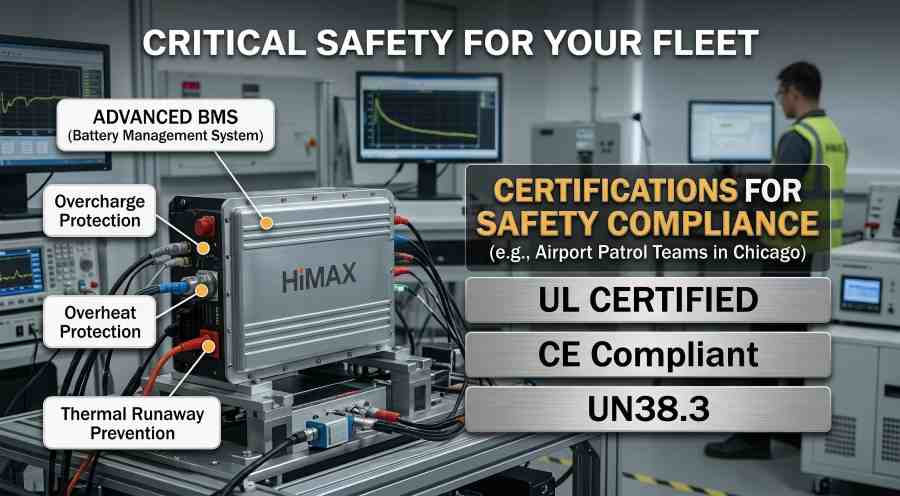
- Battery Management System (BMS)
- Overcharge/overheat protection
- Certifications such as UL, CE, or UN38.3
Use Case:
An airport patrol team in Chicago, IL required UL-certified batteries due to strict safety regulations. Lithium batteries with advanced BMS ensured compliance and operational safety.
- Operating Temperature Performance
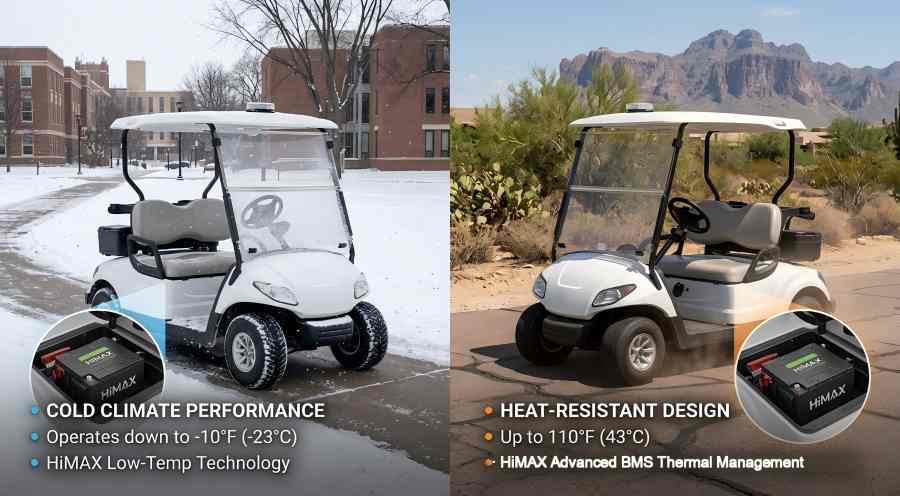
Electric patrol vehicles operate in diverse climates across the U.S.
- Cold climates (e.g., Minnesota): need low-temperature performance
- Hot climates (e.g., Arizona): need heat-resistant batteries
Use Case:
A security fleet in Phoenix, AZ faced battery degradation due to extreme heat (100°F+). Switching to high-temperature-resistant lithium batteries improved lifespan by 30%.
- Weight and Vehicle Efficiency
Battery weight directly affects vehicle efficiency.
- Lead-acid batteries are significantly heavier
- Lithium batteries reduce total vehicle weight, improving speed and range
Matching Battery Solutions to Patrol Scenarios
Different environments require different battery configurations:
Campus Patrol (Low Speed, Long Duration)
- Recommended: 48V 120–150Ah lithium battery
- Priority: long runtime, moderate speed
Urban Security Patrol (Frequent Stops)
- Recommended: 48V 150–200Ah lithium battery
- Priority: fast charging, high cycle life
Industrial Park Patrol (Heavy Load)
- Recommended: High-capacity lithium battery with reinforced BMS
- Priority: durability and stability
Residential/Gated Community Patrol
- Recommended: Cost-effective lithium battery
- Priority: low maintenance, reliability
Common Mistakes to Avoid
- Choosing based only on upfront cost
- Ignoring climate conditions
- Overlooking safety certifications
- Undersizing battery capacity
- Not planning for future fleet expansion
Overview
Selecting the right battery solution for electric patrol vehicles is a strategic decision that impacts performance, safety, and cost efficiency. As lithium-ion technology continues to evolve, it is becoming the go-to choice for modern patrol fleets across the United States.
By carefully evaluating your operational needs—such as range, charging time, and environment—you can ensure your fleet operates smoothly and efficiently for years to come.
About HiMAX Battery
HiMAX is one of the world’s leading battery manufacturers, specializing in high-performance lithium battery solutions for electric vehicles and industrial applications.
We provide customized battery systems designed for durability, safety, and efficiency—supporting a wide range of patrol and utility vehicle needs. With advanced Battery Management Systems (BMS), strict quality control, and global certifications, HiMAX ensures reliable power in every environment.
Whether you are upgrading an existing fleet or building a new one, HiMAX offers scalable solutions tailored to your requirements—helping you achieve better performance, lower costs, and long-term reliability.
Find articles related to LiFePO4 Battery