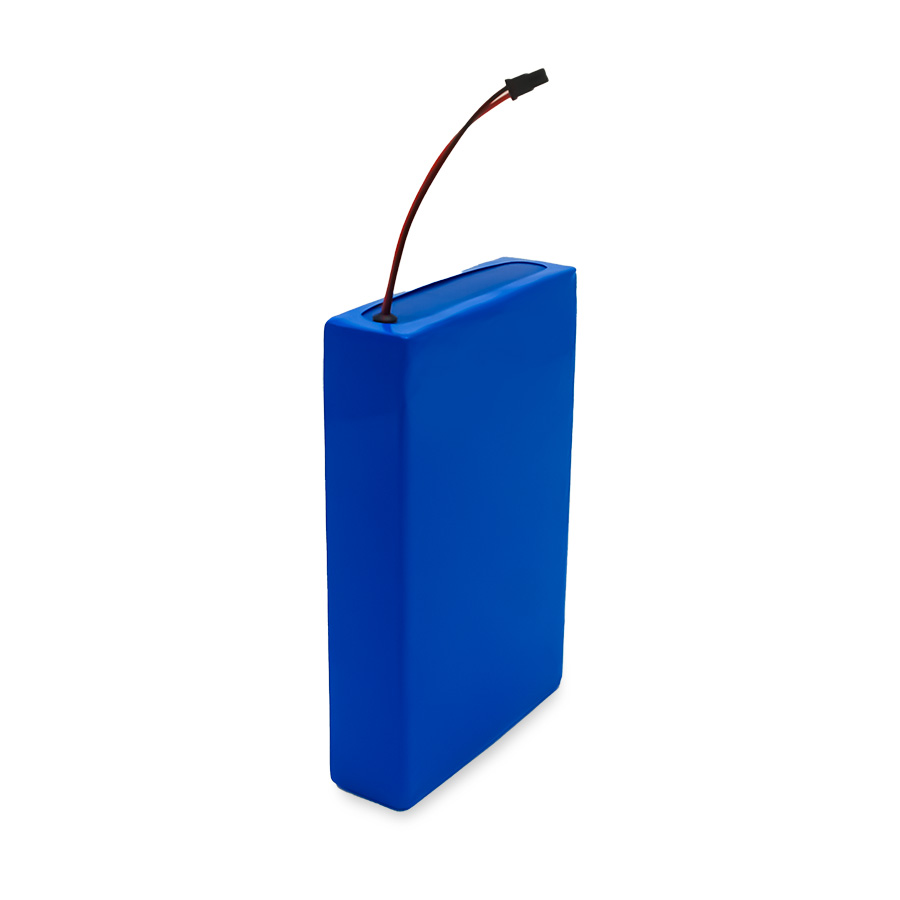
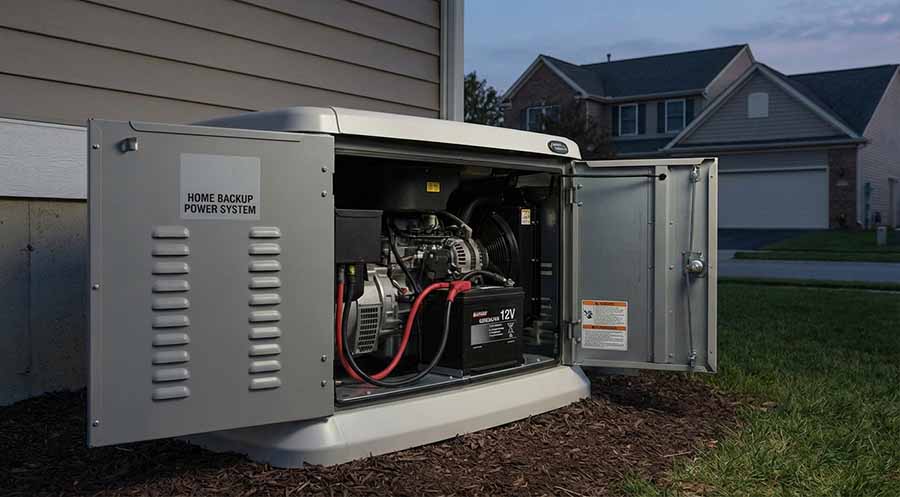
A home backup generator is only as reliable as the battery that powers it. When a power outage happens, the generator battery is responsible for starting the system and keeping critical components running. Choosing the right battery is not just a technical decision. It directly affects reliability, safety, and long-term cost.
This guide explains how to select the best battery for your home backup generator. Whether you are replacing an old battery or planning a new installation, this article will help you make a confident decision.
Why the Generator Battery Matters in Home Backup Systems
Many homeowners focus on generator size or fuel type. They often overlook the battery. This is a mistake. The generator battery is the first component that works when the grid goes down.
A weak or incompatible battery can cause:
- Failure to start during an outage
- Delayed power restoration
- Increased wear on the generator motor
- Unexpected maintenance costs
The battery supplies initial power to the starter motor, control board, and monitoring systems. Without a reliable backup power battery, even the most advanced generator cannot function.
Understanding How Home Backup Generator Batteries Work
A home backup generator battery stores electrical energy and releases it instantly when needed. Unlike automotive batteries, many generator systems rely on deep cycle generator batteries or high-reserve starting batteries.
The battery performs three main tasks:
- Starts the generator engine
- Stabilizes voltage for control electronics
- Supports automatic transfer switch operation
Because of these roles, the generator battery system must be durable, stable, and matched to the generator’s design.
Common Types of Generator Batteries for Home Use
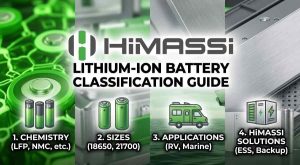
Choosing the right type is the first major decision. Each battery chemistry has strengths and limitations.
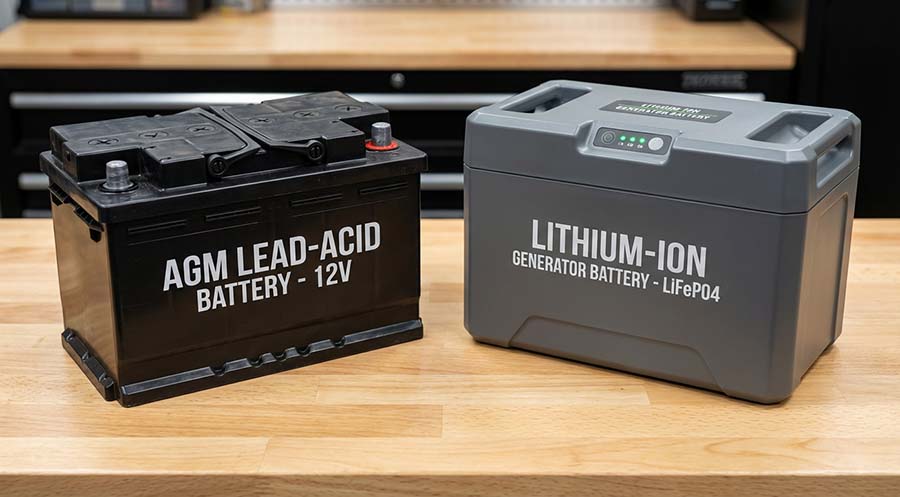
Lead-acid batteries are the most common choice for home generators. They are affordable and widely available.
There are two main subtypes:
- Flooded lead-acid batteries
- Sealed AGM generator batteries
Flooded batteries require regular maintenance. AGM batteries are sealed and maintenance-free. Many homeowners prefer AGM because they are safer and easier to manage.
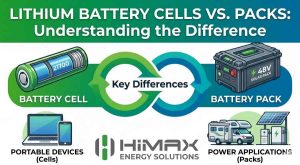
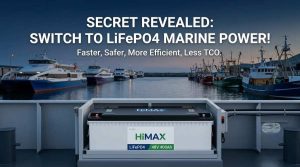
Lithium batteries are becoming more popular. A lithium generator battery(lithium-ion battery) offers higher energy density, faster charging, and longer lifespan.
Advantages include:
- Lower weight
- Longer cycle life
- Better performance in partial charge states
The higher upfront cost is the main drawback. However, for long-term reliability, lithium options can be cost-effective.
Battery Voltage Requirements for Home Backup Generators
Most residential generators use either:
- 12V generator batteries
- 24V generator battery systems
The correct voltage depends on the generator model. Using the wrong voltage can damage the starter motor or control panel.
Always check the manufacturer’s specifications. Never assume compatibility based on size alone. Voltage is a critical parameter in generator battery selection.
Cold Cranking Amps and Starting Performance
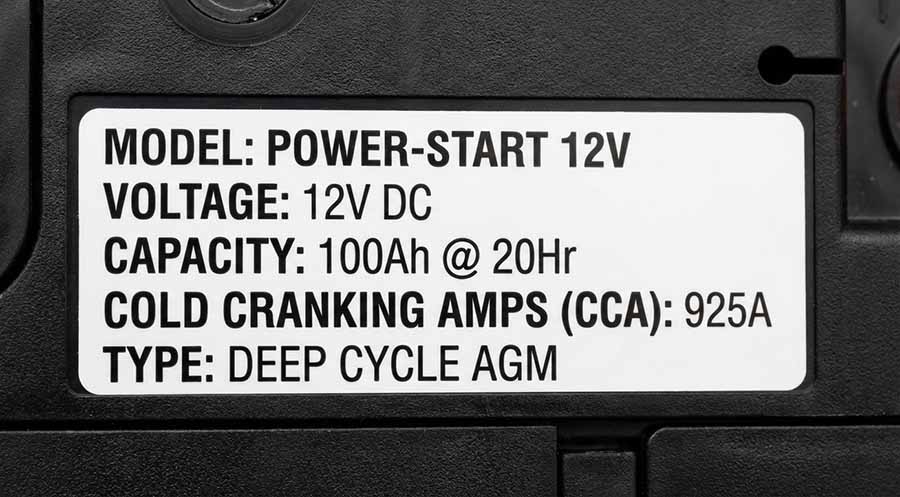
Cold Cranking Amps, or CCA, measure how well a battery can start an engine in cold conditions. For home generators, this rating is extremely important.
A higher CCA means:
- Faster engine startup
- Better performance in winter
- Reduced stress on electrical components
When selecting a generator starting battery, choose a CCA rating that meets or exceeds the generator manufacturer’s recommendation.
Battery Capacity and Runtime Considerations
Battery capacity is measured in amp-hours (Ah). It defines how long the battery can supply power.
For home backup systems, capacity affects:
- Control system stability
- Monitoring system uptime
- Automatic self-test reliability
A battery with insufficient capacity may start the generator but fail during extended standby periods. Always match capacity to system demands when choosing a home generator battery.
Environmental Factors That Affect Generator Battery Life
The environment plays a major role in battery performance. Heat, cold, and humidity all affect lifespan.
Key considerations include:
- Installation location
- Ventilation quality
- Exposure to moisture
Extreme temperatures shorten battery life. AGM and lithium batteries usually handle temperature variation better than flooded lead-acid types.
Protecting your generator battery from harsh conditions improves reliability and reduces replacement frequency.
Maintenance Requirements for Different Battery Types
Maintenance varies by battery chemistry.
Flooded lead-acid batteries require:
- Regular electrolyte level checks
- Terminal cleaning
- Ventilation monitoring
AGM and lithium batteries are mostly maintenance-free. This makes them ideal for homeowners who want a low-effort backup generator battery solution.
Understanding maintenance needs helps you choose a battery that fits your lifestyle.
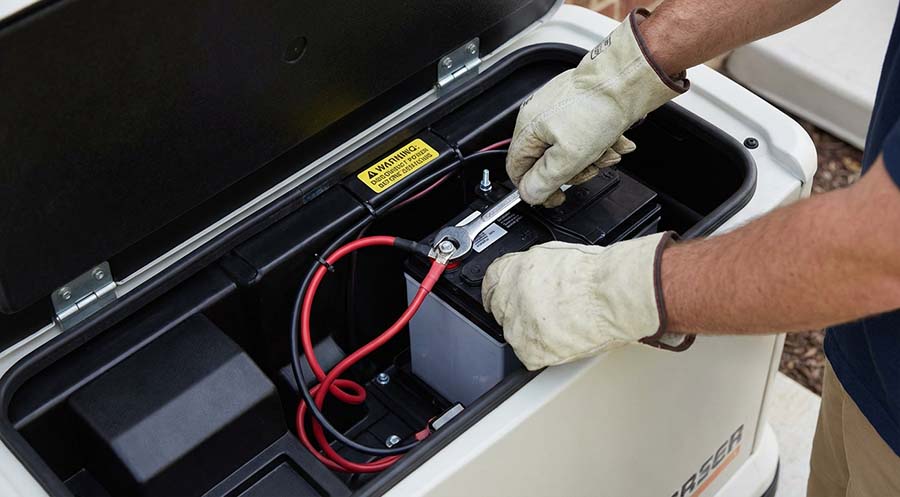
Safety and Compliance Considerations
Safety should never be ignored. A poorly selected or installed battery can cause:
- Electrical shorts
- Gas buildup
- Fire hazards
Always ensure:
- Proper battery enclosure
- Correct cable sizing
- Compliance with local electrical codes
Using certified generator battery products reduces risk and improves long-term safety.
Replacement Cycles and Total Cost of Ownership
Battery lifespan varies by type:
- Flooded lead-acid: 3–5 years
- AGM batteries: 4–6 years
- Lithium batteries: 8–10 years
While lithium batteries cost more upfront, they often provide lower total ownership cost. Fewer replacements mean less downtime and fewer service calls.
A smart generator battery investment balances initial price with long-term value.
How to Choose the Right Generator Battery for Your Home
To summarize, consider these factors:
- Battery type and chemistry
- Voltage and capacity requirements
- Cold cranking performance
- Environmental durability
- Maintenance expectations
- Safety and compliance
Evaluating these points ensures you choose a reliable generator battery system that performs when you need it most.
HiMAX Generator Battery Solutions
HiMAX specializes in high-performance generator battery solutions designed for residential backup power systems. HiMAX batteries deliver strong starting power, stable voltage output, and long service life. Each HiMAX backup generator battery is engineered with strict quality control and advanced materials to ensure reliable performance during power outages. Whether you need a durable AGM option or a modern lithium solution, HiMAX provides dependable generator batteries that help keep your home powered, safe, and prepared.