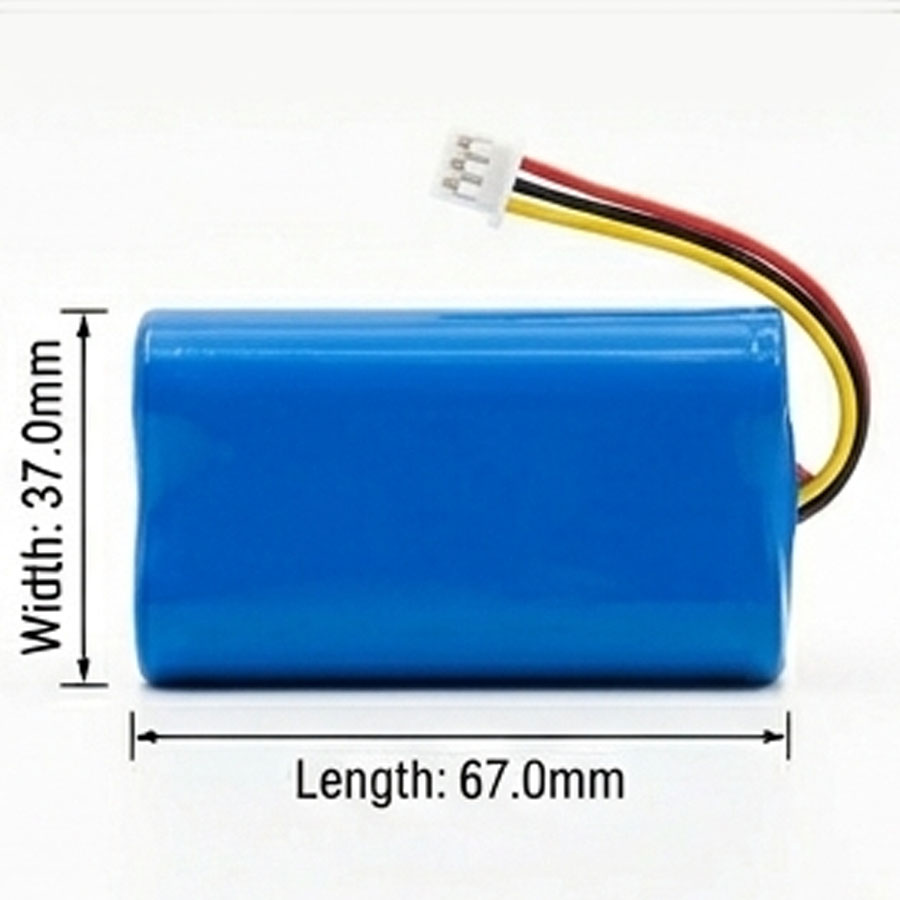
Key Takeaways
- Storm season can knock out power for hours or even days, so the batteries behind your emergency gear matter just as much as the gear itself.
- For home storm preparation, focus on four essential categories: lighting, communication, smoke detection, and sump pump backup.
- Choose batteries based on runtime, discharge rate, storage life, rechargeability, temperature tolerance, and safety. Lithium-ion battery packs are ideal for rechargeable lighting, radios, portable power stations, and backup systems, while alkaline or lithium primary batteries can be useful for low-drain devices that sit unused for long periods. For sump pumps, battery capacity and surge power are especially important because the system may need to operate repeatedly during heavy rainfall.
- A smart emergency battery plan helps keep your home safer, more connected, and more functional when the grid goes down.
Why Batteries Matter During Storm Emergencies
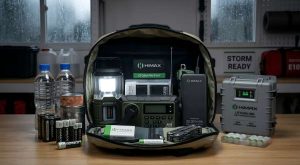
When a major storm hits, power loss is often one of the first problems families face. Heavy rain, high winds, flooding, fallen trees, and damaged utility lines can interrupt electricity across neighborhoods. During that time, battery-powered emergency gear becomes your first layer of protection.
A flashlight without working batteries is just a piece of plastic. A weather radio with weak batteries may fail before the storm warning arrives. A smoke detector with an expired battery can leave your family exposed to fire risk during a blackout. A sump pump without backup power may stop working exactly when the basement needs it most.
That is why storm preparation should not only include emergency devices. It should also include a clear battery strategy. You need to know which battery type fits each device, how much runtime you need, how often batteries should be checked, and whether rechargeable battery packs make more sense than disposable batteries.
This guide explains how to choose batteries for four critical storm emergency gear categories: lighting, communication, smoke detection, and sump pump systems.
- Emergency Lighting: Flashlights, Lanterns, Headlamps, and Work Lights
Lighting is one of the most important parts of storm readiness. When the power goes out at night, safe movement inside the home depends on reliable battery-powered lighting.
For emergency lighting, consider three factors: brightness, runtime, and battery availability.
A small flashlight may only need AA or AAA batteries, but a high-output LED lantern or rechargeable work light may require a lithium-ion battery pack. For household use, LED devices are preferred because they consume less power and provide longer runtime compared with older incandescent lights.
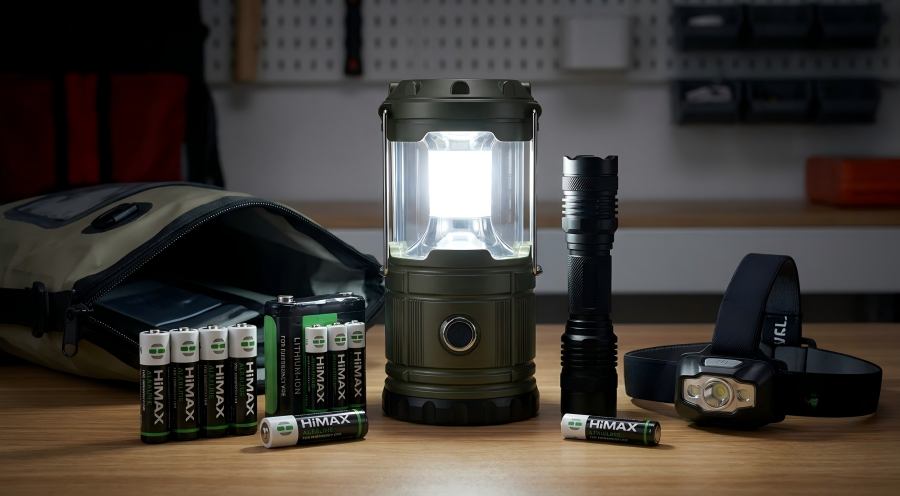
For a basic storm kit, a family should have multiple lighting options:
One compact flashlight for each person
One larger lantern for shared room lighting
One headlamp for hands-free tasks
One rechargeable work light for garage, basement, or outdoor use
Battery Tips for Emergency Lighting
For low-power flashlights, alkaline AA or AAA batteries are widely available and affordable. However, they can leak if stored for too long. Lithium primary AA batteries offer longer shelf life and better performance in cold conditions.
For rechargeable lanterns and work lights, lithium-ion battery packs are a strong option because they provide higher energy density, lighter weight, and stable output. A 10,000mAh to 20,000mAh rechargeable battery bank can also help recharge USB flashlights and small lanterns during an outage.
Example Scenario: Suburban Family Power Outage
A family in Ohio prepares for spring thunderstorms and possible 24-hour outages. Their emergency lighting setup includes:
4 LED flashlights using AA batteries
2 rechargeable LED lanterns, each with a 5,000mAh internal lithium-ion battery
1 USB-C headlamp with a 1,200mAh battery
1 20,000mAh portable power bank
If each flashlight is used for 2 hours per night, the AA batteries may last several nights depending on brightness mode. The lanterns can provide shared room lighting for 6 to 12 hours each on medium mode. The power bank can recharge the headlamp several times and support small USB devices. This setup gives the household layered lighting instead of relying on a single device.
- Communication Gear: Weather Radios, Phones, Walkie-Talkies, and Power Banks
During a storm, communication can become more important than convenience. You may need weather alerts, evacuation updates, emergency calls, or contact with family members.
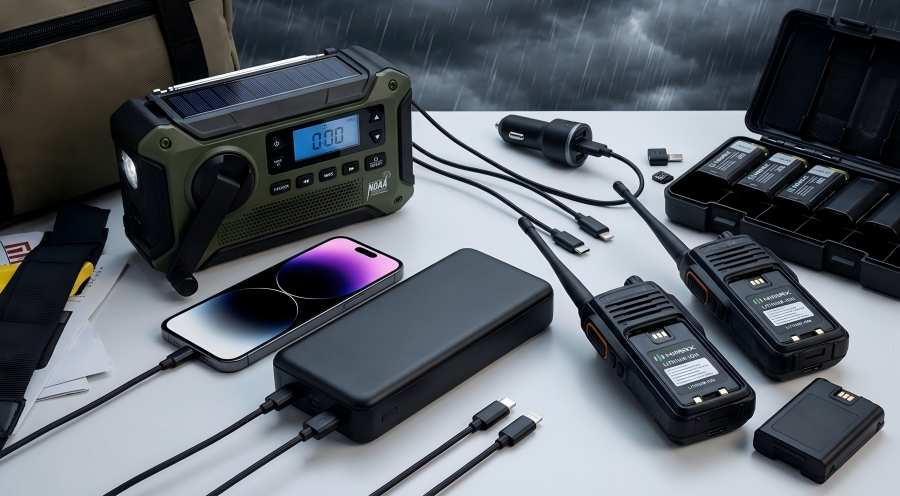
The most useful communication gear usually includes:
NOAA weather radio
Cell phones
Portable power banks
Walkie-talkies or two-way radios
Car charger or solar charger
A NOAA weather radio is highly recommended because it can receive emergency broadcasts even when internet service is down. Many models use AA batteries, built-in rechargeable batteries, hand-crank charging, or USB charging.
Cell phones are essential, but they are also power-hungry. During a long outage, a fully charged phone may not last more than a day if used heavily. Power banks and rechargeable lithium-ion packs can extend phone life significantly.
Battery Tips for Communication Devices
For weather radios, choose a model with multiple power options. A device that supports USB charging, replaceable batteries, and hand-crank backup offers extra security.
For phones, keep at least one fully charged 10,000mAh or 20,000mAh power bank in your storm kit. A 10,000mAh power bank can usually recharge a modern smartphone about 1.5 to 2 times depending on phone battery size and power loss during charging. A 20,000mAh model can support multiple family phones or longer outages.
For walkie-talkies, rechargeable lithium-ion packs are convenient, but it is smart to keep an extra charged battery pack or backup alkaline battery adapter if the device supports it.
Example Scenario: Hurricane Preparation in Florida
A household in Tampa prepares for a hurricane with a possible 48-hour power outage. Their communication battery plan includes:
2 NOAA weather radios with AA battery backup
4 smartphones
2 power banks rated at 20,000mAh each
2 USB-C charging cables and 2 Lightning cables
1 pair of two-way radios with 1,500mAh rechargeable packs
1 car charger as an additional backup
During the outage, each phone is kept in low-power mode. The household uses the weather radio for updates instead of streaming video or constantly refreshing apps. This reduces phone battery drain. With two 20,000mAh power banks, the family has enough backup capacity to keep phones available for emergency calls and basic communication for at least two days.
- Smoke Detection: Battery Backup for Fire Safety During Outages
Storms do not eliminate fire risk. In fact, fire risk can increase during outages because families may use candles, generators, fireplaces, space heaters, or improvised charging setups.
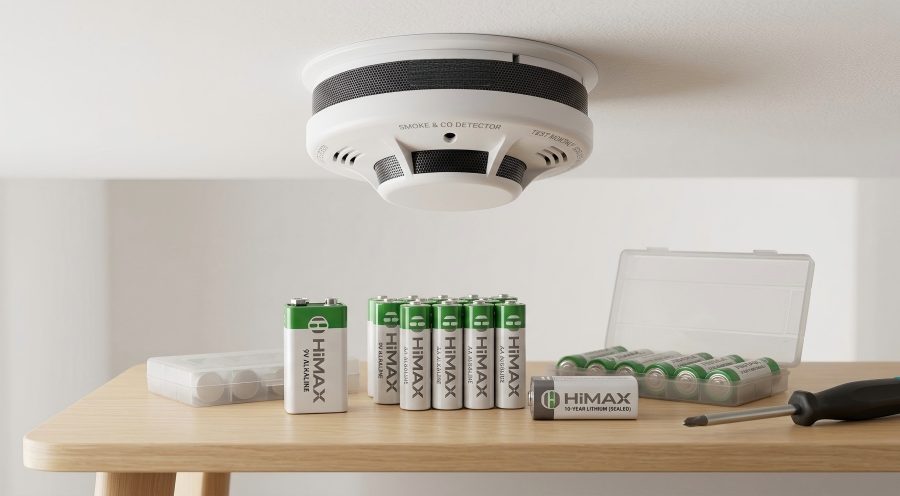
Smoke detectors and carbon monoxide detectors are essential safety devices, and their batteries must be checked before storm season. Many smoke alarms use 9V batteries, AA batteries, or sealed 10-year lithium batteries. Some hardwired smoke detectors also include battery backup.
Battery Tips for Smoke Detectors
Test smoke detectors monthly. Replace removable batteries according to the manufacturer’s instructions, or sooner if the device chirps. If your smoke detector uses a sealed lithium battery, replace the entire unit at the end of its rated service life.
For storm readiness, every home should confirm that smoke detectors work in bedrooms, hallways, kitchens, basements, and near utility areas. Carbon monoxide detectors are especially important if a generator may be used. Never run a generator indoors, in a garage, or near windows.
Smoke detectors are low-drain devices, so long shelf life and reliability are more important than high power output. For many models, name-brand alkaline or lithium batteries are suitable. Always follow the device manufacturer’s battery recommendations.
Example Scenario: Midwest Winter Storm
A homeowner in Michigan prepares for an ice storm that may cause a 36-hour outage. The home has:
6 smoke detectors with AA battery backup
2 carbon monoxide detectors
1 portable generator used outdoors
1 wood-burning fireplace
Before the storm, the homeowner replaces older backup batteries, tests every detector, and places spare AA batteries in the emergency kit. Because the generator will be used outdoors, carbon monoxide detectors become a critical safety layer. In this case, the battery plan is not about high capacity. It is about making sure every safety device remains active when the electrical system is down.
- Sump Pump Backup: The Most Power-Demanding Storm Device
A sump pump can be the difference between a dry basement and thousands of dollars in water damage. During heavy rainfall, the pump may cycle repeatedly to remove water. If the power goes out, a standard electric sump pump stops unless it has backup power.
Battery backup sump pump systems are different from flashlights and radios because they require much higher current. The battery must support motor startup, repeated cycling, and extended runtime under load.
Common backup options include:
Dedicated battery backup sump pump system
Deep-cycle lead-acid battery
Lithium battery backup system
Portable power station with suitable output
Generator backup
Lithium battery systems can offer advantages such as lighter weight, longer cycle life, faster charging, and better usable capacity. However, the system must be properly matched to the pump’s voltage, current, surge demand, and runtime requirements.
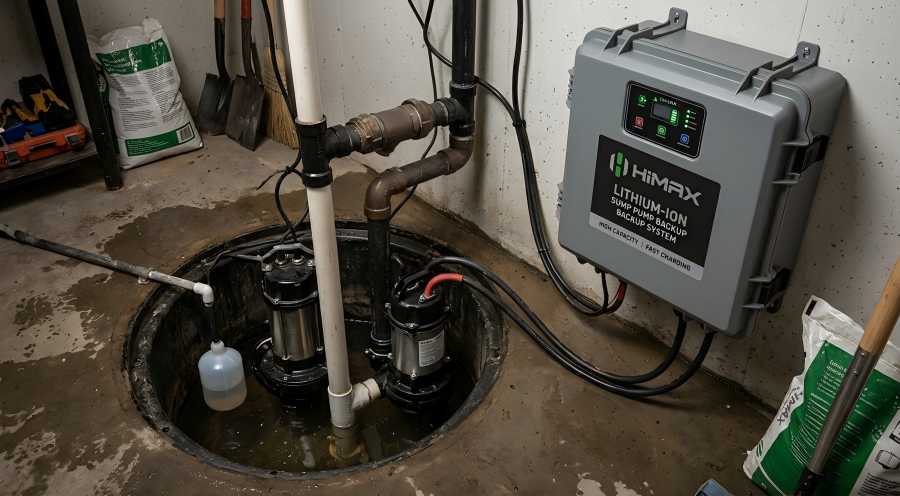
Battery Tips for Sump Pumps
Check the pump’s voltage and power rating. A small backup pump may operate at 12V DC, while larger systems may require inverter support. Look at amp draw, pump flow rate, and expected cycles per hour.
A sump pump backup battery should be sized based on real storm conditions. A basement with frequent water inflow needs more capacity than a home where the pump only runs occasionally.
You should also test the backup system before storm season. Unplug the main pump briefly, confirm the backup pump activates, and inspect battery status. If the system uses a smart charger, confirm it is charging correctly.
Example Scenario: Basement Flood Risk in Illinois
A homeowner near Chicago has a sump pump that activates frequently during heavy rain. The backup system includes:
12V DC backup sump pump
100Ah deep-cycle battery or equivalent lithium battery pack
Pump draw: approximately 8A during operation
Expected storm operation: 10 minutes per hour for 24 hours
If the pump runs 10 minutes per hour, that equals 4 total hours of runtime over 24 hours. At 8A, the pump may require about 32Ah of usable capacity, not including efficiency losses and safety margin. A 100Ah battery provides a more comfortable buffer, especially if the storm lasts longer or water inflow increases.
For a lithium battery pack, usable capacity may be higher compared with some lead-acid options because lithium batteries can often support deeper discharge depending on chemistry and battery management system design. This makes lithium an attractive option for homeowners who want lighter weight, longer service life, and more consistent performance.
How to Build a Practical Storm Battery Plan
A strong battery plan should be simple enough to maintain and reliable enough to trust. Start by listing every storm-related device in your home. Then write down the battery type, quantity, charging method, and backup plan for each device.
A basic battery checklist may include:
AA and AAA batteries for flashlights, radios, and small devices
9V batteries if required by smoke detectors
USB power banks for phones and rechargeable lights
Rechargeable lithium-ion battery packs for lanterns and tools
Backup battery system for sump pump
Charging cables stored in one waterproof bag
Battery tester or multimeter
Monthly charging schedule for rechargeable devices
Rechargeable batteries should not be ignored after purchase. Power banks, lithium-ion packs, and rechargeable lanterns should be topped up every few months. For storm season, charge everything when a severe weather alert is forecast.
It is also smart to store batteries in a cool, dry place. Avoid extreme heat, moisture, and direct sunlight. Keep spare batteries in original packaging or a battery organizer to prevent short circuits.
Lithium-Ion vs. Alkaline vs. Lead-Acid for Storm Gear
Each battery type has its place.
Alkaline batteries are inexpensive and widely available. They work well for many flashlights, radios, and basic household devices. However, they may leak over time and are not ideal for high-drain emergency equipment.
Lithium primary batteries have long shelf life, lighter weight, and strong cold-weather performance. They are a good choice for emergency kits that may sit unused for long periods.
Rechargeable lithium-ion batteries are ideal for power banks, lanterns, communication gear, portable power stations, and many modern backup systems. They offer high energy density and can be recharged many times.
Lead-acid batteries are still commonly used in sump pump backup systems because they are affordable and proven. However, they are heavy and may offer less usable capacity depending on discharge depth and maintenance condition.
For many households, the best approach is a mixed battery strategy: disposable batteries for simple low-drain devices, rechargeable lithium-ion packs for communication and lighting, and a properly sized backup system for sump pump protection.
Final Storm Battery Checklist
Before the next major storm, confirm the following:
All flashlights turn on and have spare batteries
Lanterns and headlamps are fully charged
Power banks are charged to 100%
Weather radio works and has backup batteries
Smoke detectors and carbon monoxide detectors pass a test
Sump pump backup battery is charged and tested
Charging cables are easy to find
Extra batteries are stored safely
Family members know where the emergency kit is located
Storm preparation is not about panic. It is about reducing risk before the weather turns dangerous. With the right batteries, your home can stay brighter, safer, and better connected during an outage.
About HiMAX Batteries
HiMAX is dedicated to providing reliable battery solutions for modern emergency power needs, outdoor equipment, energy storage, and custom electronic applications. As a professional battery manufacturer, HiMAX focuses on performance, safety, consistency, and practical usability across demanding real-world scenarios.
For storm emergency gear, HiMAX battery solutions can support applications such as rechargeable lighting, communication devices, backup power systems, portable equipment, and custom battery pack projects. Whether you need high-capacity lithium-ion battery packs, rechargeable power solutions, or application-specific battery design support, HiMAX helps businesses and users build dependable power systems for critical moments.
Find articles related to Lithium-ion Battery
- Price Comparison of 6 Common Lithium-Ion Battery Voltages (3.7V–22.2V)
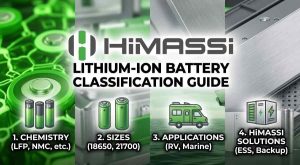
- Lithium-ion Battery Classification Guide: Exploring Chemical Compositions, Common Sizes, and Application Scenarios
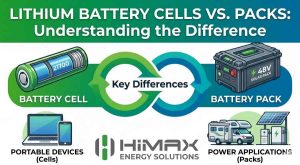
Lithium-Ion Battery Packs vs. Cells: Differences & Application Scenario Exploration