When shopping for batteries, many users run into the same question: if they’re all 18650 batteries, why do capacities range from 2000mAh to 3500mAh? What are the real differences, and how do you choose the right one for your needs?
This guide breaks down the capacity differences in 18650 lithium-ion batteries, covering performance, runtime, and real-world applications—so you can make a smarter, more informed decision.
What Is an 18650 Lithium-Ion Battery?
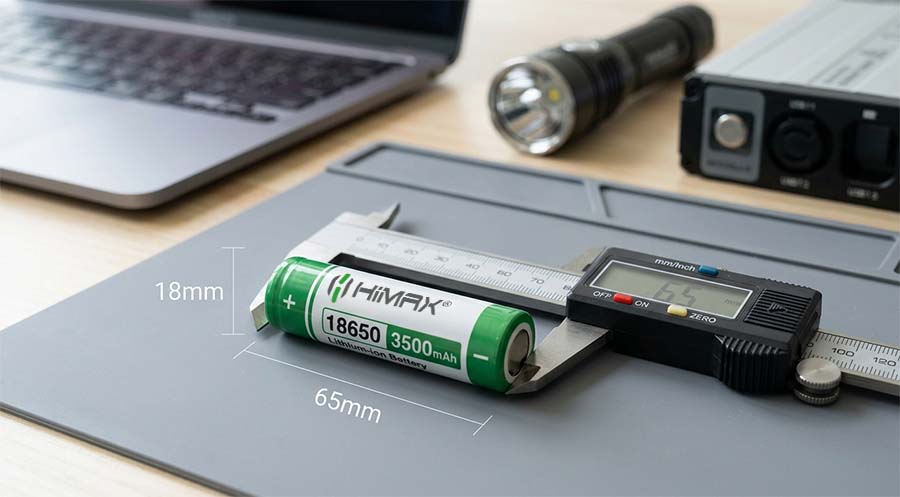
An 18650 lithium-ion battery is a widely used cylindrical rechargeable battery measuring 18mm in diameter and 65mm in length—hence the name “18650.”
These batteries are commonly used in:
- Consumer electronics
- Power tools
- Energy storage systems
- Portable power stations
Typical capacity ranges for 18650 lithium-ion batteries include:
- 1800mAh – 2200mAh (low capacity)
- 2500mAh – 3000mAh (mid capacity)
- 3000mAh – 3500mAh (high capacity)
At their core, different capacities reflect differences in energy density, discharge capability, and lifespan.
Key Differences Between 18650 Lithium-Ion Batteries of Different Capacities
Higher capacity means more stored energy per cell.
- 2000mAh battery → shorter runtime
- 3500mAh battery → longer runtime
For devices that need extended operation, high-capacity 18650 lithium-ion batteries are the better choice.
Simple takeaway: The higher the capacity, the longer your device runs.
2. Discharge Performance (C-Rate Capability)
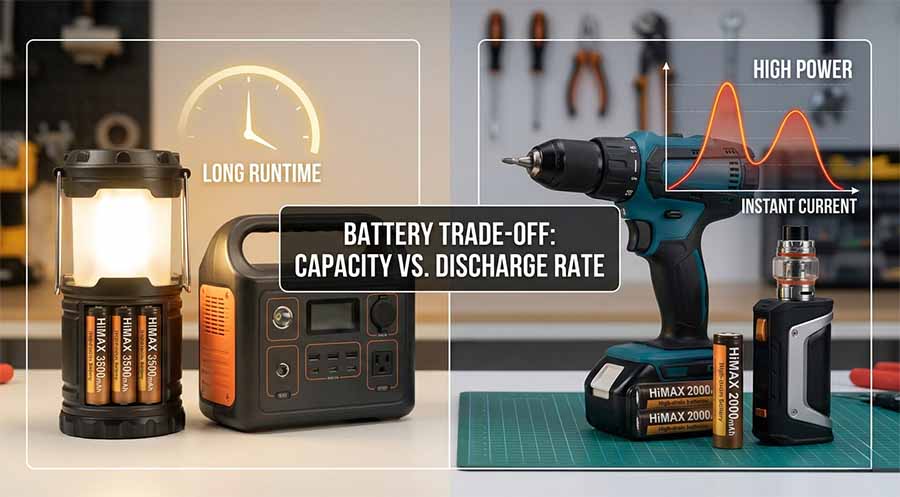
There’s typically a trade-off between capacity and discharge rate:
- Low-capacity batteries (e.g., 2000mAh) → higher discharge rates, ideal for high-drain devices
- High-capacity batteries (e.g., 3500mAh) → lower discharge rates, better for low-power devices
For example:
- High-drain batteries → power tools
- High-capacity batteries → long-runtime applications
Capacity also affects cycle life:
- High-drain (low-capacity) batteries → often support more charge cycles
- High-capacity batteries → may have slightly shorter lifespan under heavy loads
However, under normal usage conditions, the difference is usually not dramatic.
Higher capacity cells require more advanced internal design and stricter manufacturing standards.
- Premium high-capacity 18650 lithium-ion batteries → reliable and safe
- Low-quality, overrated high-capacity cells → potential safety risks
Recommendation: Always choose reputable brands and verified specifications.
Real-World Applications (U.S.-Style Use Cases)
Scenario 1: Portable Power for Camping (High Capacity Preferred)
Setup:
- Portable power station: 300W output
- Devices: LED light (10W) + phone charging (15W)
- Usage time: 6 hours
Analysis:
Using a battery pack built with 3000mAh+ 18650 lithium-ion batteries significantly improves runtime and reduces recharge frequency.
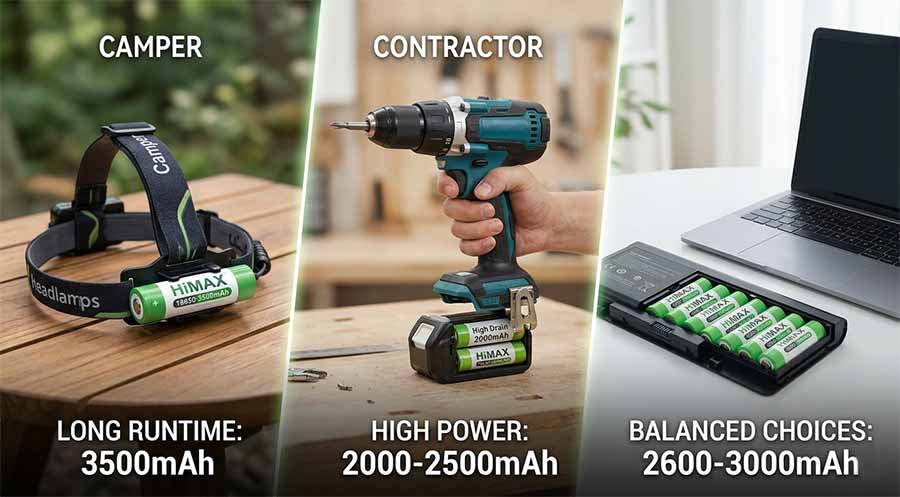
Recommended: 3200mAh–3500mAh
Scenario 2: Power Tools (High Discharge Rate Required)
Setup:
- Electric drill: 500W
- Peak current: 20A+
Analysis:
Power tools demand high burst current. Lower-capacity but high-drain 18650 lithium-ion batteries perform better.
Recommended: 2000mAh–2500mAh (high-drain models)
Scenario 3: Laptop Battery Pack (Balanced Choice)
Setup:
- 6-cell battery pack
- Operating current: 2A–5A
- Runtime requirement: 6–10 hours
Analysis:
You need a balance between capacity and stability.
Recommended: 2600mAh–3000mAh
Scenario 4: Vapes & Compact Devices (Balanced Size & Runtime)
Setup:
- Power: 15W–40W
- Usage: intermittent daily use
Analysis:
Higher-capacity 18650 lithium-ion batteries reduce charging frequency while meeting power demands.
Recommended: around 3000mAh
How to Choose the Right 18650 Lithium-Ion Battery
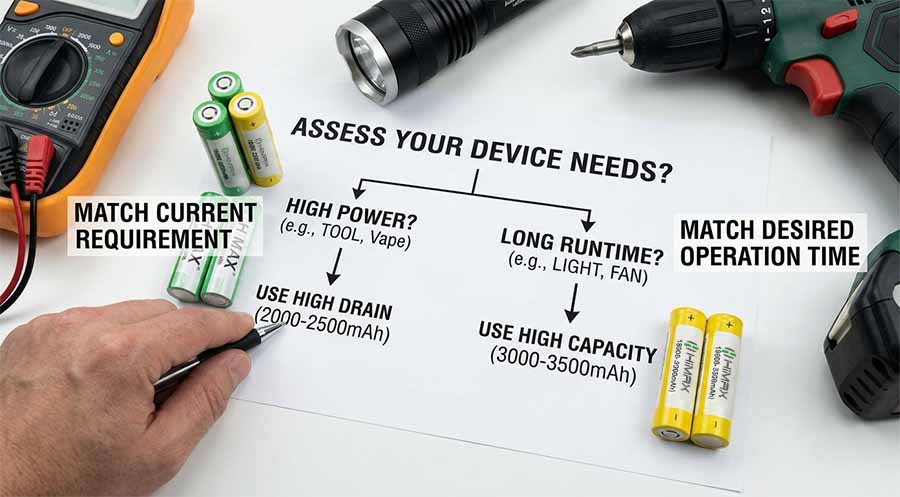
1. Match Your Device Power Needs
- High-power devices → choose high-drain (lower capacity)
- Low-power devices → choose high-capacity
2. Consider Runtime Requirements
- Long runtime → high capacity
- Short bursts, high intensity → high discharge rate
Avoid overrated cells (e.g., claims above 4000mAh for 18650 are usually unrealistic).
4. Factor in Usage Environment
- High-temperature environments → choose more stable cells
- Outdoor use → prioritize high capacity + long cycle life
Myth 1: Higher Capacity Is Always Better
Not true—especially for high-drain devices.
Myth 2: All 18650 Batteries Are the Same
Different brands and chemistries vary significantly.
Myth 3: Higher Rated Capacity = Better Value
Most 18650 lithium-ion batteries above 3500mAh are likely overrated or misleading.
Different capacities of 18650 lithium-ion batteries offer distinct advantages:
- High capacity → longer runtime, ideal for low-power devices
- Mid capacity → balanced performance and lifespan
- Low capacity → high discharge output, ideal for high-power devices
The key is not choosing the biggest number—but selecting the right battery for your specific application.
HiMAX 18650 Lithium-Ion Battery Solutions
HiMAX is committed to delivering high-performance, safe, and reliable 18650 lithium-ion battery solutions worldwide. With advanced cell manufacturing technology and strict quality control, our products are widely used in:
- Energy storage systems
- Power tools
- Consumer electronics
Whether you need high-drain performance or long-lasting runtime, HiMAX provides dependable battery solutions to help your devices perform at their best.
Find articles related to 18650 Lithium Battery