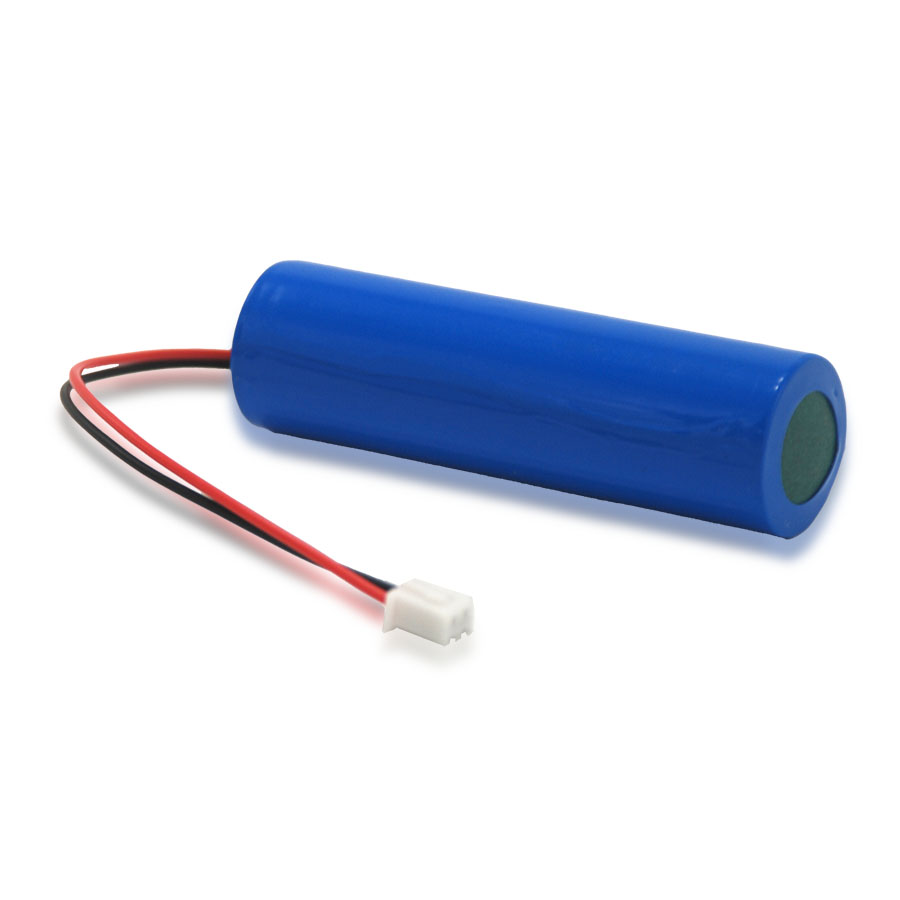
Choosing the right rechargeable battery is critical for modern electronics. Two of the most widely used options today are Lithium Polymer Batteries (Li-Po Batteries) and Nickel-Metal Hydride Batteries (NiMH Batteries).
Many users ask the same questions:
- Which battery lasts longer?
- Which battery is safer?
- Which battery is more cost-effective over time?
The answer depends on several factors such as energy density, cycle life, weight, safety, and application scenarios. In this guide, we’ll provide a detailed comparison of Lithium Polymer Batteries vs NiMH Batteries to help you determine the best battery for your device.
What Is a Lithium Polymer Battery?
A Lithium Polymer Battery (Li-Po battery) is a type of lithium-ion battery that uses a polymer electrolyte instead of a liquid electrolyte.
This structure provides several advantages:
- Thinner battery design
- Lighter weight
- Flexible shapes and sizes
- Higher energy density
Because of these benefits, Lithium Polymer Batteries are commonly used in:
- Smartphones
- Drones
- Wearable devices
- Portable electronics
These batteries are ideal for devices where weight, size, and performance are important.
A Nickel-Metal Hydride Battery (NiMH battery) uses:
- Nickel oxyhydroxide as the positive electrode
- Hydrogen-absorbing alloy as the negative electrode
NiMH technology has been widely used for decades and is known for its stability and reliability.
Typical applications include:
- Digital cameras
- Remote-control toys
- Electric tools
- AA / AAA rechargeable batteries
Compared with lithium batteries, NiMH batteries are generally cheaper and safer, but they are heavier and have lower energy density.
Lithium Polymer Battery vs NiMH Battery: Key Differences
The following table summarizes the main differences between the two battery types.
| Feature | Lithium Polymer Battery | NiMH Battery |
| Energy Density | 150–250 Wh/kg | 60–120 Wh/kg |
| Weight | Lightweight | Heavier |
| Runtime | Longer | Shorter |
| Cycle Life | 500–1000 cycles | 500–800 cycles |
| Cost | Higher | Lower |
| Safety | Requires BMS protection | Naturally stable |
| Common Uses | Drones, smartphones, robotics | Toys, cameras, AA batteries |
1. Runtime Comparison: Which Battery Lasts Longer?
One of the most important battery performance indicators is runtime, which mainly depends on energy density.
Typical values:
- Lithium Polymer Battery: 150–250 Wh/kg
- NiMH Battery: 60–120 Wh/kg
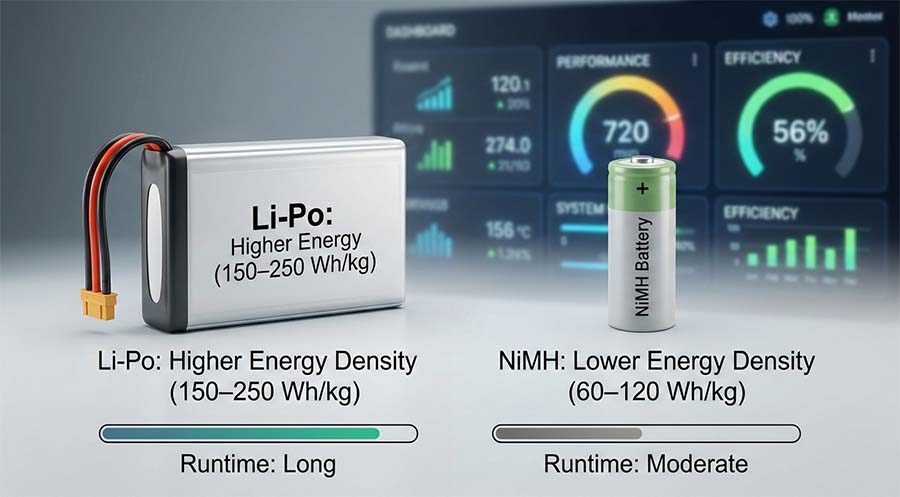
Because Lithium Polymer Batteries store more energy in the same weight, they usually provide longer operating time.
Example: 7.4V 3000mAh Battery Pack
| Battery Type | Weight | Device Runtime |
| Lithium Polymer Battery | ~160 g | ~5 hours |
| NiMH Battery | ~320 g | ~4 hours |
For devices that require long runtime and lightweight design, Lithium Polymer Batteries clearly have the advantage.
Battery lifespan is typically measured by charge-discharge cycles.
Typical cycle life:
- Lithium Polymer Battery: 500–1000 cycles
- NiMH Battery: 500–800 cycles
Although the numbers are similar, Lithium Polymer Batteries usually maintain their capacity better over time.
Example scenario:
If a device is charged once per day:
- NiMH battery capacity may drop significantly after 1.5–2 years
- Lithium polymer batteries often last 2–3 years
This is one reason why modern electronics increasingly use Li-Po batteries.
3. Cost Comparison: Which Battery Is More Affordable?
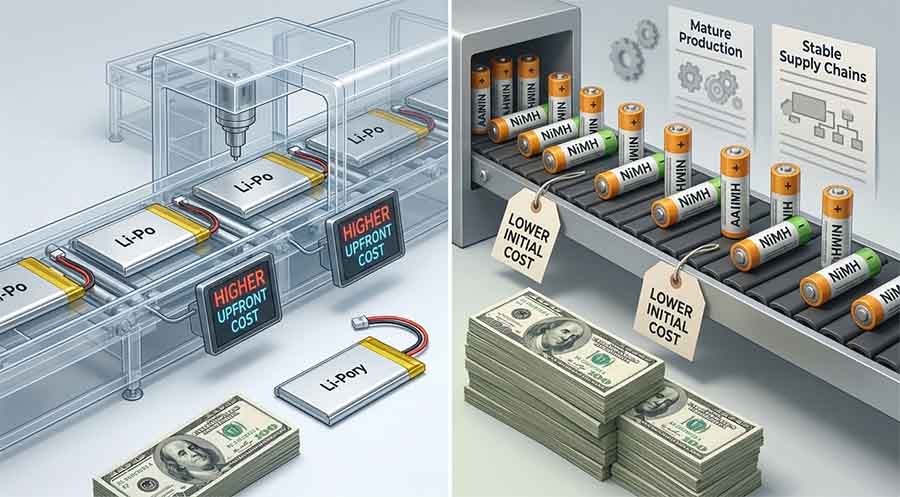
When comparing upfront cost, NiMH batteries are usually cheaper.
Reasons include:
- Mature production technology
- Lower raw material costs
- Stable supply chains
Example price comparison:
| Battery Type | Price per Cell |
| NiMH Battery | $2–$3 |
| Lithium Polymer Battery | $4–$6 |
Because of this, NiMH batteries remain popular in budget-sensitive products.
However, when considering long-term performance and runtime, lithium polymer batteries can still offer strong value.
Battery safety is always a major concern.
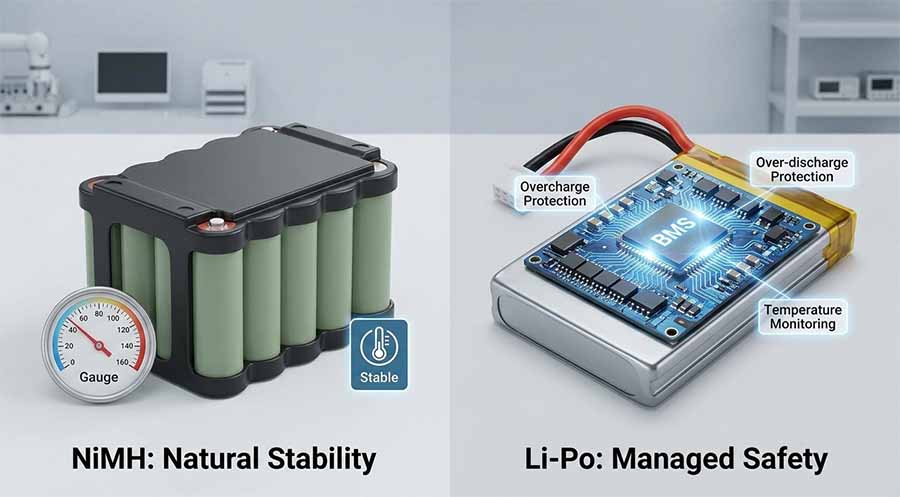
NiMH batteries offer strong natural safety:
- Lower operating voltage
- Good thermal stability
- Low risk of thermal runaway
This makes them suitable for consumer products and children’s toys.
Safety of Lithium Polymer Batteries
Although Lithium Polymer Batteries have higher energy density, they rely on a Battery Management System (BMS) for protection.
Common safety features include:
- Overcharge protection
- Over-discharge protection
- Temperature monitoring
With proper design, Li-Po batteries can achieve excellent safety performance.
Real-World Application Examples
User: Drone hobbyist in California
Specifications:
- Voltage: 11.1V
- Motor power: 120W
| Battery Type | Weight | Flight Time |
| Lithium Polymer Battery | ~180 g | 15 minutes |
| NiMH Battery | ~420 g | 11 minutes |
Because drones are extremely sensitive to weight, most drones use Lithium Polymer Batteries.
User: Family user in Texas
Specifications:
- Voltage: 7.2V
- Motor power: 35W
| Battery Type | Runtime | Cycle Life |
| NiMH Battery | 25 minutes | ~600 cycles |
| Lithium Polymer Battery | 30 minutes | ~800 cycles |
For children’s toys, NiMH batteries remain popular due to lower cost.
User: Office worker in New York
| Battery Type | Usage Time |
| NiMH AA Battery | ~1 month |
| Lithium Polymer Battery | ~1.5 months |
In lightweight electronics, Li-Po batteries are becoming increasingly common.
How to Choose the Right Battery
Choose a Lithium Polymer Battery if:
- Your device requires lightweight design
- You need high energy density
- Long battery runtime is important
Choose a NiMH Battery if:
- Cost is a priority
- The device operates in a stable environment
- Maximum safety is required
There is no single “best” battery. The right choice depends on your device requirements and budget.
HiMAX is a global manufacturer specializing in high-performance battery technology. The company provides reliable battery solutions for customers worldwide.
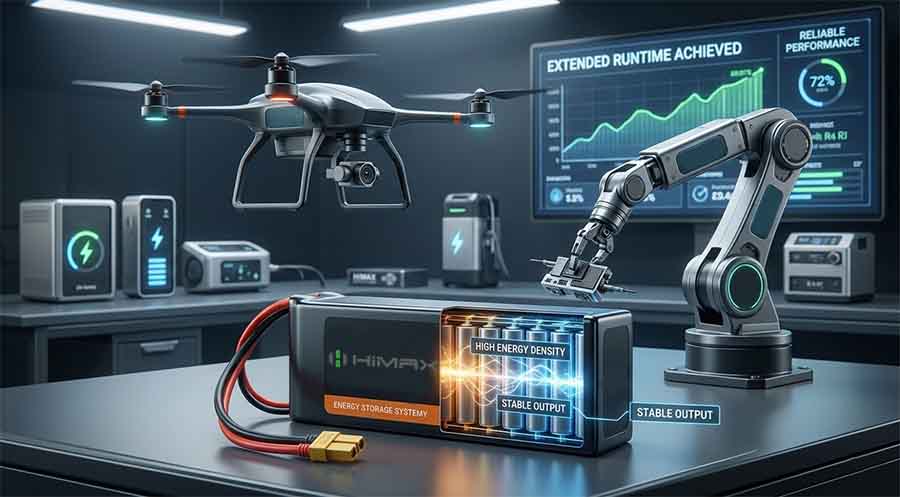
HiMAX products include:
- Lithium Polymer Batteries
- Lithium-Ion Batteries
- Custom battery packs
HiMAX batteries are widely used in:
- Smart electronics
- Robotics equipment
- Drones
- Energy storage systems
- Power tools
- Portable devices
With advanced cell technology and strict quality control, HiMAX batteries deliver high energy density, stable output, long cycle life, and excellent safety performance.
If you are looking for a reliable battery solution, HiMAX can help your products achieve longer runtime and more stable performance.
Find articles related to Battery Comparison Tips on HiMAX
- Lithium vs Lead Acid Batteries for Electric Wheelchairs
- Battery Cell vs Battery Pack: What’s the Difference
- Price Comparison of 6 Common Lithium-Ion Battery Voltages (3.7V–22.2V)
- Waterproof Battery vs Regular Battery: What’s the Difference?
- Comparing Lithium-Ion Battery Needs: Consumer Electronics vs EV
- Small LiFePO4 Battery vs Ternary Lithium – Runtime, Cost, and Lifespan Comparison, and More