Security Check Inquiry: Why Don’t Portable Power Banks Use Lithium Iron Phosphate (LiFePO₄) Batteries?
Key Takeaways
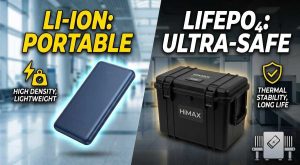
- Lithium Iron Phosphate (LiFePO₄) batteries are widely recognized for their excellent safety, thermal stability, and long cycle life.
- Despite these advantages, most portable power banks still use Lithium-Ion (Li-ion) or Lithium Polymer (Li-Po) batteries.
- The primary reasons include lower energy density, larger size, heavier weight, and higher manufacturing costs associated with LiFePO₄ technology.
- Airport security regulations generally focus on battery capacity (Wh) rather than battery chemistry.
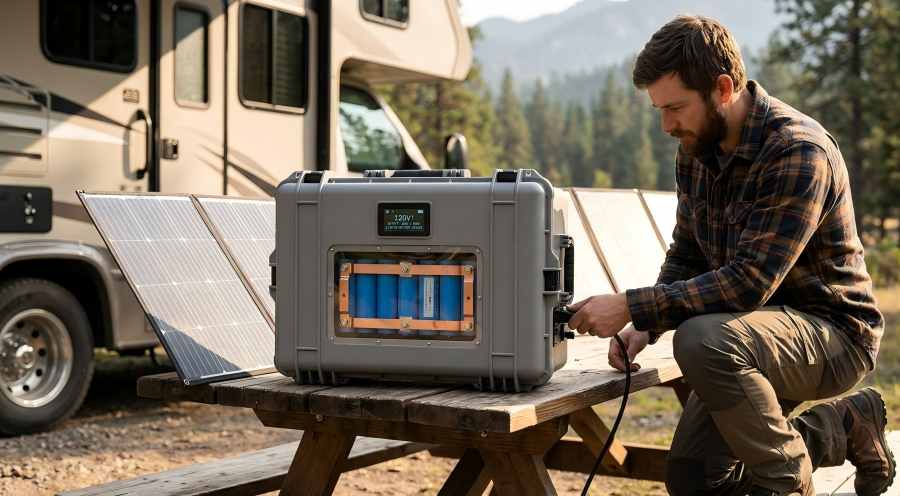
- LiFePO₄ batteries are more commonly found in solar energy storage systems, RV power stations, marine applications, and industrial backup systems.
- Ongoing advancements in battery technology may eventually increase the adoption of LiFePO₄ in portable consumer electronics.
Understanding the Security Check Question
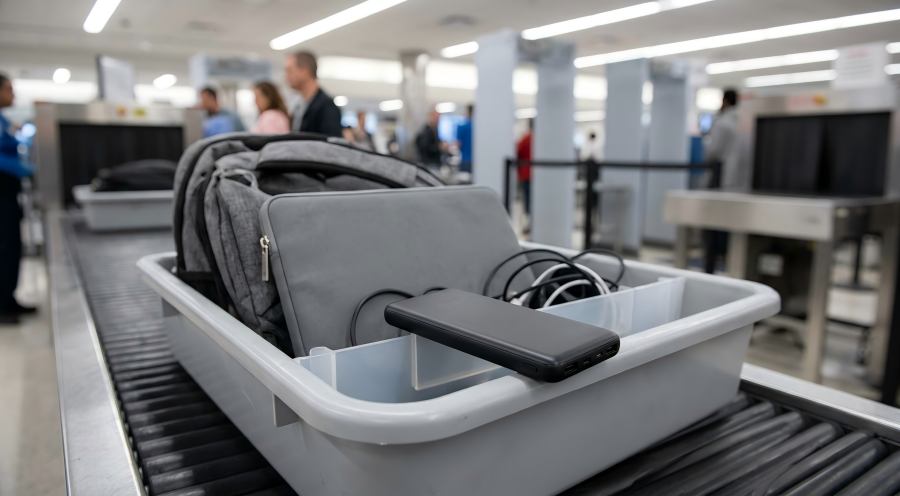
One of the most common questions travelers ask when carrying portable power banks through airport security is:
“If Lithium Iron Phosphate batteries are considered safer, why aren’t they commonly used inside portable power banks?”
At first glance, the question seems logical. LiFePO₄ batteries are known for being less prone to thermal runaway, overheating, or combustion compared to conventional lithium-ion batteries.
However, battery selection is a balance between safety, energy storage, size, weight, cost, and user convenience.
To understand why manufacturers continue to favor traditional lithium-ion technology, we need to compare the characteristics of both battery types.
What Is a LiFePO₄ Battery?
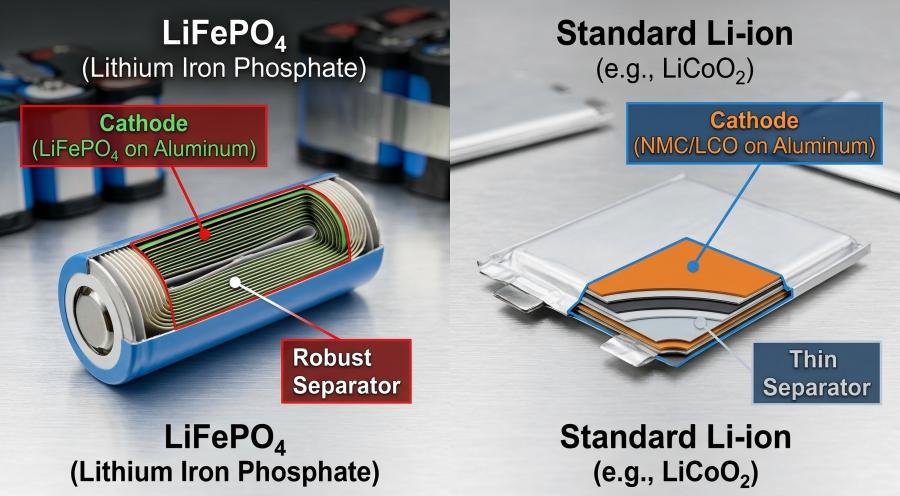
Lithium Iron Phosphate (LiFePO₄) is a lithium-based rechargeable battery chemistry that uses iron phosphate as the cathode material.
Compared with standard lithium-ion batteries, LiFePO₄ offers:
- Higher thermal stability
- Improved safety performance
- Longer cycle life
- Better resistance to overcharging
- Lower risk of fire or explosion
Typical LiFePO₄ batteries can withstand:
- 2,000–6,000 charge cycles
- Operating temperatures from -20°C to 60°C
- Higher abuse tolerance during charging and discharging
These characteristics make LiFePO₄ batteries highly desirable for large-scale energy storage applications.
Why Portable Power Banks Prefer Lithium-Ion Batteries
- Energy Density Matters Most
Portable power banks are designed to maximize stored energy while minimizing size and weight.
Battery Chemistry Comparison:
| Battery Type | Energy Density |
| Lithium-Ion (NMC/NCA) | 180–280 Wh/kg |
| Lithium Polymer | 180–260 Wh/kg |
| LiFePO₄ | 90–160 Wh/kg |
LiFePO₄ batteries store significantly less energy per kilogram.
This means a 20,000mAh power bank using LiFePO₄ cells would be noticeably larger and heavier than a comparable lithium-ion model.
For consumers who prioritize portability, this becomes a major disadvantage.
- Size Constraints in Consumer Electronics
Modern consumers expect slim and lightweight devices.
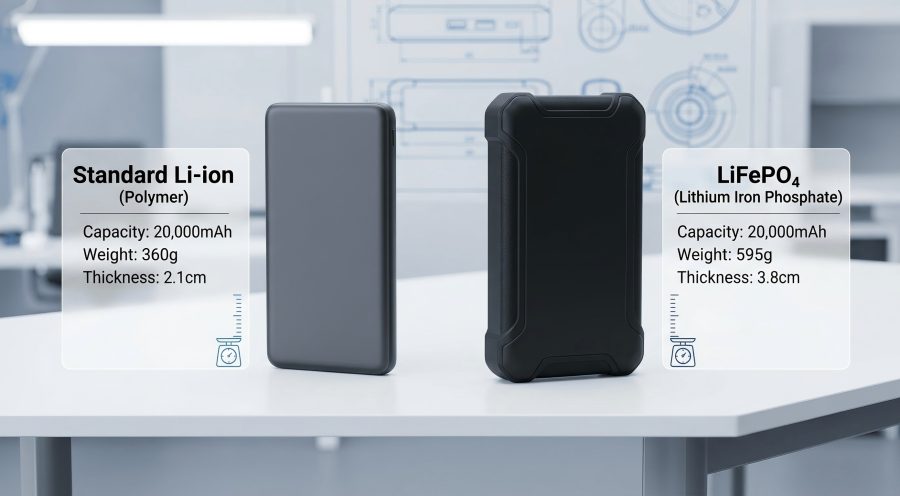
Consider a typical travel power bank:
Example A: Traditional Lithium-Ion Power Bank
- Capacity: 20,000mAh
- Energy: 74Wh
- Weight: 360g
- Thickness: 2.3cm
Example B: Equivalent LiFePO₄ Power Bank
- Capacity: 20,000mAh
- Energy: 74Wh
- Weight: 520g–600g
- Thickness: 3.5cm+
For travelers carrying power banks in backpacks, laptop bags, or carry-on luggage, the extra size and weight can significantly reduce convenience.
- Manufacturing Costs Are Higher
LiFePO₄ battery systems often require:
- Larger battery packs
- More housing material
- Additional structural reinforcement
- Specialized battery management systems (BMS)
As a result, retail prices are usually higher.
For example:
| Product Type | Typical Price |
| 20,000mAh Li-ion Power Bank | $35–$60 |
| Similar LiFePO₄ Power Bank | $70–$120 |
Most consumers shopping for portable chargers prioritize affordability, making lithium-ion batteries the more competitive option.
- Security Regulations Focus on Watt-Hours
A common misconception is that airport security treats LiFePO₄ batteries differently.
In reality, most airline and TSA regulations are based primarily on battery capacity measured in watt-hours (Wh).
For example:
- Under 100Wh: Generally allowed in carry-on baggage
- 100–160Wh: Airline approval may be required
- Over 160Wh: Usually prohibited for passengers
Whether the battery uses:
- Lithium-ion
- Lithium polymer
- LiFePO₄
The capacity limitation remains largely the same.
Therefore, manufacturers gain little regulatory advantage by switching portable power banks to LiFePO₄ technology.
Usage Scenarios
Scenario 1: Business Traveler in New York
Sarah travels weekly between New York and Los Angeles.
Device requirements:
- iPhone 16 Pro Max: 4,685mAh
- iPad Air: 28.6Wh
- Bluetooth headset: 500mAh
A 20,000mAh lithium-ion power bank weighing 360g easily fits inside her carry-on bag and provides enough energy for an entire day.
A LiFePO₄ alternative with the same capacity could add 200g or more, increasing travel burden without providing additional charging capability.
Scenario 2: National Park Photographer
Michael spends weekends photographing wildlife in Yellowstone National Park.
Equipment:
- Mirrorless camera batteries: 7.2V, 2,200mAh
- Drone batteries: 15.4V, 5,000mAh
- Smartphone: 5,000mAh
Since he hikes 8–12 miles per day, every ounce matters.
A lighter lithium-ion power bank allows him to carry more camera equipment and extra water.
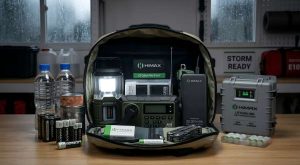
Scenario 3: Emergency Home Backup
Lisa lives in Florida where hurricanes frequently cause power outages.
Backup needs:
- LED lights: 15W
- Smartphone charging: 20W
- Router: 12W
Expected backup duration:
- 8–12 hours
In this situation, LiFePO₄ becomes a better solution because portability is less important than long-term durability and safety.
This is why many home energy storage systems and portable power stations use LiFePO₄ batteries rather than traditional lithium-ion cells.
Environmental Considerations
As battery usage continues to grow globally, recycling and disposal have become increasingly important.
Manufacturers and consumers are paying more attention to:
- Battery recycling infrastructure
- Resource recovery
- Sustainable manufacturing
- Circular economy initiatives
Discussions surrounding Waste lithium-ion battery treatment, lithium battery recycling technologies, end-of-life battery management, battery material recovery, and sustainable battery disposal solutions have become essential parts of the modern energy ecosystem.
Both lithium-ion and LiFePO₄ batteries require responsible recycling processes to reduce environmental impact and recover valuable materials.
Could Future Power Banks Use LiFePO₄?
The answer is yes.
Several emerging trends are making LiFePO₄ technology more attractive:
- Improved cell energy density
- Advanced battery packaging
- Reduced manufacturing costs
- Enhanced fast-charging technologies
- Growing consumer awareness of battery safety
Some niche manufacturers have already introduced LiFePO₄-based power banks targeted toward outdoor enthusiasts, emergency preparedness users, and professional field workers.
As technology evolves, we may see broader adoption in consumer charging products.
Why Choose HiMAX Batteries?
HiMAX is one of the world’s leading battery manufacturers, dedicated to delivering reliable, high-performance energy solutions for consumer electronics, industrial equipment, renewable energy systems, backup power applications, and customized battery projects.
With advanced manufacturing facilities, strict quality control standards, and extensive experience in lithium battery technology, HiMAX provides:
- High-performance Lithium-Ion battery packs
- LiFePO₄ battery solutions
- Custom battery design and engineering
- Solar energy storage batteries
- Portable power station battery systems
- Industrial and commercial energy storage solutions
Every HiMAX battery undergoes rigorous testing for safety, durability, and performance to meet the demanding requirements of global customers. Whether you’re building next-generation portable electronics or large-scale energy storage systems, HiMAX delivers dependable power solutions designed for long-term success.
Find articles related to LiFePO4 Batteries
- Emergency Flashlight Battery Buying Guide
- 2026 Online Buying Guide for Camping Lanterns Batteries
- 2026 Online Buying Guide for Electric Sightseeing Vehicle Batteries
- How to Choose the Right Battery Solution for Electric Boat
- The Forestry Agencies’ Secret: Why It’s Finally Time to Switch to LiFePO4 Batteries for Forest Monitoring Systems