In the battery market, high-capacity 18650 batteries are one of the most searched topics. Many sellers advertise 4000mAh, 5000mAh, or even 9900mAh 18650 batteries in product listings.
At first glance, these numbers seem impressive. However, most of them are fake capacity claims.
In fact, battery engineers widely agree on one thing:
Nearly 99% of 18650 batteries claiming capacities above 3500mAh are either fake or severely overrated.
So why does this happen?
The answer is closely related to battery size limitations, material technology, and manufacturing constraints.
In this article, we’ll explain the real capacity limit of 18650 lithium-ion batteries and show you how to identify fake products in the market.
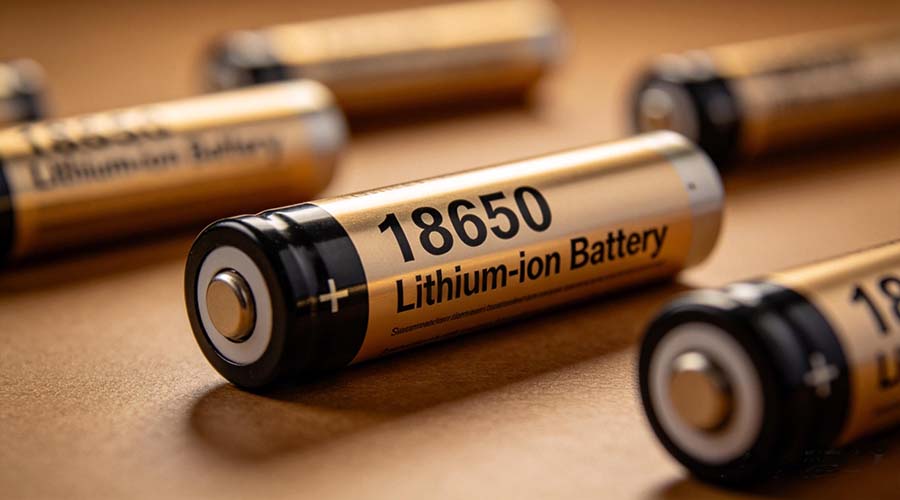
An 18650 battery is a standardized cylindrical lithium-ion battery cell widely used in modern electronics.
The name “18650” simply describes the battery size:
- 18 – approximately 18 mm diameter
- 65 – approximately 65 mm length
- 0 – cylindrical battery shape
Because of its balanced energy density, safety, and reliability, the 18650 lithium-ion battery has become one of the most widely used battery formats.
Common applications include:
- Laptop batteries
- Power tools
- Energy storage systems
- Flashlights
- E-cigarettes
- Robotics equipment
What Is the Real Capacity Limit of an 18650 Battery?
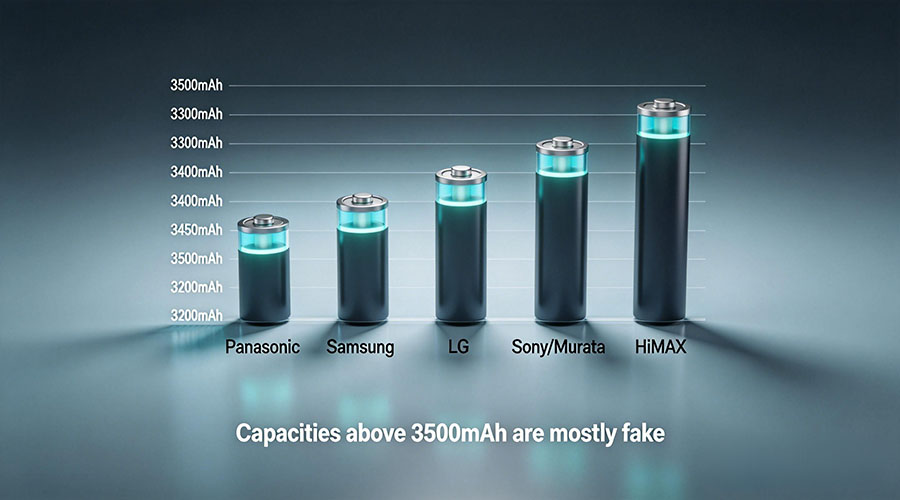
Today, the world’s major battery manufacturers produce high-capacity 18650 lithium-ion batteries within a very specific range.
Typical capacities from leading brands include:
- Panasonic
- Samsung
- LG
- Sony / Murata
- HiMAX
Their mass-produced 18650 lithium-ion battery cells typically range from:
3200mAh – 3500mAh
This range represents the practical physical limit of current 18650 battery technology.
In simple terms:
Without increasing the battery size, it is extremely difficult for an 18650 rechargeable lithium battery to exceed 3500mAh.
So when you see:
- 4000mAh 18650 batteries
- 5000mAh 18650 batteries
- 8000mAh 18650 batteries
They are almost certainly fake capacity 18650 batteries.
Why Is It So Difficult for 18650 Batteries to Exceed 3500mAh?
To understand this limitation, we need to look inside an 18650 lithium-ion battery cell.
A typical 18650 rechargeable battery contains the following components:
- Cathode material
- Anode material
- Separator
- Electrolyte
- Jelly-roll internal structure
The energy density of the electrode materials determines the battery capacity.
Common cathode chemistries include:
- NCA (Nickel Cobalt Aluminum Oxide)
- NCM (Nickel Cobalt Manganese Oxide)
- LCO (Lithium Cobalt Oxide)
With current commercial technology, these materials are already approaching their maximum practical energy density.
Trying to push the capacity significantly higher can create serious issues:
- Reduced safety
- Shorter cycle life
- Poor thermal stability
That’s why major manufacturers carefully balance capacity, lifespan, and safety.
As a result, most high-capacity 18650 lithium-ion cells stay within the 3400mAh–3500mAh range.
How Fake High-Capacity 18650 Batteries Are Made
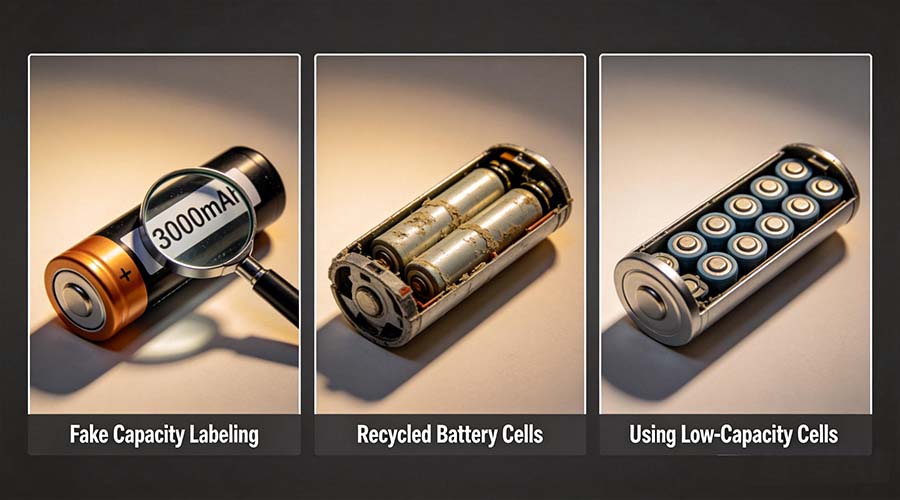
Since the true capacity limit is difficult to exceed, many sellers use different tricks to create fake high-capacity 18650 batteries.
Here are the most common methods.
This is the most widespread tactic.
Example:
- Real capacity: 1800mAh
- Printed label: 5000mAh
Most consumers do not have professional equipment to test the real capacity of an 18650 rechargeable lithium battery, making this trick difficult to detect.
Some dishonest sellers collect used battery cells from products like:
- Laptop battery packs
- Electric vehicle batteries
- Discarded battery modules
These old cells are then re-wrapped with new labels claiming unrealistic capacity.
These refurbished lithium-ion cells often have:
- Low capacity
- Degraded performance
- High safety risks
3. Using Cheap Low-Capacity Cells
Another common trick is to use 1500mAh–2000mAh cells and label them as 5000mAh 18650 batteries.
In real usage, these batteries typically show:
- Very short runtime
- Rapid voltage drop
- Extremely low cycle life
Examples of Fake 18650 Batteries
Understanding real-world scenarios can help explain the impact of fake 18650 lithium-ion batteries.
Example 1: Tactical Flashlight
Device specifications:
- Power: 12W
- Voltage: 3.7V
- Current: 3.2A
If a genuine 3500mAh 18650 lithium-ion battery is used:
Estimated runtime: about 1 hour
If a fake 6000mAh 18650 battery actually contains only 2000mAh, the runtime may drop to:
Around 35 minutes
This often leads users to believe the flashlight itself is defective.
Example 2: Power Tool Battery Pack
A DIY enthusiast in Florida builds 18650 battery packs for power tools.
Typical configuration:
- 5S2P battery pack
- 18V nominal voltage
- 3500mAh per cell
Total capacity:
7000mAh
If fake 5000mAh 18650 cells actually provide 2000mAh, the real battery pack capacity becomes:
4000mAh
This can cause:
- Shorter tool runtime
- Faster battery degradation
- Battery overheating
Example 3: Home Energy Storage Systems
Many users now build DIY home energy storage systems.
A typical setup may include:
- 48V storage system
- 13S battery pack
- 100Ah capacity
Using genuine high-capacity 18650 lithium-ion cells ensures stable performance.
However, fake cells can cause:
- Severe capacity loss
- Battery pack imbalance
- Frequent BMS protection triggers
In extreme cases, this may even lead to battery thermal runaway.
How to Identify Fake 18650 Batteries
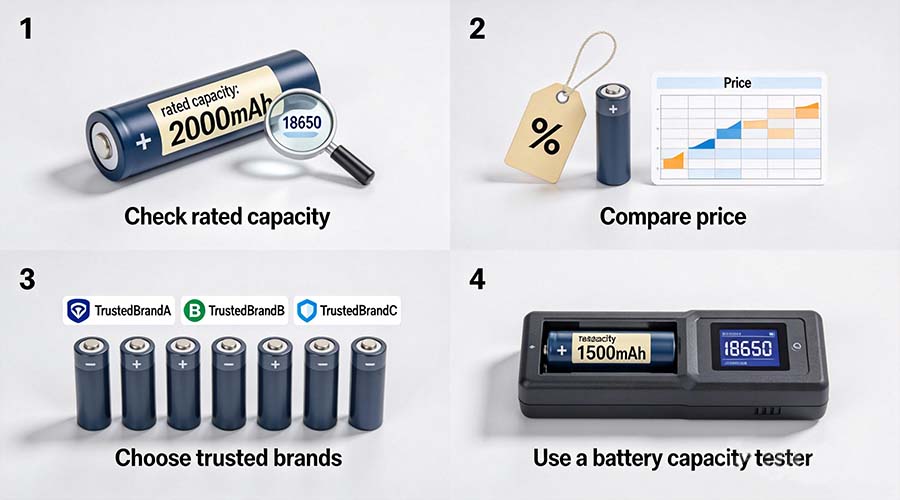
Consumers can use several simple methods to detect fake 18650 lithium-ion batteries.
If the battery label shows:
- 4000mAh
- 5000mAh
- 8000mAh
- 9900mAh
It is almost certainly a fake capacity 18650 battery.
High-quality 18650 lithium-ion batteries are not cheap to produce.
If the price is far below the market average, the battery is likely counterfeit.
Always buy 18650 lithium-ion cells from reliable manufacturers such as:
- Panasonic
- Samsung
- LG
- Murata
- HiMAX
These companies provide accurately rated 18650 battery cells.
4. Use a Battery Capacity Tester
A battery capacity tester can measure the real capacity of an 18650 rechargeable lithium-ion battery through a discharge test.
Why Choosing a Reliable 18650 Battery Manufacturer Matters
For applications such as:
- Power tools
- Energy storage systems
- Medical equipment
- Industrial machinery
- Smart robots
Battery quality directly affects performance, reliability, and safety.
Using fake 18650 rechargeable lithium batteries can result in:
- Reduced device runtime
- Unstable performance
- Increased safety risks
HiMAX is a leading global manufacturer specializing in high-performance lithium batteries.
We supply:
- 18650 lithium-ion batteries
- High-capacity lithium batteries
- Power-type 18650 battery cells
- Custom battery solutions
Every high-performance 18650 battery from HiMAX is manufactured under strict quality control standards to ensure:
- Stable capacity
- Long cycle life
- Excellent safety performance
HiMAX batteries are widely used in:
- Power tools
- Energy storage systems
- Medical devices
- Robotics
- Consumer electronics
If you are looking for a reliable 18650 battery manufacturer, HiMAX is a trusted partner.