Waterproof Battery vs Regular Battery: What’s the Difference?
In many electronic devices, the battery determines whether the device can run reliably. As outdoor equipment, smart devices, and industrial machines become more common, users expect higher levels of safety and durability from batteries.
When devices are used in humid, rainy, or complex environments, whether a battery has waterproof protection becomes extremely important. Because of this, more users are paying attention to the difference between waterproof batteries and regular batteries.
This article explains the key differences, common applications, and how to choose the right battery for your needs.
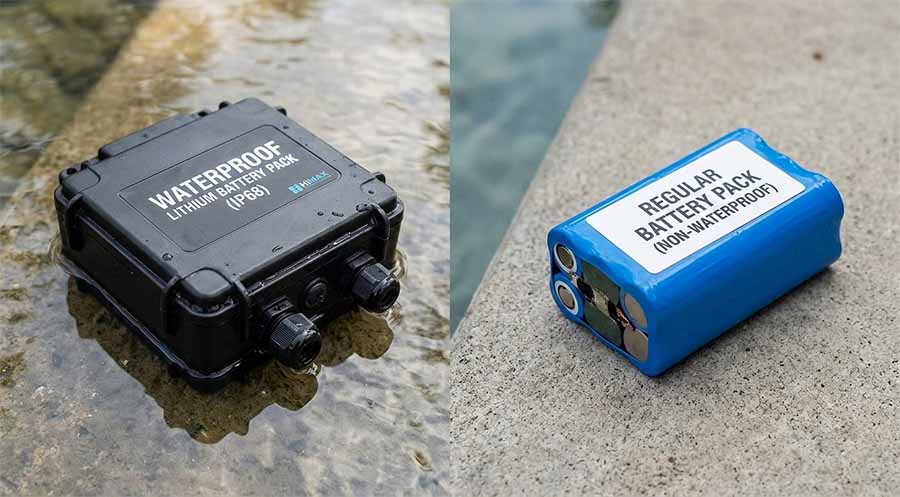
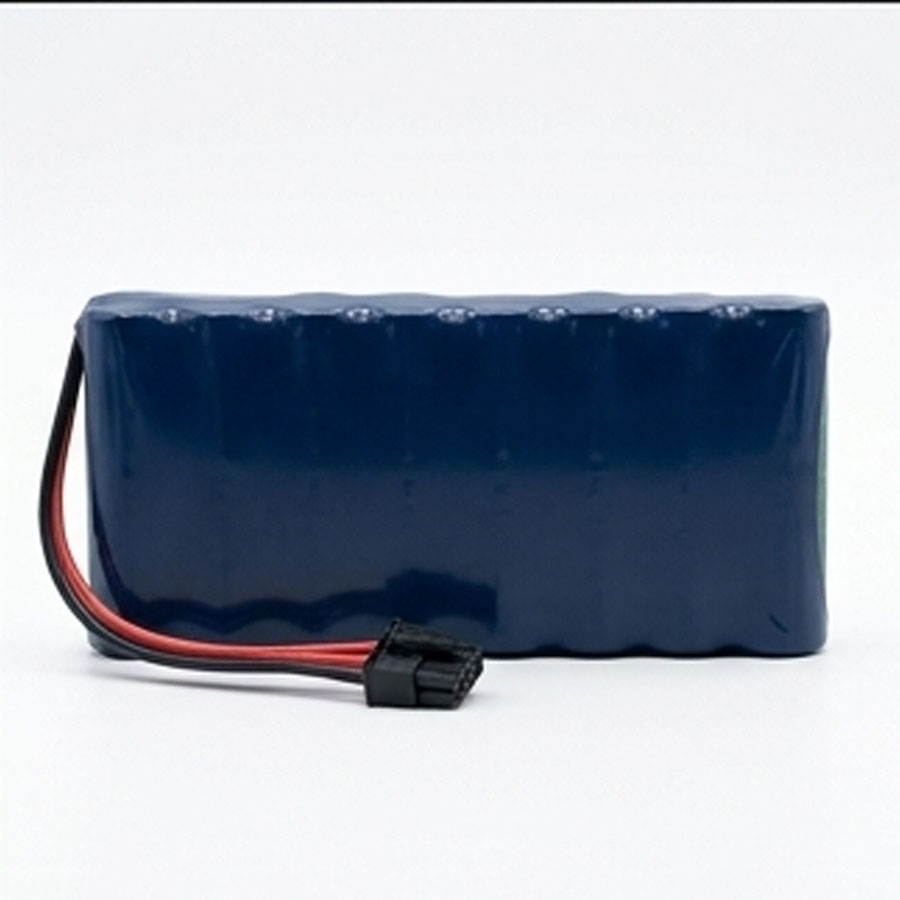
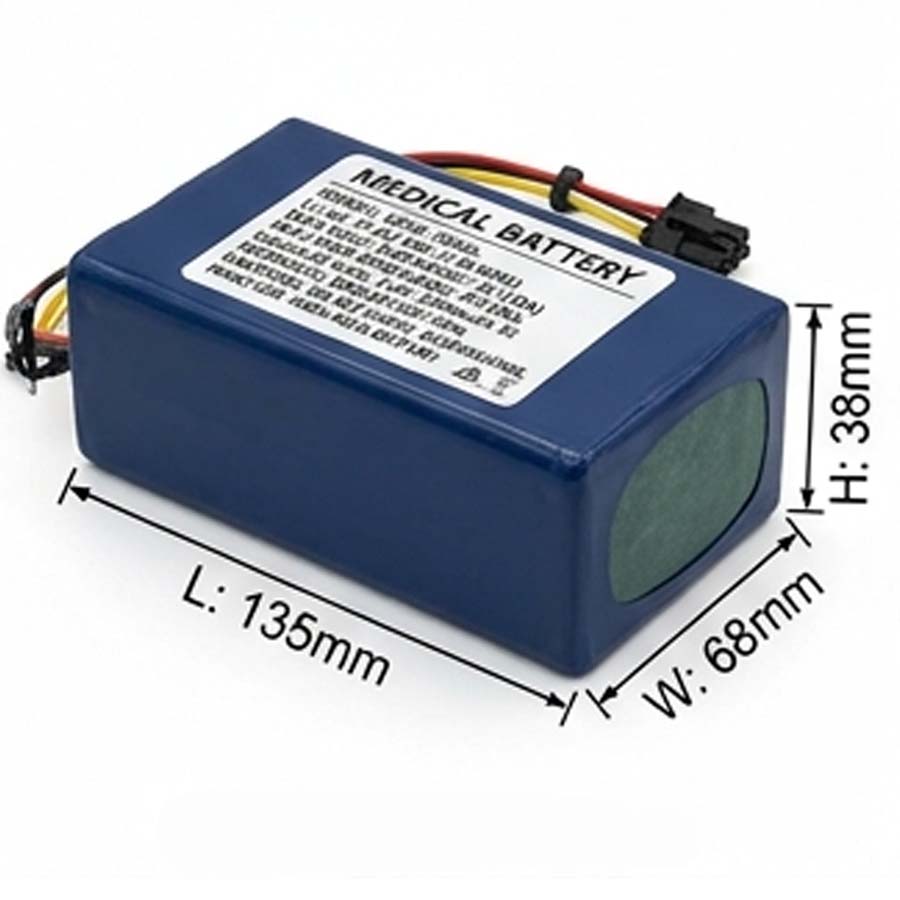
A waterproof battery is a battery designed with protective structures that help prevent water from entering the internal components. During manufacturing, engineers use sealing structures, waterproof materials, and specialized production processes to reduce moisture intrusion. This helps prevent short circuits, corrosion, and performance loss.
In most cases, a waterproof battery has the following characteristics:
- A tightly sealed outer housing
- Waterproof protection around battery connectors
- Stable operation in wet or humid environments
- Protection against moisture damage to battery cells
In product descriptions, you may also see related terms such as waterproof lithium battery, waterproof battery pack, waterproof battery pack assembly, or waterproof power battery. These are all variations of the waterproof battery concept designed for different devices.
In simple terms, a waterproof battery is not meant to stay underwater forever. Instead, it is built to operate safely under specific waterproof ratings.
A regular battery is a battery without a specialized waterproof design. These batteries are typically used in dry or indoor environments, such as:
- Remote controls
- Small electronic devices
- Indoor equipment
- Toys
- Office electronics
Regular batteries usually have a simpler structure and lower production cost. However, when exposed to moisture for long periods, several issues may occur:
- Rust on battery terminals
- Moisture entering the battery cells
- Circuit shorting
- Reduced battery lifespan
Because of this, regular batteries are often less reliable in demanding environments.
Key Differences Between Waterproof Batteries and Regular Batteries
Many users are unsure how these two types of batteries differ. The differences mainly appear in the following areas.
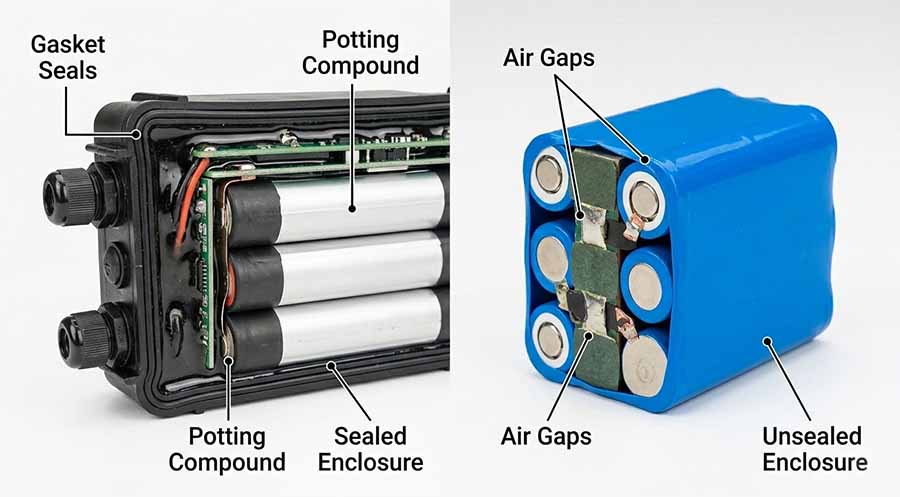
A waterproof battery has a more complex structural design. Manufacturers use sealing rings, waterproof housings, and specialized welding methods to prevent water from entering the battery.
Regular batteries mainly focus on delivering power and usually do not include waterproof protection. As a result, the structure is simpler.
Put simply:
- Waterproof battery: Focus on sealing and protection
- Regular battery: Focus on basic power supply
A waterproof battery is commonly used in more demanding environments, such as:
- Outdoor equipment
- Coastal or marine environments
- Industrial machines
- High-humidity areas
- Smart robots
- Cleaning equipment
Regular batteries are more suitable for:
- Indoor devices
- Dry environments
- Low-risk situations
If your device may come into contact with water, choosing a waterproof battery is usually the safer option.
When water enters a battery, serious problems can occur, including short circuits, overheating, or even device failure.
A waterproof battery reduces these risks through its sealed design.
Safety is especially important for devices such as:
- Power tools
- Outdoor lighting
- Portable electronics
- Smart devices
That is why many brands prioritize waterproof battery technology when upgrading their products.
In humid environments, regular batteries are more likely to corrode and degrade faster.
A waterproof battery, thanks to its protective structure, can maintain more stable performance in harsh conditions.
Over the long term, waterproof batteries are usually more durable.
Understanding Waterproof Ratings
When purchasing a waterproof battery, you may notice IP ratings such as:
- IPX4 – Protection against splashing water
- IPX6 – Protection against strong water jets
- IP67 – Can withstand temporary immersion
- IP68 – Higher level waterproof protection
If your device will be used outdoors for long periods, choosing a higher-rated waterproof battery solution is recommended.
Real User Application Scenarios
To better understand how these batteries perform in real life, let’s look at a few examples.
Case 1: Outdoor Camping Equipment

An outdoor enthusiast used a camping lantern powered by a regular battery. It worked fine in normal weather, but during a rainy trip the battery quickly absorbed moisture and the device stopped working.
After switching to a waterproof battery pack, the lantern continued to operate reliably even in wet conditions.
This shows how important a waterproof battery can be for outdoor use.
Case 2: Smart Cleaning Devices
Some households use robotic pool cleaners. These devices often operate in wet or underwater environments.
With regular batteries, failures can occur more easily. After switching to a waterproof lithium battery, the stability of the device improved significantly.
This is one reason many smart device manufacturers adopt waterproof battery technology.
Case 3: Industrial Inspection Equipment
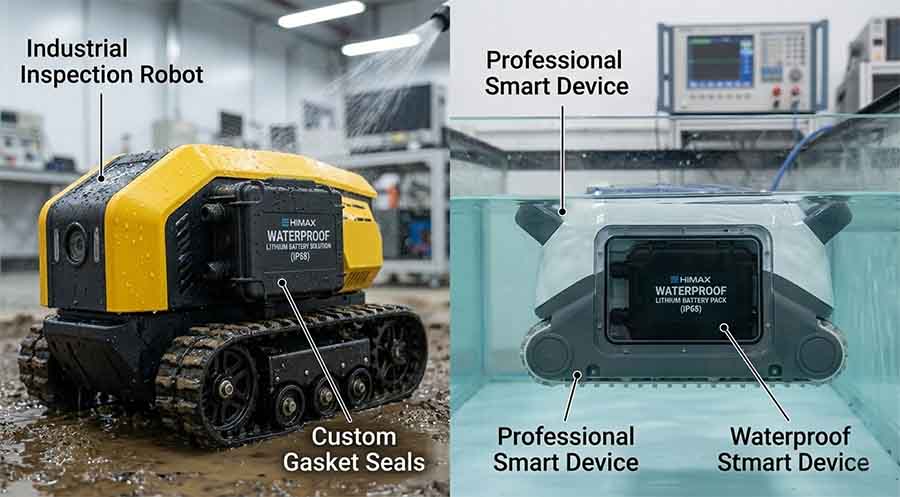
A factory installed outdoor inspection robots that needed to work in rain, humidity, and muddy environments.
During early testing, regular batteries frequently failed. After upgrading to an industrial waterproof battery pack, reliability improved dramatically.
Situations like this are very common in industrial applications.
How to Choose the Right Waterproof Battery
If you are selecting a battery for a device, consider the following factors.
You should consider a waterproof battery if the device may experience:
- Outdoor usage
- High humidity
- Rain exposure
- Industrial conditions
2. Check the Waterproof Rating
Different devices require different protection levels. Avoid choosing the lowest rating without considering real conditions.
For example:
- Outdoor equipment: recommended IPX6 or higher
- Underwater devices: recommended IP67 or highe
3. Choose a Reliable Battery Manufacturer
Battery quality directly affects device safety. Professional manufacturers usually have more advanced waterproof technology.
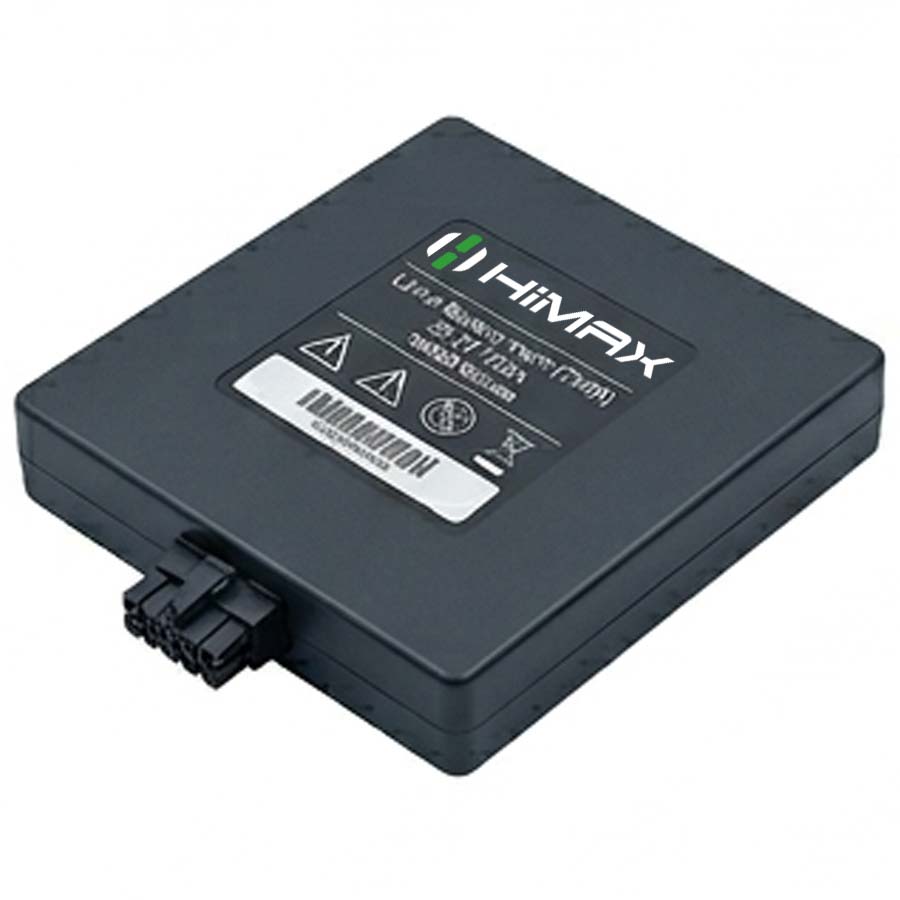
Companies like HiMAX have extensive experience in waterproof battery solutions and can provide customized batteries for different applications.
Future Trends of Waterproof Batteries
As smart devices and outdoor equipment continue to grow in popularity, demand for waterproof batteries is rising quickly. In the future, battery technology may develop in several directions:
- Higher waterproof protection levels
- Lighter battery designs
- Longer runtime
- Higher safety standards
- More stable battery management systems
For manufacturers, developing high-performance waterproof battery technology has become an important focus.
Overall, the biggest differences between waterproof batteries and regular batteries lie in structural design, usage environments, safety, and durability. For outdoor equipment, industrial machines, and smart devices, choosing a waterproof battery can greatly improve reliability and safety.
If your device frequently operates in wet or demanding environments, upgrading to a waterproof lithium battery or waterproof battery pack is often a smarter decision. As technology continues to advance, waterproof batteries will play an increasingly important role across many industries.
For users, understanding battery types and choosing the right solution will help devices operate reliably for a long time.
Find articles related to Battery Comparison Tips on HiMAX