Key Takeaways
- Selecting the right laser rangefinder battery directly impacts accuracy, uptime, and operational safety in industrial environments.
- Key factors include voltage compatibility, discharge rate, temperature tolerance, and cycle life.
- Lithium-ion and lithium primary batteries are the most common choices for industrial-grade rangefinders due to their stability and energy density.
- Real-world application scenarios—such as construction surveying, warehouse automation, and oil & gas measurement—require different battery specifications.
- Partnering with a reliable battery manufacturer ensures long-term performance, compliance, and cost efficiency.
Introduction
Laser rangefinders are widely used in industrial applications such as construction measurement, logistics automation, mining operations, and precision engineering. These devices rely heavily on stable and consistent power sources to maintain measurement accuracy.

A poor battery choice can lead to:
- Fluctuating voltage output, causing inaccurate readings
- Reduced runtime, leading to operational downtime
- Safety risks in extreme environments
That’s why choosing the right battery is not just a technical decision—it’s a strategic one for improving productivity and reducing maintenance costs.
The Factors to Consider When Choosing a Laser Rangefinder Battery
- Voltage Compatibility
Most industrial laser rangefinders operate within specific voltage ranges, commonly:
- 0V (CR123A lithium batteries)
- 7V (rechargeable lithium-ion batteries)
- 4V (battery packs for high-power devices)
Using a battery outside the recommended voltage range can damage internal circuits or reduce measurement precision. Always match the battery voltage to the device specifications provided by the manufacturer.
- Capacity (mAh) and Runtime
Battery capacity determines how long your device can operate before needing replacement or recharging.
Typical capacity ranges:
- CR123A lithium battery: 1400–1700 mAh
- 18650 lithium-ion battery: 2200–3500 mAh
For industrial use, longer runtime is critical—especially in remote or continuous-operation environments. A higher-capacity battery reduces interruptions and improves workflow efficiency.
- Discharge Rate and Power Stability
Laser rangefinders require consistent power output to maintain signal accuracy. Batteries with unstable discharge curves can cause measurement drift.
Look for:
- Low internal resistance
- Stable discharge plateau
- High pulse current capability (especially for long-range devices)
Lithium batteries typically outperform alkaline alternatives in this regard.
- Operating Temperature Range
Industrial environments often involve extreme temperatures.
Typical requirements:
- Standard range: -4°F to 140°F (-20°C to 60°C)
- Extreme environments: down to -40°F (-40°C)
Lithium batteries are preferred because they perform reliably in both high and low temperatures, whereas alkaline batteries degrade quickly in cold conditions.
- Rechargeable vs. Non-Rechargeable
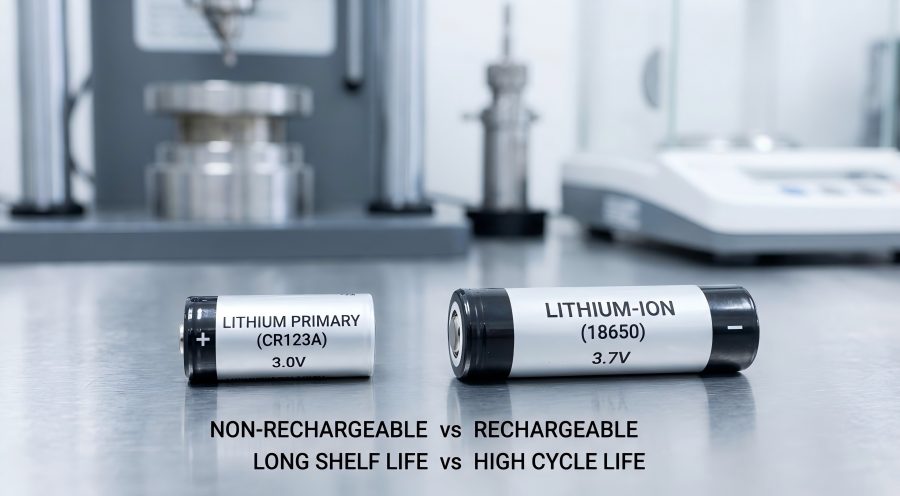
Rechargeable (Li-ion Battery):
- Lower long-term cost
- Environmentally friendly
- Suitable for frequent use
Non-rechargeable (Lithium primary):
- Longer shelf life (up to 10 years)
- Better for backup or intermittent use
- More stable in extreme conditions
Your choice depends on usage frequency and operational demands.
- Size and Form Factor
Common battery formats include:
- CR123A
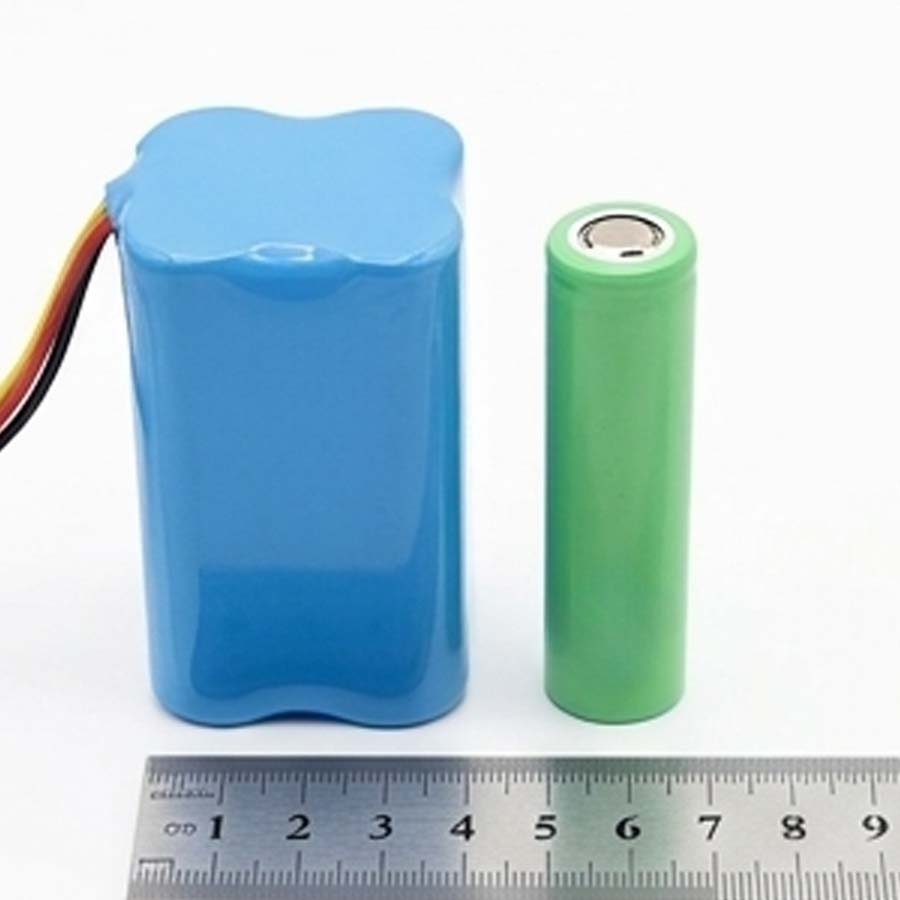
- 18650
- Custom battery packs
Industrial devices often require compact yet high-energy solutions. Always ensure the battery fits securely and meets the device’s design constraints.
User Scenarios
Case 1: Construction Surveying Company in Texas
A U.S.-based construction firm uses laser rangefinders for large-scale site measurement.
Device Specs:
- Voltage: 3.7V
- Power consumption: 1.5W
- Operating temperature: 14°F to 122°F
Battery Solution:
- 18650 lithium-ion battery
- Capacity: 3000 mAh
- Cycle life: 500+ cycles
Outcome:
- 12-hour continuous operation per charge
- Reduced battery replacement costs by 40%
- Improved measurement consistency across long workdays

Case 2: Warehouse Automation System in California
A logistics company integrates laser rangefinders into automated storage systems.
Device Specs:
- Voltage: 3.0V
- Intermittent operation with high pulse demand
Battery Solution:
- CR123A lithium primary battery
- Capacity: 1500 mAh
- Shelf life: 10 years
Outcome:
- Reliable performance in 24/7 operations
- Minimal maintenance due to long battery life
- Stable readings during rapid scanning cycles
Case 3: Oil & Gas Inspection Team in Alaska
An inspection team uses rugged laser rangefinders in extreme cold environments.
Device Specs:
- Voltage: 7.4V battery pack
- Operating temperature: -40°F to 104°F
Battery Solution:
- Custom lithium battery pack
- Capacity: 4400 mAh
- Low-temperature discharge capability
Outcome:
- Consistent performance in sub-zero conditions
- No voltage drop during critical measurements
- Enhanced safety in hazardous environments
Mistakes to Avoid
- Using consumer-grade batteriesin industrial devices
- Ignoring temperature specifications
- Choosing low-cost batteries with inconsistent quality
- Overlooking certification requirements (UL, UN38.3, IEC62133)
These mistakes can lead to equipment failure, safety risks, and higher long-term costs.
Certifications and Compliance
For industrial applications in the U.S., ensure your battery meets key standards:
- UL certification for safety
- 3 for transportation compliance
- IEC62133 for international battery safety
Compliance is especially important for companies operating across multiple regions.
How to Optimize Battery Performance
- Store batteries in controlled environments (50–77°F recommended)
- Avoid deep discharge for lithium-ion batteries
- Use smart chargers with overcharge protection
- Implement regular maintenance checks
These practices can significantly extend battery lifespan and improve device reliability.
Contact HiMAX for Custom Laser Rangefinder Batteries
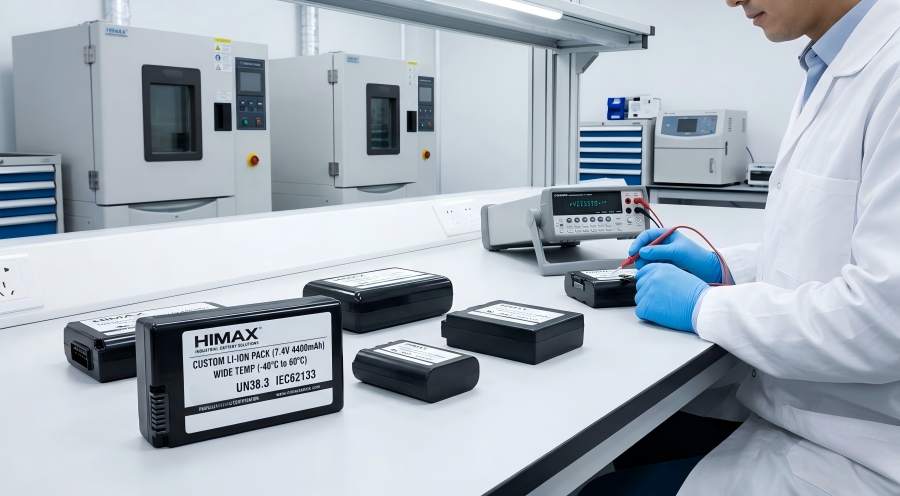
At HiMAX, we specialize in high-performance lithium battery solutions tailored for industrial applications. Our batteries are engineered to deliver:
- High energy densityfor longer runtime
- Wide temperature tolerancefor extreme environments
- Stable discharge performancefor precision उपकरण accuracy
- Customizable solutionsfor unique industrial requirements
- Global certificationsincluding UL, UN38.3, and IEC standards
Find articles related to Lithium lon Battery