Key Takeaways
OEM road e-bike replacement batteries usually offer the highest peace of mind when they are still available, correctly priced, and supported by the original bike brand.
Aftermarket e-bike batteries can be a strong solution when the OEM battery is discontinued, too expensive, out of stock, or when the rider needs a customized capacity, shape, connector, or BMS configuration.
The most important factors are not only voltage and capacity. A good replacement battery must also match the charger, connector, mounting system, controller requirements, communication protocol, and battery management system.
For road e-bike riders, weight, range, charging stability, and frame fit are especially important because the battery often needs to stay compact and balanced.
The safest aftermarket option is not the cheapest one. It is the one made by a professional battery manufacturer with proper cell selection, BMS protection, testing, technical documentation, and after-sales support.
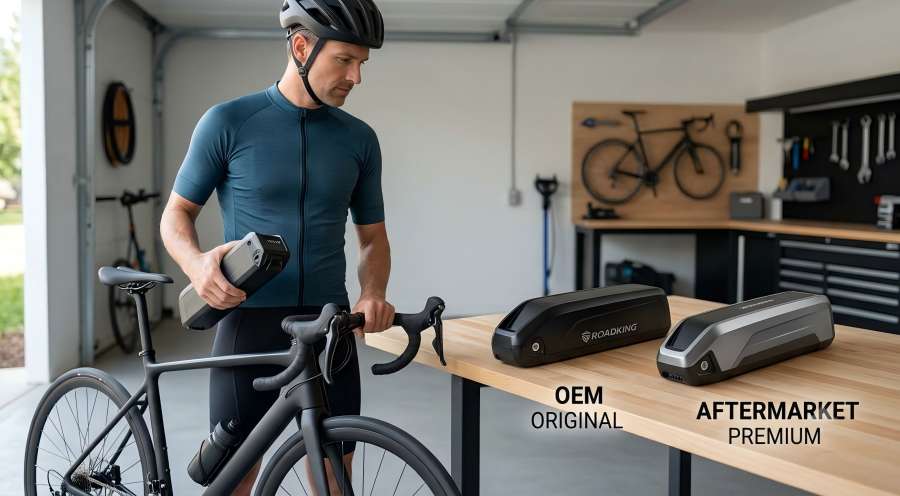
Why Road E-Bike Battery Replacement Is Different
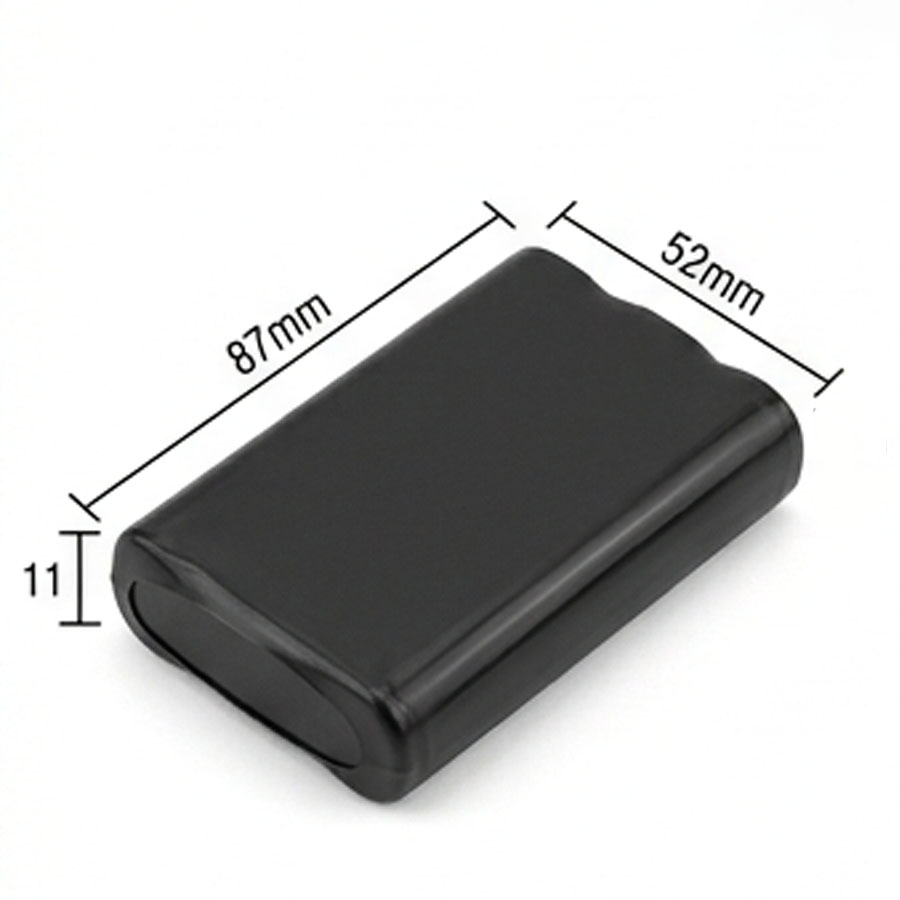
Road e-bikes are built for efficiency, lighter weight, and longer-distance riding. Unlike heavy utility e-bikes or cargo e-bikes, many road e-bikes use slim downtube batteries, integrated frame batteries, or compact external packs. That makes replacement more sensitive.
A small mismatch can create a big problem. A battery that physically fits may still have the wrong discharge connector. A battery with the same voltage may not communicate with the controller. A higher-capacity pack may offer more range but may also be too large, too heavy, or incompatible with the original mounting system.
That is why road e-bike battery replacement should be approached as a system decision, not just a battery purchase.
What Actually Gives Riders Peace of Mind?
Peace of mind does not come from the logo alone. It comes from knowing the battery will work safely and consistently with your bike.
For a road e-bike rider, the best replacement battery should answer five questions clearly:
- Will it fit the frame or mount securely?
- Will it work with the original controller and display?
- Will it charge safely with the correct charger?
- Will it deliver enough range for real rides?
- Will someone support me if something goes wrong?
If a battery supplier cannot answer these questions, the low price is not worth the risk.
When an OEM Road E-Bike Battery Makes More Sense
An OEM battery is usually the easier choice when your bike is still supported by the original brand. If your e-bike uses a smart battery system with firmware communication, proprietary connectors, or a frame-integrated design, OEM can reduce uncertainty.
For example, if your road e-bike display shows exact battery data, range estimates, health status, or error codes, the battery may be communicating with the controller. In that case, an aftermarket battery must be carefully matched, or the bike may not operate correctly.
OEM is also a strong choice for riders who want a simple buying experience. You order the correct part, install it, use the original charger, and continue riding. There is less technical decision-making involved.
Choose OEM if:
- Your bike brand still sells the battery.
- The price is acceptable.
- Your bike uses a smart battery communication system.
- You want the simplest warranty and service path.
- You do not need extra capacity or customization.
- You want the lowest compatibility risk.
When an Aftermarket Road E-Bike Battery Makes More Sense
Aftermarket does not automatically mean lower quality. In many cases, a professional aftermarket e-bike battery manufacturer can provide a practical solution when the OEM route is limited.
This is common for older road e-bikes. The frame may still be in excellent condition, the motor may still work well, and the rider may still love the bike. But the original battery may be discontinued, too expensive, or unavailable in the United States.
A high-quality aftermarket battery can help extend the life of the bike. It may also allow better range options, improved cell selection, or a custom housing when the original pack is no longer easy to source.
Choose aftermarket if:
- The OEM battery is discontinued or out of stock.
- Your original battery is too expensive to justify.
- You need a custom battery size, connector, or housing.
- You want a range upgrade.
- Your bike uses a simpler electrical system.
- You can work with a supplier that offers engineering support.
The key is to avoid random low-cost batteries with unclear specifications. A trusted aftermarket supplier should confirm voltage, capacity, connector type, maximum discharge current, charger requirements, BMS protections, size, mounting, and application compatibility.
OEM vs. Aftermarket E-Bike Batteries: Quick Comparison
| Decision Factor | OEM Replacement Battery | Aftermarket Replacement Battery | Best Peace-of-Mind Choice |
| Fit and mounting | Usually designed for the original frame | Must be verified carefully | OEM, unless aftermarket is custom-built |
| Charger compatibility | Usually uses the original charger | Must match voltage, plug, and charging profile | OEM or verified aftermarket |
| Controller communication | More likely to work without errors | May need protocol matching | OEM for smart systems |
| Price | Usually higher | Often more flexible | Aftermarket for budget control |
| Availability | Can be limited or discontinued | More flexible sourcing options | Aftermarket when OEM is unavailable |
| Capacity options | Usually limited to original specs | Can offer customized Ah/Wh options | Aftermarket for range upgrades |
| Warranty path | Supported by bike brand | Supported by battery supplier | Depends on supplier quality |
| Safety confidence | Strong if genuine and certified | Strong only if professionally built and tested | OEM or premium aftermarket |
| Best use case | Newer bikes with active brand support | Older bikes, custom builds, discontinued models | Depends on bike condition and rider needs |
Key Technical Factors to Check Before Buying
| Battery Parameter | Why It Matters | What to Check |
| Voltage | Must match the bike system | 36V, 48V, or other original system voltage |
| Capacity | Affects range | Ah and Wh rating |
| Max discharge current | Affects power delivery | Must support motor and controller demand |
| Charger voltage | Prevents unsafe charging mismatch | 36V systems often use 42V chargers; 48V systems often use 54.6V chargers |
| Connector type | Affects plug-and-play use | Discharge plug, charge port, communication plug |
| BMS protection | Helps protect the battery | Overcharge, over-discharge, short circuit, overcurrent, temperature protection |
| Cell quality | Affects lifespan and stability | Brand-grade cells and consistent cell matching |
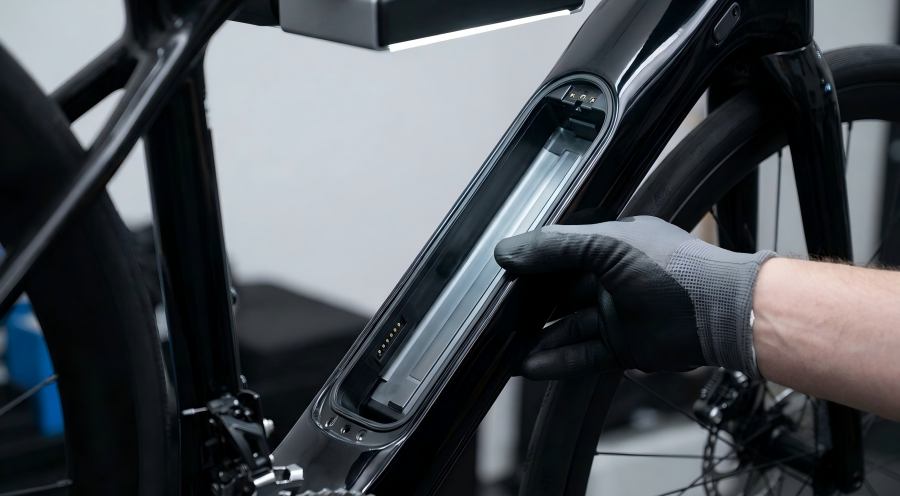
| Mounting system | Affects ride safety | Frame lock, rail, downtube mount, internal housing |
| Waterproofing | Important for outdoor rides | Case sealing and connector protection |
| Warranty support | Affects long-term peace of mind | Clear warranty, service response, replacement policy |
Rider Scenario 1: California Weekend Road Rider
Consider a rider in San Diego, California who uses a lightweight road e-bike for weekend coastal rides.
- Rider weight: 175 lb
- Bike system: 36V, 250W rear hub motor
- Original battery: 36V 10.5Ah, about 378Wh
- Average ride distance: 35–45 miles
- Terrain: rolling coastal roads
- Temperature range: 60–85°F
- Main concern: reliable range and low weight
For this rider, OEM may be the best choice if the original brand still offers the same slim battery. The rider values weight balance and frame fit more than a large range upgrade. A heavier aftermarket pack could reduce the road-bike feel.
However, if the OEM battery is discontinued, a professional aftermarket replacement with similar dimensions, same 36V system voltage, around 10–12Ah capacity, and correct discharge current can be a strong solution. The goal is not maximum capacity. The goal is stable performance without changing the bike’s handling.
Rider Scenario 2: Colorado Climbing Commuter
Now imagine a rider in Boulder, Colorado who uses a road e-bike for commuting and hill climbs.
- Rider weight: 190 lb
- Bike system: 48V, 350W mid-drive motor
- Original battery: 48V 11.6Ah, about 557Wh
- Daily route: 22 miles round trip
- Elevation gain: about 1,500 feet
- Temperature range: 35–90°F
- Main concern: hill performance and dependable discharge
This rider places more stress on the battery because climbing increases current demand. A low-quality aftermarket battery with weak cells or an undersized BMS may cause voltage sag, early cutoff, or reduced performance on climbs.
In this case, peace of mind comes from verified discharge capability. If OEM is available, it is a safe and simple option. If choosing aftermarket, the rider should confirm the BMS current rating, cell quality, thermal protection, and compatibility with the mid-drive system. A slightly higher-capacity pack, such as 48V 14Ah or around 672Wh, may provide better commuting confidence, but only if it fits safely and does not overload the mounting system.

Rider Scenario 3: New York Apartment Rider
A rider in Brooklyn, New York may have different priorities.
- Bike system: 36V compact road e-bike
- Storage: small apartment
- Charging location: indoor outlet
- Weekly riding: 50–70 miles
- Main concern: safety, charging confidence, and support
For apartment riders, battery safety becomes especially important. The rider may charge the battery indoors and store it near living space. This makes charger compatibility, battery condition, BMS protection, and supplier reliability essential.
An OEM battery offers a simpler path when available. But a professionally designed aftermarket battery can also work if it includes proper protection, clear charging instructions, and reliable support. The rider should avoid used batteries, damaged packs, unknown chargers, and batteries with no technical documentation.
Rider Scenario 4: Florida Heat and Daily Fitness Rides
A rider in Tampa, Florida uses a road e-bike for morning fitness rides before work.
- Bike system: 48V, 500W motor
- Original battery: 48V 13Ah, about 624Wh
- Ride distance: 25–30 miles
- Summer temperature: often above 90°F
- Main concern: heat management and battery lifespan
In hot climates, battery quality matters even more. Heat can accelerate battery aging, especially if the pack is charged immediately after a hard ride or stored in a hot garage. For this rider, an aftermarket battery should not be selected only by capacity. The quality of cell matching, BMS temperature protection, and case design matter.
OEM may offer predictable performance, but a high-quality aftermarket pack from a professional manufacturer can provide strong peace of mind if it is designed for the correct current load and operating environment.
FAQ: OEM vs. Aftermarket Road E-Bike Replacement Batteries
Is an aftermarket e-bike battery safe?
An aftermarket e-bike battery can be safe when it is properly designed, built, tested, and matched to the bike system. The risk increases when the battery has unknown cells, unclear BMS protection, poor connectors, no documentation, or mismatched charging requirements.
Can I use a higher-capacity battery on my road e-bike?
Sometimes, yes. A higher-capacity battery can increase range, but it must match the original voltage, fit the frame or mount safely, and support the bike’s controller requirements. Bigger is not always better if it adds too much weight or creates mounting problems.
Can I use my original charger with an aftermarket battery?
Only if the battery supplier confirms that the charger voltage, plug type, and charging profile are compatible. Never assume the charger is safe just because the plug fits.
Why are OEM e-bike batteries more expensive?
OEM batteries usually include brand-specific design, housing, communication compatibility, warranty support, and distribution costs. For riders who value plug-and-play confidence, that extra cost may be worth it.
When should I replace my road e-bike battery?
You should consider replacing the battery when range drops significantly, the battery shuts off early, charging becomes inconsistent, the case is damaged, the battery gets unusually hot, or the bike shows battery-related error codes.
Is a used e-bike battery a good idea?
A used battery may seem affordable, but it can be risky because the history of charging, storage, damage, and cycle count is often unknown. For peace of mind, a new OEM or professionally manufactured aftermarket battery is usually a better choice.
What information should I provide before ordering a replacement battery?
You should provide the original battery voltage, capacity, bike brand and model, motor power, charger output, connector photos, battery dimensions, mounting style, and any communication plug details. Photos of the old battery label are also helpful.

About HiMAX Battery
HiMAX is one of the world’s leading battery manufacturers, providing reliable battery solutions for e-bikes, electric mobility, consumer electronics, energy storage, and customized power applications. For road e-bike replacement batteries, HiMAX focuses on practical user needs such as safety, compatibility, range stability, cell quality, BMS protection, and long-term support.
Whether customers need an OEM-style replacement battery, an aftermarket e-bike battery solution, or a custom battery pack for a specific road e-bike platform, HiMAX helps turn technical requirements into dependable battery products. With professional engineering experience, strict quality control, and flexible customization capabilities, HiMAX is committed to helping riders, brands, and distributors build greater confidence in every ride.
Find articles related to Lithium-ion Battery
- Price Comparison of 6 Common Lithium-Ion Battery Voltages (3.7V–22.2V)
- Lithium-ion Battery Classification Guide: Exploring Chemical Compositions, Common Sizes, and Application Scenarios
- Lithium-Ion Battery Packs vs. Cells: Differences & Application Scenario Exploration
- Responding to Amazon US Lithium Battery Compliance Upgrades: Supply Chain Tech Guide
- A Must-Read for Business Buyers: Uncovering the “Sand-Filled” High-End Lithium Battery Scam — A Guide to Spotting Traps and Choosing Reliable Suppliers
- Procurement Secrets for Geological Exploration Companies: Why It’s Time to Equip Your Surveying Equipment with Rechargeable Lithium-Ion Batteries