Key Takeaways
- Lithium-ion and LiFePO4 18650 batteries may look similar in size, but they are designed for different priorities.
- A standard lithium-ion 18650 battery usually offers higher capacity and higher nominal voltage, making it a strong choice for compact devices that need longer runtime in a small space.
- A LiFePO4 18650 battery usually has lower capacity and lower nominal voltage, but it is often chosen for safety, thermal stability, long cycle life, and demanding working environments.
- For buyers, the best choice is not simply “which battery has more mAh.” The real question is: which chemistry gives your device the right balance of capacity, voltage, safety, discharge performance, lifespan, and cost?
Understanding the 18650 Battery Format
An 18650 battery is a cylindrical rechargeable cell. The name “18650” refers to its approximate size: 18 mm in diameter and 65 mm in length. This format is widely used in flashlights, portable electronics, battery packs, power tools, medical devices, backup systems, and industrial applications.
However, not all 18650 batteries are the same. Two batteries can have the same physical size but very different chemistry, voltage, capacity, discharge behavior, and safety characteristics. That is why comparing lithium-ion and LiFePO4 18650 batteries only by appearance can lead to the wrong buying decision.
Lithium-ion 18650 batteries usually refer to chemistries such as NMC, NCA, LCO, or similar high-energy lithium-based systems. These are common in consumer electronics, flashlights, laptops, e-bikes, and high-capacity portable battery packs. A typical lithium-ion 18650 cell often has a nominal voltage around 3.6V to 3.7V and is commonly charged up to 4.2V, depending on the cell design and manufacturer specification. (ersaelectronics.com)
LiFePO4, also called lithium iron phosphate or LFP, is another lithium-based chemistry. In 18650 format, LiFePO4 cells usually have a nominal voltage around 3.2V and a full-charge voltage around 3.6V. LiFePO4 is widely valued for stability, safety, and long cycle life, even though its energy density is usually lower than many standard lithium-ion chemistries. (evlithium.com)
Capacity Comparison: Why mAh Alone Can Be Misleading
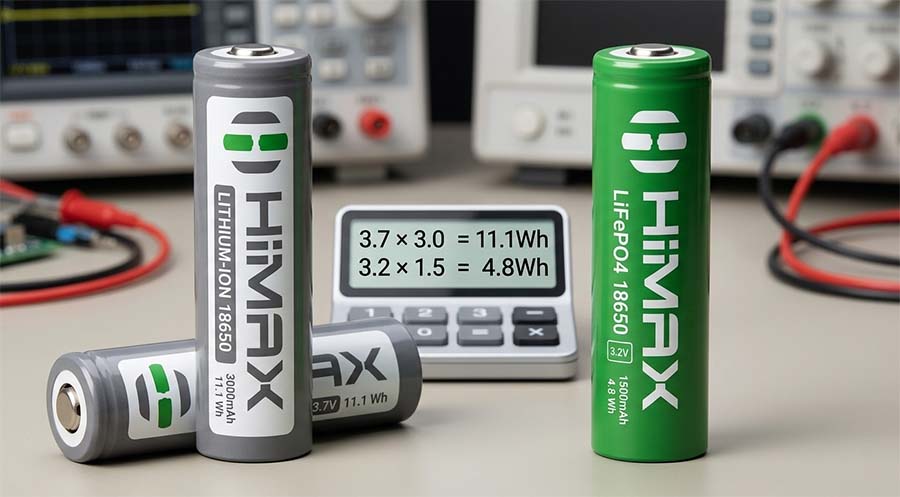
When shoppers compare 18650 batteries, the first number they often check is capacity, usually shown in mAh. For example, one lithium-ion 18650 battery may be labeled 3000mAh, while a LiFePO4 18650 battery may be labeled 1500mAh. At first glance, the lithium-ion battery seems like the obvious winner.
But battery capacity should be understood together with voltage. A simple way to compare energy is watt-hours, or Wh:
Watt-hours = Voltage × Amp-hours
For example:
A 3000mAh lithium-ion 18650 cell at 3.7V equals approximately:
3.7V × 3.0Ah = 11.1Wh
A 1500mAh LiFePO4 18650 cell at 3.2V equals approximately:
3.2V × 1.5Ah = 4.8Wh
This means that in many same-size 18650 applications, lithium-ion provides more stored energy and longer runtime. Standard lithium-ion 18650 batteries commonly fall in a capacity range around 1800mAh to 3500mAh, depending on chemistry and design. LiFePO4 18650 cells are often lower in capacity, with many typical examples around 1500mAh, though exact specifications vary by manufacturer and model.
So, if your main goal is maximum runtime in the smallest possible space, lithium-ion usually has the advantage. But if your main goal is safety, durability, stable discharge, or longer service life, LiFePO4 may be the smarter choice.
Lithium-Ion 18650 Batteries: Best for Higher Capacity and Compact Runtime
Lithium-ion 18650 batteries are often selected when the buyer needs more energy in a small, lightweight cell. This is why they are common in portable electronics, LED flashlights, laptops, handheld devices, and compact battery packs.
For a user who wants a flashlight to run longer on a single charge, a high-capacity lithium-ion 18650 battery can be a practical choice. For example, if a flashlight consumes 5 watts and uses one 3000mAh 3.7V lithium-ion cell, the estimated energy is about 11.1Wh. In theory, that could provide around 2.2 hours of runtime before real-world efficiency losses.
Lithium-ion also works well when weight matters. If a buyer is building a compact battery pack for a portable device, higher energy density can reduce the number of cells needed. This helps keep the product smaller and lighter.
However, lithium-ion batteries require proper battery management. Overcharging, over-discharging, overheating, physical damage, or using the wrong charger can reduce lifespan and create safety risks. Battery University notes that high voltage stress can affect lithium-based battery life, and charge range management can help prolong battery life. (Battery University)
LiFePO4 18650 Batteries: Best for Safety, Stability, and Long Service Life
LiFePO4 18650 batteries are usually chosen for a different reason. Instead of maximizing capacity in the smallest size, they prioritize stability, safety, and cycle performance. LiFePO4 chemistry is known for strong thermal stability and long cycle life, which makes it popular in industrial equipment, solar energy storage, backup power, mobility devices, and applications where reliability matters more than maximum mAh.
For example, a buyer using a battery in a device that sits in a garage, workshop, service vehicle, or outdoor environment may care more about stable performance and safety than maximum runtime. In this type of case, LiFePO4 can be attractive because it is more tolerant in demanding use environments compared with many high-energy lithium-ion options.
The lower nominal voltage is important. A LiFePO4 18650 cell at 3.2V is not a direct drop-in replacement for a 3.7V lithium-ion cell unless the device is designed to support that voltage range. This is one of the most common mistakes buyers make. The battery may physically fit, but the device may not perform correctly if the voltage is wrong.
Exploring Scenarios
Scenario 1: High-Lumen Flashlight for Outdoor Use
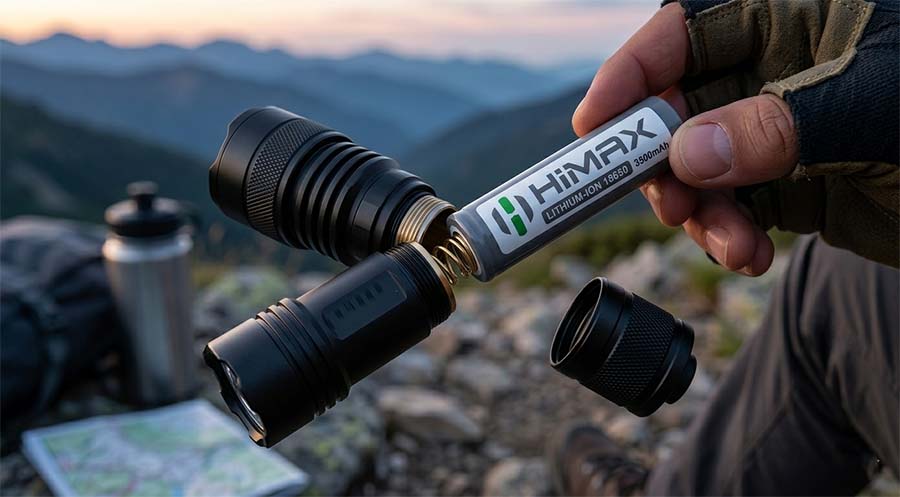
Imagine a buyer in Colorado who needs a rechargeable 18650 battery for a high-lumen hiking flashlight. The flashlight requires one 18650 cell and draws around 8W on high mode.
If the buyer chooses a 3500mAh lithium-ion 18650 cell at 3.7V, the energy is approximately:
3.7V × 3.5Ah = 12.95Wh
Estimated runtime before efficiency loss:
12.95Wh ÷ 8W = 1.62 hours
If the buyer chooses a 1500mAh LiFePO4 18650 cell at 3.2V, the energy is approximately:
3.2V × 1.5Ah = 4.8Wh
Estimated runtime before efficiency loss:
4.8Wh ÷ 8W = 0.6 hours
For this buyer, lithium-ion is likely the better choice because runtime and compact energy are the top priorities. However, the buyer must confirm that the flashlight supports the selected cell, discharge current, and protection requirements.
Scenario 2: Solar Sensor or Outdoor Monitoring Device
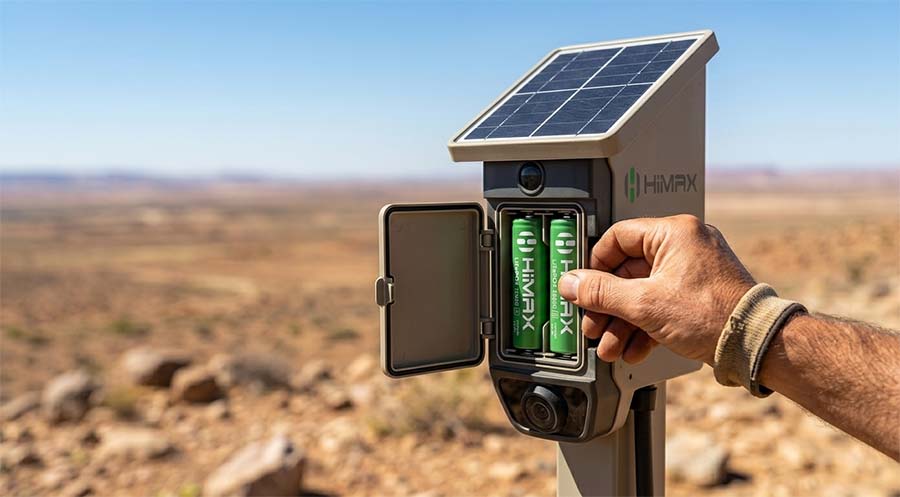
Now consider a buyer in Arizona who needs batteries for a solar-powered outdoor sensor. The device charges during the day and discharges at night. The battery may experience heat, daily cycling, and long-term outdoor use.
In this case, the buyer may not need the highest possible capacity. Instead, they need a chemistry that handles repeated cycling and stable operation well. A LiFePO4 18650 battery may be a better fit because of its safety profile and long cycle-life advantages. The lower voltage must still match the device design, but for a system engineered around LiFePO4, this chemistry can offer strong long-term value.
For a solar sensor consuming 0.5W overnight for 8 hours, the energy requirement is:
0.5W × 8 hours = 4Wh
A 1500mAh LiFePO4 18650 cell at 3.2V provides approximately 4.8Wh before real-world losses. That may be enough if the system is efficiently designed. If the device needs more reserve capacity for cloudy days, multiple cells or a larger battery pack may be required.
Scenario 3: Portable Medical or Safety Device
For a user in Florida buying batteries for a portable safety device, reliability may matter more than maximum runtime. If the device is used in emergency conditions, battery stability and predictable performance become important buying factors.
Lithium-ion may still be selected if the device requires higher voltage or longer runtime in a small size. But if the device manufacturer specifies LiFePO4, buyers should not replace it with a standard lithium-ion 18650 battery just because the size looks the same. The charging voltage, discharge curve, and battery management system may be different.
This scenario highlights an important buyer rule: always match the battery chemistry to the device specification. A wrong chemistry can lead to poor performance, charging failure, shortened lifespan, or safety issues.
Scenario 4: DIY Battery Pack for a Small Backup System
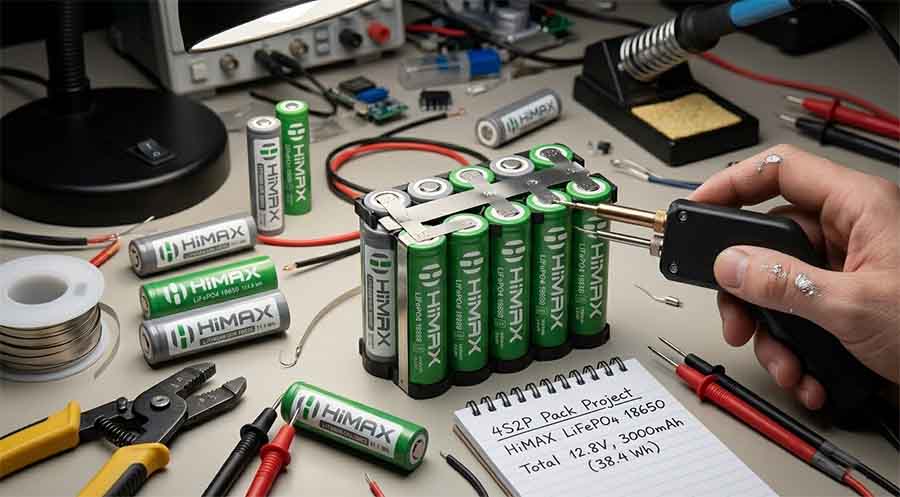
A buyer in Texas wants to build a small backup battery pack for LED lighting during power outages. The system requires stable output, moderate runtime, and long storage life.
If the buyer wants the smallest possible pack, lithium-ion may reduce size and weight. For example, a 4-cell lithium-ion pack using 3000mAh cells can store roughly:
4 × 11.1Wh = 44.4Wh
A 4-cell LiFePO4 pack using 1500mAh cells stores roughly:
4 × 4.8Wh = 19.2Wh
Lithium-ion clearly offers more stored energy in this example. But if the buyer wants a safer chemistry for long-term standby use and frequent cycling, LiFePO4 may still be preferred, especially if the system is designed for its voltage profile.
Scenario 5: Power Tools and High-Drain Applications
For high-drain applications, buyers must consider discharge rate, not just capacity. Some lithium-ion 18650 cells are designed for high energy, while others are designed for high power. Battery University notes that lithium-ion power cells can support high continuous discharge rates, and Li-phosphate can also support high current performance in suitable cell designs. (Battery University)
A buyer using 18650 cells in a compact tool, motorized device, or high-drain lighting system should check:
Cell chemistry
Continuous discharge rating
Peak discharge rating
Operating temperature range
Protection circuit requirements
Manufacturer safety certification
Charger compatibility
A 3500mAh cell is not always better than a 2500mAh cell if the device requires high current. In high-drain use, a lower-capacity cell with better discharge capability may perform more safely and consistently.
Buying Checklist for 18650 Batteries
Before purchasing lithium-ion or LiFePO4 18650 batteries, buyers should ask:
Does my device require 3.6V/3.7V lithium-ion or 3.2V LiFePO4?
What is the required capacity in mAh and energy in Wh?
What continuous discharge current does the device need?
Does the device require protected or unprotected cells?
Is the charger compatible with the battery chemistry?
Will the battery be used indoors, outdoors, in heat, or in cold conditions?
Is long runtime more important, or is long cycle life more important?
Is the battery from a trusted manufacturer with consistent specifications?
Conclusion
Lithium-ion and LiFePO4 18650 batteries serve different needs. Lithium-ion usually wins in capacity and energy density. LiFePO4 usually wins in safety, stability, and long-term durability. The right choice depends on the device, the environment, and the buyer’s real-world expectations.
If you want longer runtime in a compact device, lithium-ion is often the better fit. If you want a stable battery chemistry for repeated cycling, outdoor systems, industrial use, or safety-focused applications, LiFePO4 deserves serious consideration.
The smartest buying decision is not simply choosing the highest mAh number. It is choosing the battery chemistry that matches your device design, power demand, charging system, and performance goals.
Try HiMAX Battery
HiMAX is one of the world’s leading battery manufacturers, dedicated to providing reliable, high-performance battery solutions for consumer, commercial, and industrial applications. From lithium-ion to LiFePO4 battery technologies, HiMAX focuses on stable quality, strong engineering support, and application-based battery customization. Whether you need 18650 cells for portable electronics, energy storage, smart devices, outdoor equipment, or professional battery packs, HiMAX helps customers choose the right battery chemistry, capacity, voltage, and configuration for real-world performance.
Find articles related to 18650 Battery