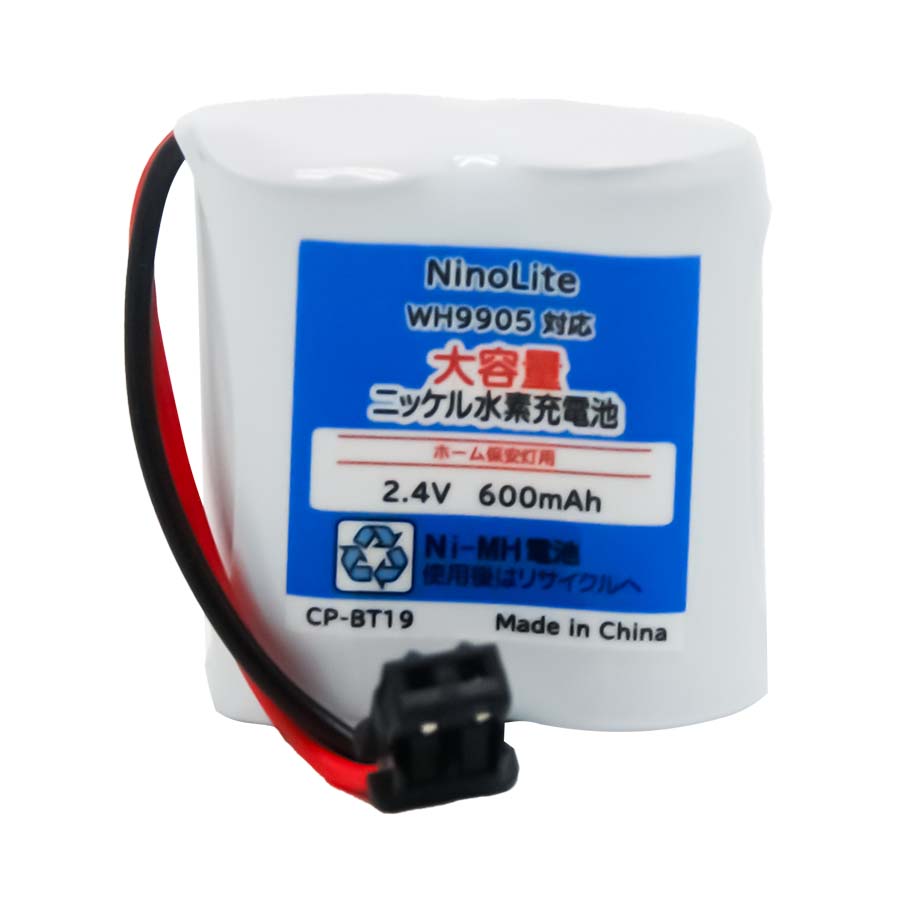
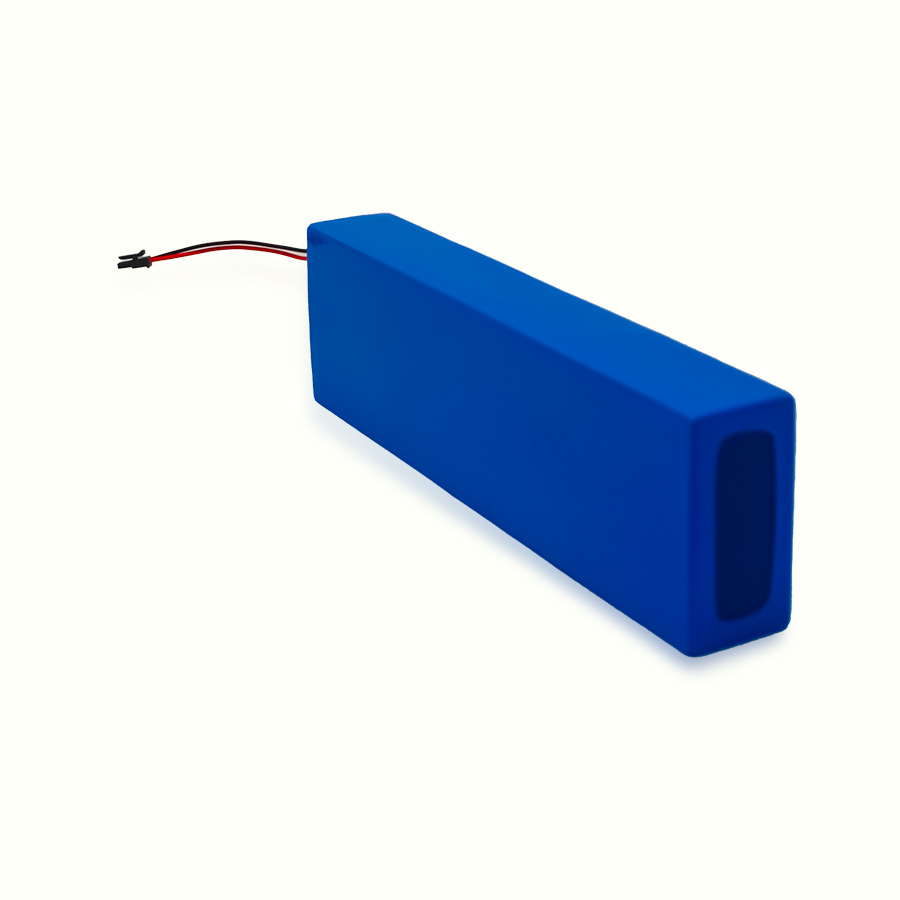
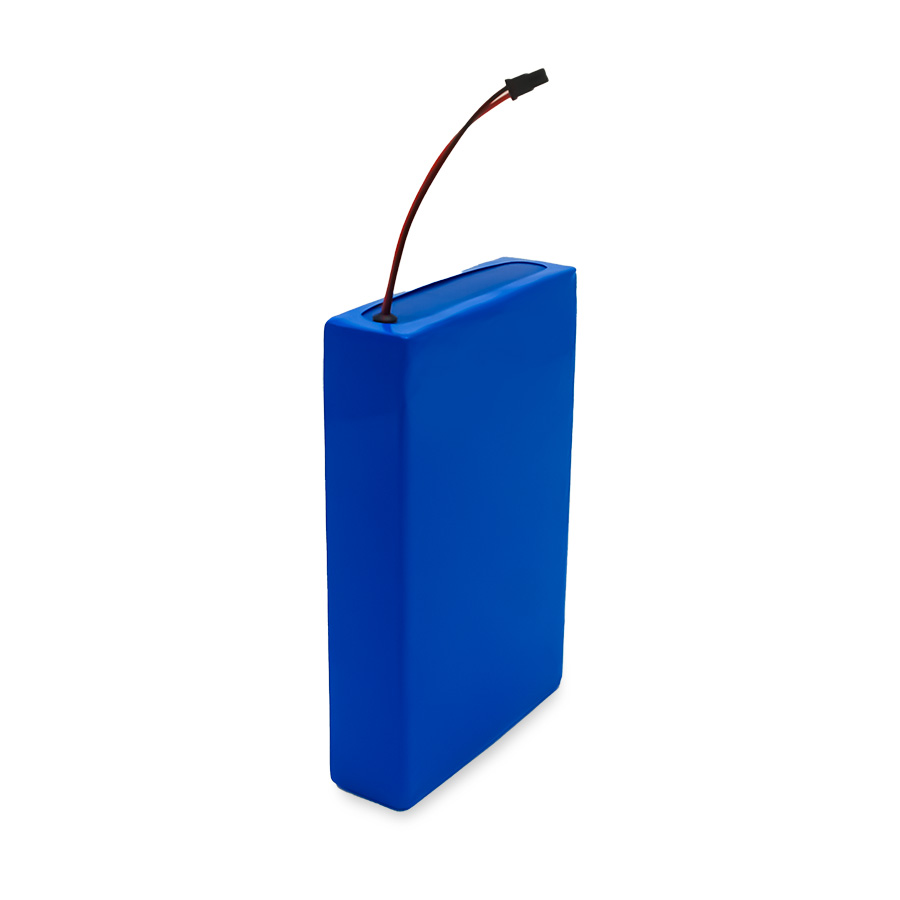
The lithium polymer battery, also known as a LiPo battery, plays a critical role in powering modern electronic devices, drones, medical instruments, and industrial systems. Its performance directly affects the reliability and safety of your equipment. Over time, however, every LiPo battery begins to degrade. Understanding when to replace it is essential to prevent sudden power failures and costly downtime.
We explains five key indicators to help you assess the health of your LiPo battery and determine the right replacement timing. Whether you use it in robotics, drones, IoT devices, or consumer electronics, following these guidelines will help you maintain peak performance and safety.

1. Voltage Stability — The Most Direct Sign of LiPo Battery Health
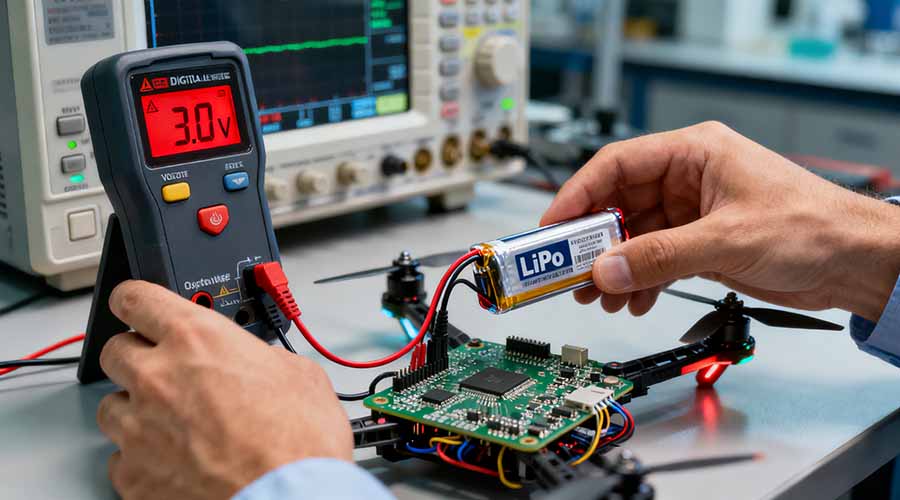
One of the most critical indicators of a LiPo battery’s life is voltage stability. A healthy battery maintains a consistent voltage under load. If you notice that your battery voltage drops rapidly when your device starts running, it’s often an early sign of internal wear.
The standard nominal voltage for a single-cell LiPo battery is 3.7V. When the voltage drops below 3.0V per cell under normal conditions, it means the internal resistance has likely increased, reducing the battery’s efficiency.
- Use a digital voltmeter or battery analyzer to monitor each cell’s voltage.
- Check voltage both at full charge and after partial discharge.
- Look for irregular or sudden voltage drops; this indicates cell degradation.
Ignoring unstable voltage can lead to battery swelling, reduced cycle life, and unpredictable performance in your device.
2. Capacity Retention — Tracking the Energy You Can Still Use
Battery capacity measures how much energy a LiPo battery can hold compared to its original specification. Over hundreds of charge and discharge cycles, this capacity gradually decreases.
A standard LiPo battery should retain about 80% of its rated capacity after 300 to 500 full cycles under proper care. When capacity falls below 70%, it’s a strong signal that the battery needs replacement.
- Fully charge the battery and record its total capacity (in mAh).
- Run the device until the battery reaches its safe discharge limit.
- Compare the measured capacity to the rated capacity printed on the label.
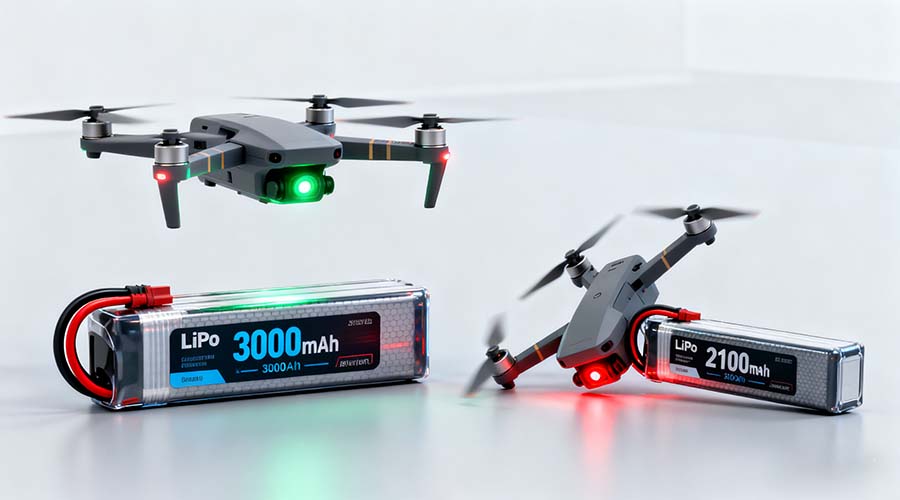
For example, if a 3000mAh LiPo battery only delivers around 2100mAh after full discharge, its capacity has dropped to 70%, and it’s time to consider a replacement.
Monitoring capacity helps you avoid downtime caused by premature power loss, especially in industrial or medical equipment where reliability is non-negotiable.
3. Internal Resistance — The Hidden Factor Behind Heat and Power Drop
Internal resistance (IR) determines how efficiently a LiPo battery delivers power. As the battery ages, internal resistance increases due to chemical changes inside the cells. High internal resistance leads to excessive heat generation, lower output voltage, and shorter run times.
When IR exceeds 20–30% of the original factory value, you’ll notice slower response, lower current output, and faster voltage sag under load.
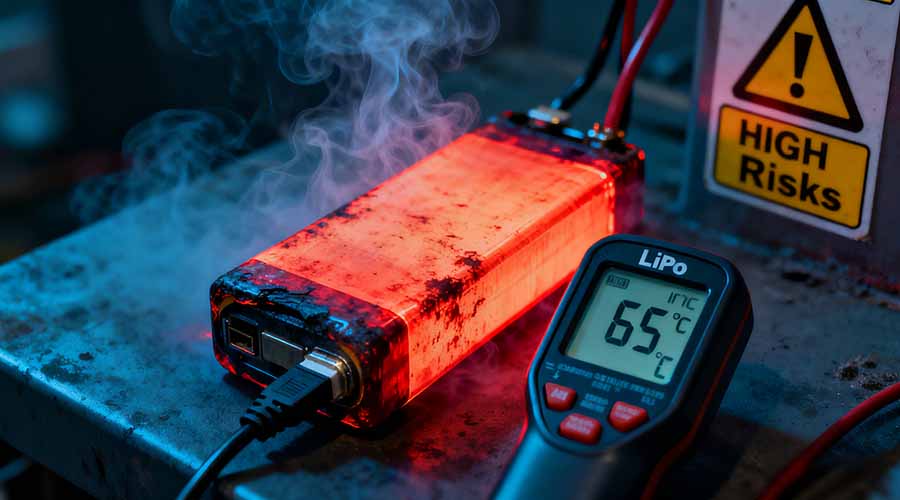
- Use a battery internal resistance tester or smart charger that provides IR readings.
- Compare new and old data regularly to detect gradual deterioration.
Reducing IR buildup involves proper charging habits. Avoid fast charging at extreme temperatures and always use a LiPo-compatible charger. Maintaining optimal temperature (15°C–30°C) can significantly extend your LiPo battery life.
4. Physical Condition — Bulging or Swelling Is a Red Flag
The physical appearance of your LiPo battery pack can tell you a lot about its internal health. Any swelling, deformation, or leakage is a serious warning sign.
Swelling happens when gas builds up inside the cells due to electrolyte breakdown, often caused by overcharging, overheating, or internal short circuits. Once swelling appears, the battery is no longer safe to use — even if it still holds a charge.
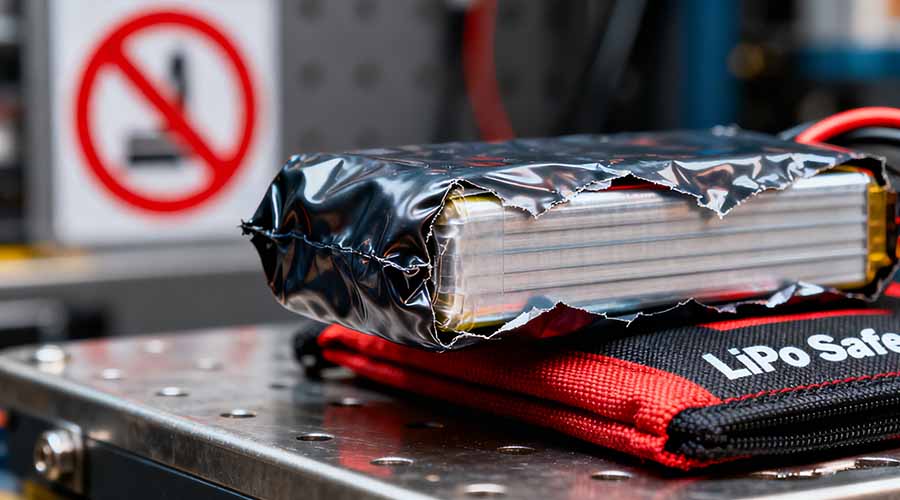
- Stop using a swollen battery immediately.
- Dispose of it safely following local e-waste regulations.
- Never puncture or compress a swollen pack.
Physically damaged LiPo batteries can explode or catch fire under stress. Always store them in fireproof LiPo battery bags and never leave them unattended while charging.
5. Self-Discharge Rate — Detecting Early Aging Before It’s Too Late
Every LiPo battery slowly loses charge when not in use. However, if your battery loses power much faster than usual — even when stored properly — it indicates self-discharge due to chemical instability or micro-shorts inside the cells.
Healthy LiPo batteries should retain over 90% of their charge after a month of storage at room temperature. A rapid drop (for instance, to 70% or below) shows that internal degradation is progressing and replacement should be planned soon.
- Fully charge the battery and record its voltage.
- Store it for two weeks in a cool, dry place.
- Re-check voltage levels. A significant drop suggests aging or internal leakage.
Keeping track of self-discharge performance helps predict end-of-life before failure occurs — saving your devices from sudden shutdowns or permanent damage.
Additional Tips to Extend LiPo Battery Life
To get the most from your LiPo batteries, you should follow a few proven maintenance practices:
- Avoid overcharging: Never exceed 4.2V per cell.
- Avoid deep discharges: Stop discharging at around 3.3V per cell.
- Store at 50–60% charge for long periods.
- Use proper chargers and avoid low-quality cables or adapters.
- Keep batteries at moderate temperatures, ideally between 15°C and 25°C.
- Balance charge multi-cell packs regularly to keep voltage levels even.
When to Replace a LiPo Battery
After analyzing all five indicators — voltage stability, capacity, internal resistance, physical condition, and self-discharge — you can make a reliable replacement decision. Generally, a LiPo battery should be replaced when:
- Capacity retention drops below 70–75%.
- Internal resistance increases significantly.
- Voltage drops sharply under load.
- The pack becomes swollen or deformed.
- The battery fails to hold charge for more than a few days.
Replacing a degraded LiPo battery on time helps avoid equipment downtime, unexpected shutdowns, and even potential safety hazards like thermal runaway.
HiMAX — Reliable Power for Every Application
If you’re looking for dependable LiPo batteries for both compact and high-capacity devices, HiMAX offers industry-leading options to meet diverse performance needs.
For small electronics, wearable devices, and lightweight drones, HiMAX’s 200mAh~500mAh LiPo battery provides stable discharge rates, compact size, and long cycle life.
For larger applications such as robotics, RC models, and industrial systems, the HiMAX 2000mAh~4000mAh LiPo battery delivers higher power density, excellent heat management, and superior voltage stability for extended runtimes.
Each HiMAX LiPo battery undergoes strict quality testing and complies with international safety standards, ensuring consistent performance and maximum reliability. Whether you need miniature cells or heavy-duty packs, HiMAX empowers your devices with durable, high-efficiency energy solutions.
Find articles related to lipo batteries