In the era of clean energy, batteries have become the core power source for everything from electric vehicles (EVs) to wearable devices. However, different battery formats vary significantly in performance, safety, cost, and application scenarios. For product designers and procurement teams, choosing between cylindrical, prismatic, and pouch batteries is a critical decision that directly impacts product competitiveness.
In this guide, we’ll break down the key characteristics of these three mainstream battery types, explore real-world applications, and provide practical insights to help you make safer and more efficient battery selection decisions.
Understanding the Three Main Battery Formats
Before diving into comparisons, let’s take a quick look at how each battery type is structured.
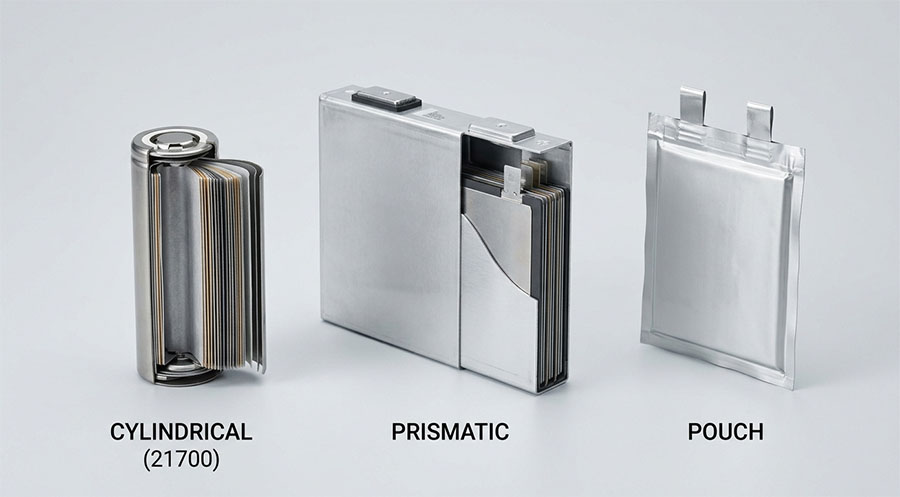
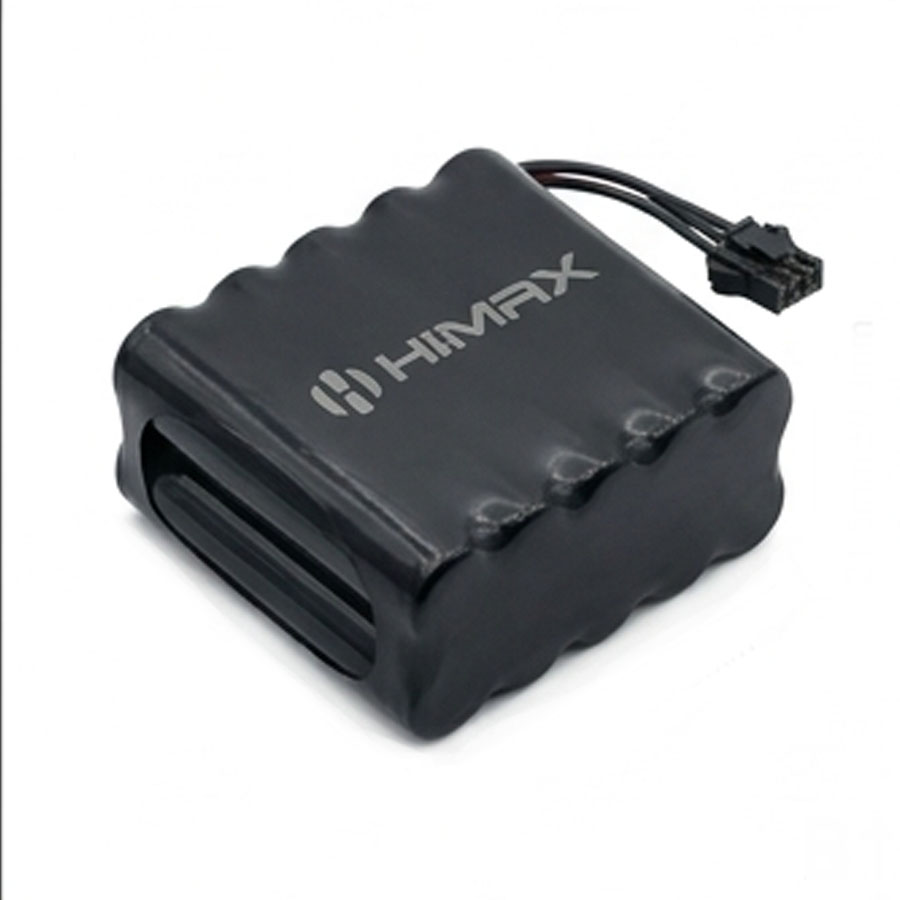
Common models include 18650 and 21700. These cells feature a cylindrical shape with a well-established internal structure and highly automated manufacturing processes.
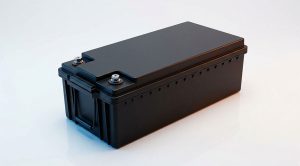
Prismatic batteries come in square or rectangular aluminum or steel casings. They offer better space utilization and are typically used in high-capacity applications.
Pouch cells use aluminum-plastic film packaging. They are lightweight, flexible in shape, and highly customizable—ideal for compact designs.
Performance & Structural Comparison: Which Fits Your Product?
In real-world applications, the differences between these battery types mainly come down to the following factors:
- Pouch batteries: Highest (thinner and lighter)
- Prismatic batteries: Moderate
- Cylindrical batteries: Slightly lower, but very stable
- Cylindrical batteries: Highest safety (robust structure, excellent heat dissipation)
- Prismatic batteries: Moderate (depends heavily on design quality)
- Pouch batteries: Lower (prone to swelling; requires strict protection design)
- Cylindrical batteries: Lowest cost, best consistency
- Prismatic batteries: متوسط (mid-range)
- Pouch batteries: Higher cost, stricter manufacturing requirements
- Pouch batteries: Highest (custom shapes possible)
- Prismatic batteries: High
- Cylindrical batteries: Lower (gaps between cells reduce efficiency)
Application Scenarios: From EVs to Wearables
Different use cases demand different battery characteristics. Let’s look at typical applications across industries.
Recommended Types: Cylindrical or Prismatic
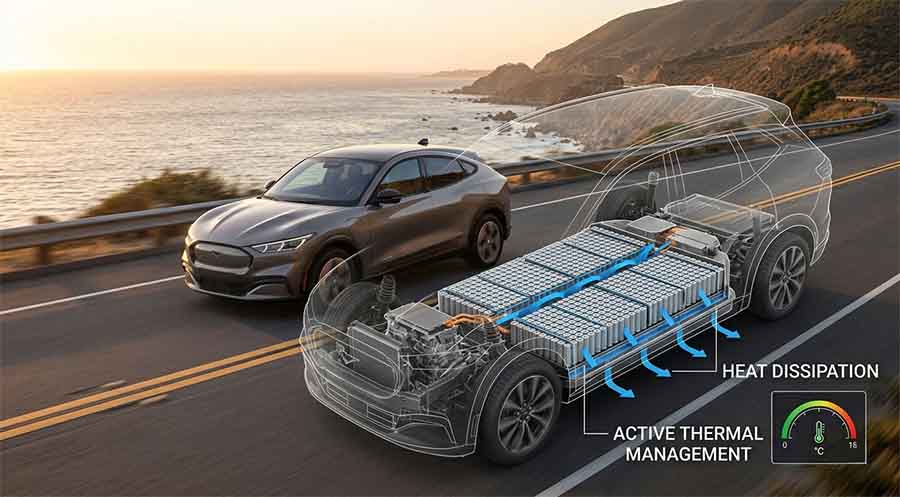
Case Study: EV User in California
- Vehicle: Mid-size electric SUV
- Battery pack: 21700 cylindrical cells
- Cell capacity: 5000mAh
- System voltage: 350V
- Daily commute: ~60 miles (96 km)
Analysis:
Cylindrical batteries excel in thermal management and safety, making them ideal for high-power output scenarios. Prismatic batteries, on the other hand, are better suited for maximizing space efficiency and optimizing vehicle architecture.
2. Home Energy Storage Systems
Recommended Type: Prismatic Batteries
Case Study: Texas Residential Storage System
- Storage capacity: 10kWh
- Battery type: LiFePO₄ prismatic cells
- Cycle life: 6,000 cycles
- Operating temperature: -10°C to 50°C
Analysis:
Prismatic batteries offer large capacity and structural stability, making them a strong fit for both residential and commercial energy storage systems.
3. Consumer Electronics (Laptops / Tablets)
Recommended Type: Pouch Batteries
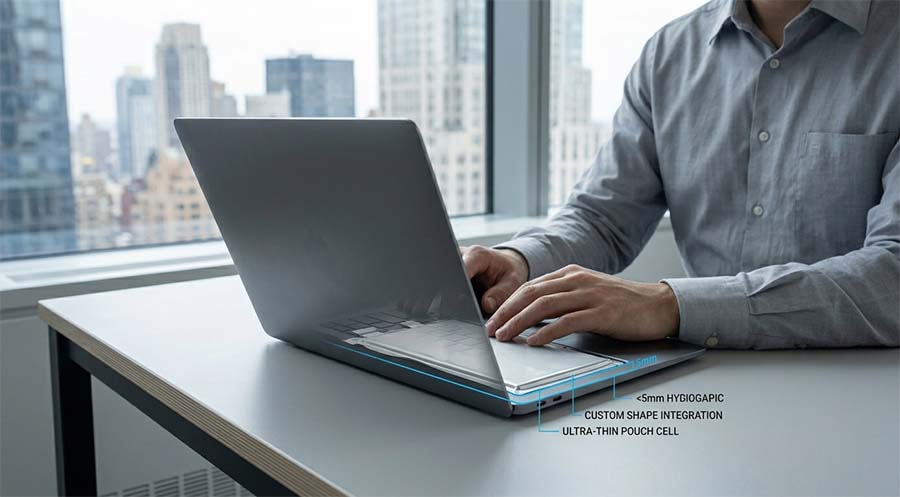
Case Study: Office User in New York
- Device: 13-inch ultrathin laptop
- Battery capacity: 6000mAh
- Thickness requirement: <5mm
- Battery life: 10+ hours
Analysis:
Pouch batteries enable ultra-thin and lightweight designs, making them the preferred choice for premium consumer electronics.
4. Wearable Devices (Smartwatches / AR Devices)
Recommended Type: Pouch Batteries
Case Study: Tech Professional in Silicon Valley
- Device: Smartwatch
- Battery capacity: 300mAh
- Size: 30mm × 20mm × 4mm
- Use case: 24/7 health monitoring
Analysis:
Thanks to their flexible form factor, pouch batteries can be customized to fit compact and complex designs—ideal for wearables.
5. Power Tools & Outdoor Equipment
Recommended Type: Cylindrical Batteries
Case Study: Outdoor User in Florida
- Device: Cordless drill
- Battery type: 18650 pack
- Voltage: 18V
- Usage: High-intensity daily operation
Analysis:
Cylindrical batteries are impact-resistant and offer excellent heat dissipation, making them perfect for high-load and high-frequency applications.
Safety Selection Guide: How to Minimize Battery Risks
Safety should always be your top priority when selecting a battery. Here are some key recommendations:
1. Choose Based on Application Environment
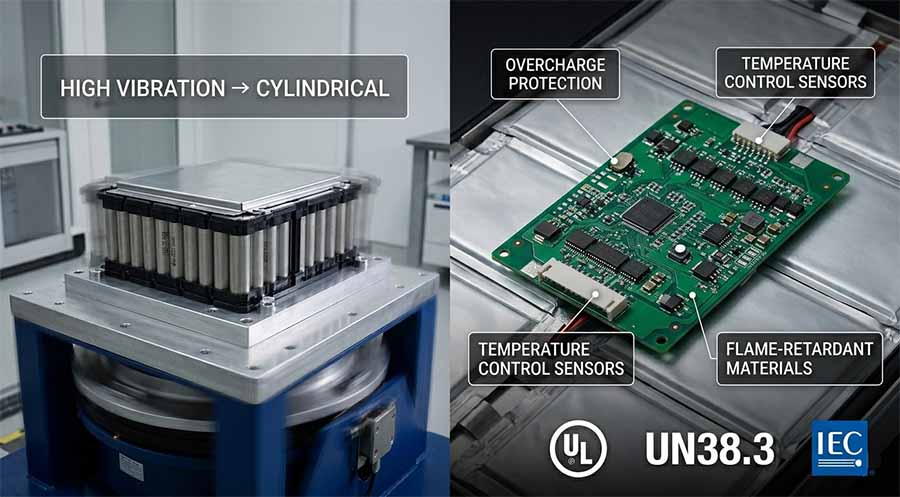
- High vibration environments → Go with cylindrical batteries
- Limited space → Choose pouch batteries
- High capacity needs → Opt for prismatic batteries
2. Prioritize Battery Management Systems (BMS)
No matter which battery you choose, a reliable BMS is essential. It ensures:
- Overcharge protection
- Over-discharge protection
- Temperature control
3. Meet Certification Standards (U.S. Market)
To enter the U.S. market, your batteries should comply with:
- UL certification
- UN38.3 transportation certification
- IEC standards
4. Optimize Thermal Management
Especially for EVs and energy storage systems, thermal runaway is the biggest risk. Mitigation requires:
- Efficient heat dissipation design
- Temperature control systems
- Flame-retardant materials
How to Make the Best Battery Choice
Here’s a simple way to decide:
- Prioritize safety and stability → Choose cylindrical batteries
- Prioritize space efficiency and capacity → Choose prismatic batteries
- Prioritize lightweight design and flexibility → Choose pouch batteries
If your product needs to balance multiple factors, consider hybrid solutions or custom battery designs.
>>>>>>
You may also be interested in HiMAX batteries. As one of the world’s leading battery manufacturers, HiMAX specializes in delivering high-performance, safe, and reliable battery solutions worldwide. With mature production lines for cylindrical, prismatic, and pouch batteries, HiMAX provides fully customized solutions tailored to your specific application needs.
>>>>>>
Find articles related to 18650 Lithium Battery