In many modern electronic devices and industrial systems, standard batteries are often unable to meet specific technical requirements. As a result, more companies are turning to custom battery solutions to power their products.
Applications such as smart devices, industrial sensors, medical equipment, outdoor electronics, and marine monitoring systems frequently require custom battery packs designed around unique specifications. These specifications may include battery size, voltage platform, capacity, operating temperature, and environmental protection levels.
However, developing a custom battery is far more complex than simply changing the battery size. Poor design decisions or overlooked requirements during the development process can lead to performance issues, safety risks, certification delays, and supply chain disruptions.
This guide explores four common risks in custom battery projects and provides practical strategies to help businesses avoid costly mistakes when developing a custom battery pack.
1. Parameter Mismatch in Custom Battery Design
One of the most common issues in custom battery pack development is a mismatch between battery specifications and device requirements. Many companies initially focus only on battery capacity while ignoring other critical factors such as voltage stability, discharge rate, operating temperature, and physical size limitations.
If a custom lithium battery pack cannot maintain a stable voltage under heavy load, the device may experience unexpected shutdowns, restarts, or degraded performance.
Case-1: Outdoor GPS Tracking Device
A U.S. company developing an outdoor GPS tracking device required the following battery specifications:
- Operating voltage: 3.7V
- Peak current: 2.5A
- Average power consumption: 1.2W
- Device size limit: 80mm × 40mm × 12mm
- Target runtime: 18 hours
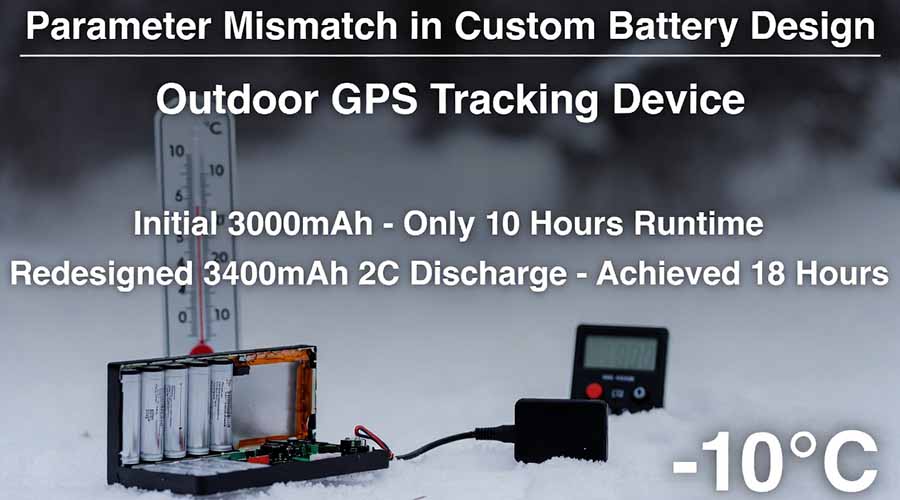
Initially, the company selected a custom rechargeable battery with a capacity of 3000mAh.
However, during testing in low temperatures (-10°C), the battery voltage dropped significantly, allowing the device to operate for only about 10 hours.
After redesigning the custom battery pack, the engineering team improved the specifications:
- Capacity: 3400mAh
- Maximum discharge rate: 2C
- Operating temperature: -20°C to 60°C
With the optimized custom battery solution, the device successfully achieved the target 18-hour runtime.
How to Avoid Parameter Mismatch
When developing a custom battery pack, companies should carefully evaluate:
- Nominal voltage compatibility with the device
- Maximum discharge current requirements
- Operating temperature range
- Battery dimensions and internal structure constraints
- Charging circuit compatibility
Ensuring full parameter compatibility is essential for a reliable custom battery solution.
2. Safety Risks in Custom Battery Packs
Safety is the most critical factor in any custom battery project. If the battery structure or protection circuitry is poorly designed, risks such as overcharging, over-discharging, short circuits, and thermal runaway may occur.
This risk becomes even more significant for outdoor or industrial devices operating in challenging environments such as high humidity, extreme temperatures, or strong vibrations.
In these situations, waterproof battery packs are often required to protect the battery from environmental damage.
High-quality waterproof batteries typically feature sealed structures and undergo strict IP protection testing to ensure reliable operation in wet or harsh conditions.
Case-2: Marine Monitoring Buoy
A U.S. marine monitoring company developed a buoy sensor system with the following battery requirements:
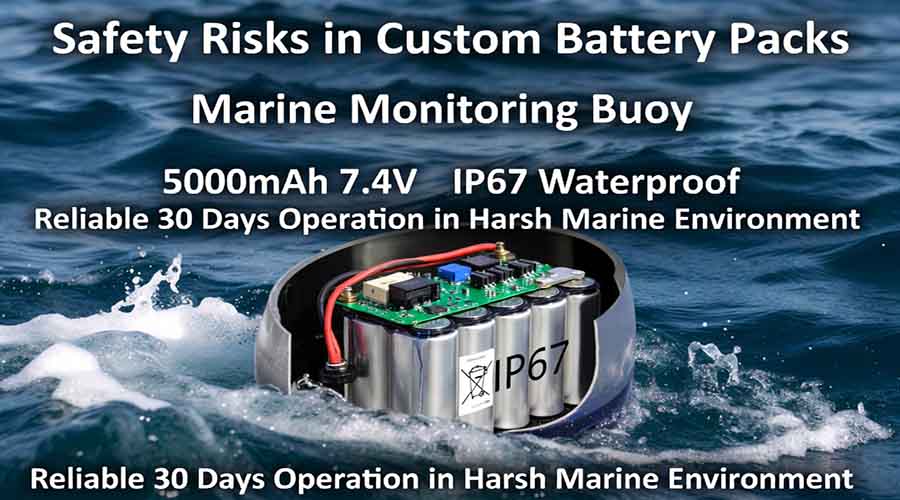
- Battery capacity: 5000mAh
- Operating voltage: 7.4V
- Operating temperature: -5°C to 50°C
- Protection level: IP67
- Continuous operating time: 30 days
Using a standard battery in a marine environment would expose it to salt spray and moisture, which could lead to internal corrosion or short circuits.
To solve this issue, the company adopted a custom waterproof battery pack with a sealed structural design. The battery passed IP67 testing and provided reliable long-term performance in marine environments.
Safety Risk Prevention Strategies
To improve safety in custom battery manufacturing, companies should:
- Use a reliable Battery Management System (BMS)
- Ensure the battery passes safety certifications such as UN38.3
- Use waterproof battery designs in humid environments
- Conduct thermal management analysis during design
- Perform drop tests, vibration tests, and environmental testing
3. Certification and Compliance Risks
Another common problem in custom battery projects is overlooking international certification requirements. Many companies only realize certification issues when preparing to export their products.
Different markets have different battery certification requirements.
U.S. Battery Certification Requirements
Products entering the United States may require:
- UL certification
- FCC testing (for electronic devices)
- UN38.3 transportation certification
European Battery Certification Requirements
Products sold in Europe may require:
- CE certification
- RoHS environmental compliance
- IEC62133 battery safety certification
Case-3: Smart Doorbell Product Launch Delay
A U.S. smart home brand developed a wireless doorbell powered by a custom lithium battery pack with the following specifications:
- Battery capacity: 2600mAh
- Nominal voltage: 3.7V
- Charging voltage: 4.2V
- Device standby time: 6 months
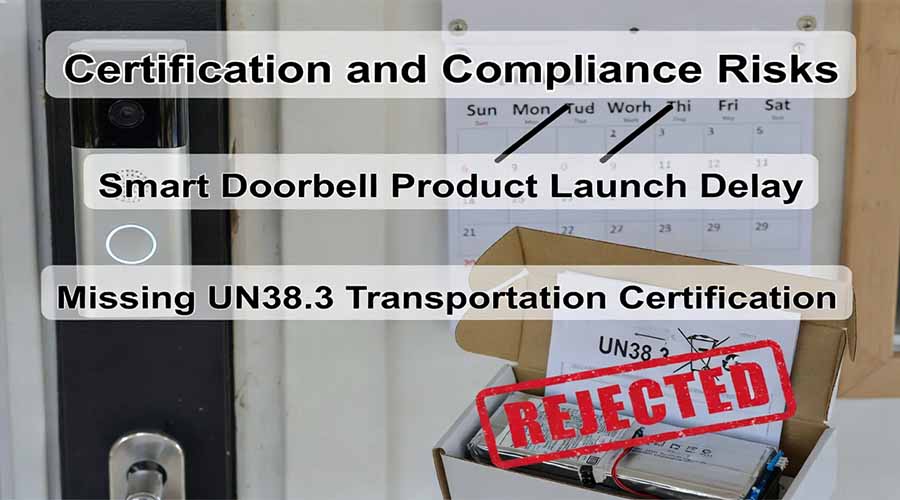
However, the selected battery had not completed UN38.3 testing.
During the shipping stage, the airline refused to transport the battery, causing a product launch delay of nearly three months.
How to Avoid Certification Risks
Before launching a custom battery pack project, companies should confirm:
- Whether UN38.3 transportation certification is required
- Whether UL or IEC safety certification is necessary
- Whether the battery complies with RoHS environmental regulations
- Whether the product meets target market requirements
Planning certifications early can significantly reduce project delays.
4. Supply Chain Risks in Custom Battery Manufacturing
Supply chain stability is another critical factor in custom battery production. If the battery supplier lacks sufficient manufacturing capacity or reliable raw material sources, companies may face delivery delays or production interruptions.
The battery industry is also affected by price fluctuations in key materials such as lithium, nickel, and cobalt, which can impact overall project costs.
Case-1: Portable Camping Lantern
A U.S. outdoor lighting brand launched a portable camping lantern with the following battery specifications:
- Battery capacity: 6000mAh
- Output voltage: 3.7V
- Maximum discharge current: 3A
- Estimated annual sales: 120,000 units
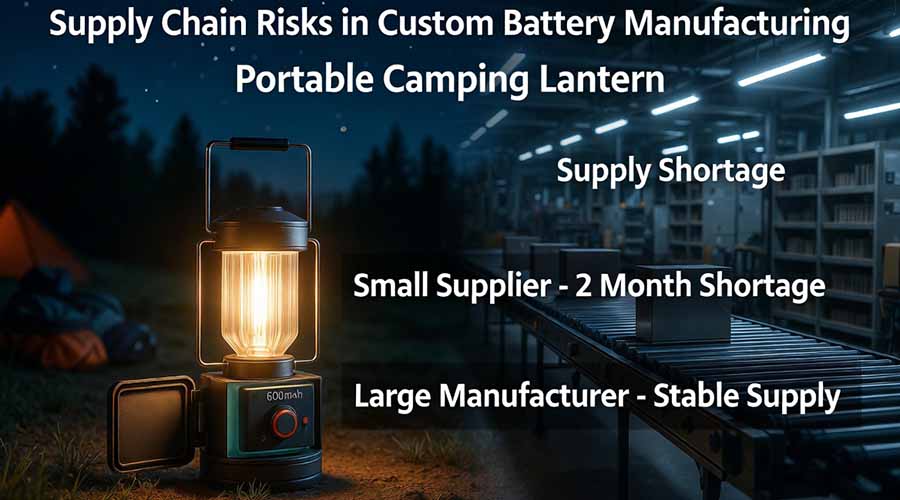
Initially, the brand partnered with a small battery supplier. As orders increased, the supplier struggled to maintain production capacity, leading to a two-month product shortage.
The company later switched to a large-scale custom battery manufacturer and implemented a safety inventory system, which stabilized supply.
How to Evaluate a Custom Battery Supplier
When choosing a custom battery manufacturer, companies should consider:
- Production capacity and scalability
- Raw material supply stability
- Quality management systems
- Long-term technical support capabilities
A stable supply chain is essential for the success of any custom battery solution.
HiMAX is one of the world’s leading battery manufacturers specializing in high-performance custom battery solutions. We provide global customers with a wide range of products, including lithium-ion batteries, industrial battery packs, and highly reliable waterproof battery solutions.
HiMAX has an advanced battery R&D team and a strict quality management system. All products support custom battery pack design based on customer requirements and comply with multiple international certification standards. Our batteries are widely used in smart devices, industrial equipment, medical devices, outdoor electronics, and marine systems.