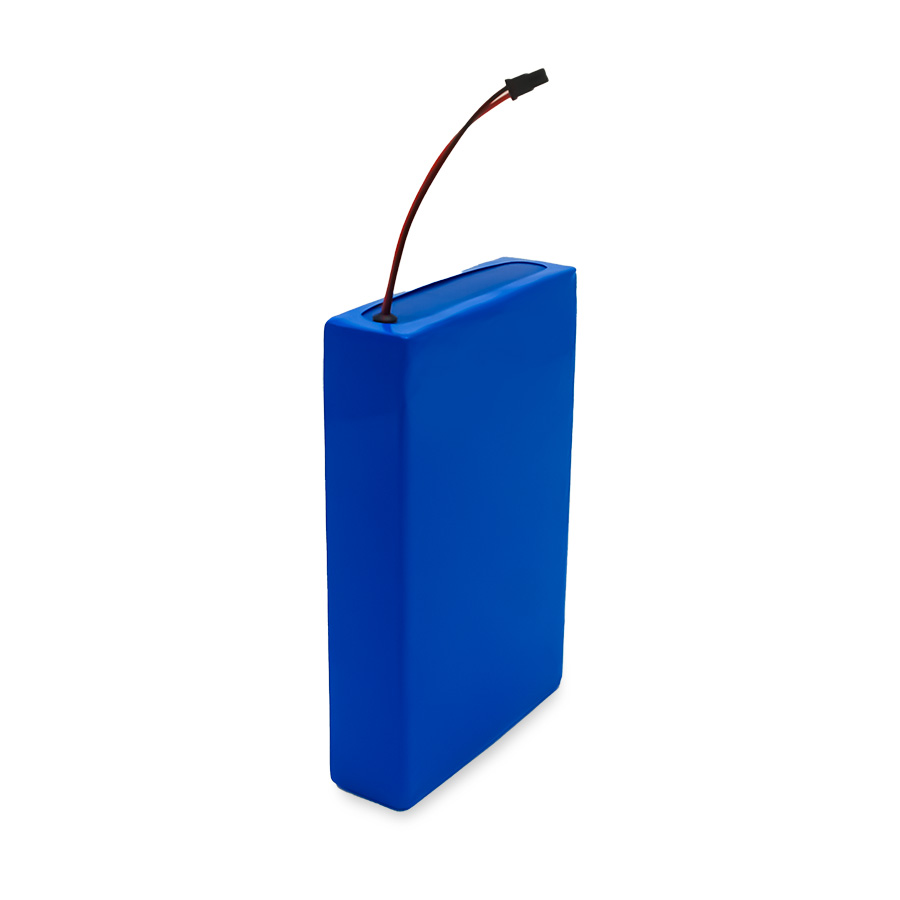
Understanding LiPo (lithium-polymer) voltages is crucial for correct pack design, safe charging, and reliable product performance. This guide focuses on concrete numbers, worked examples, and procurement requirements so engineers, product managers, and B2B buyers can make confident specifications.
Core voltages explained (single-cell basis)
Key voltage points for a single LiPo cell
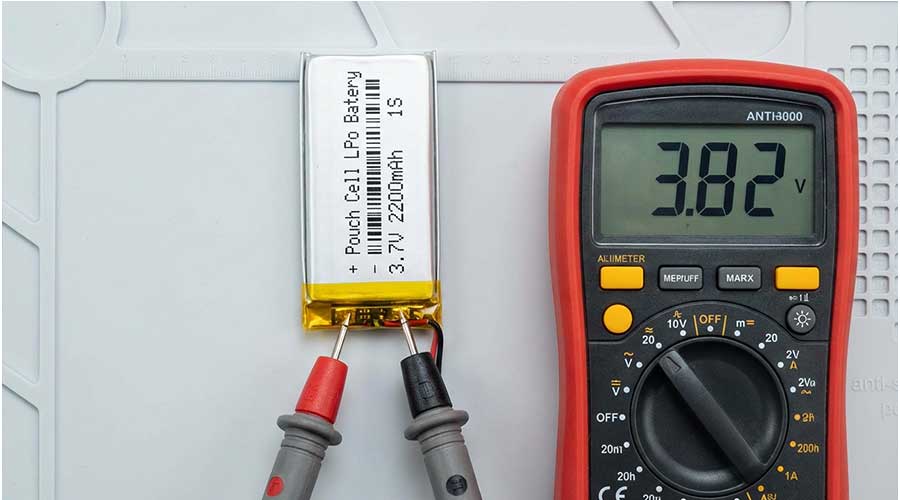
- Nominal voltage: 3.7 V — typical reference used for capacity (Ah) and energy (Wh) calculations.
- Fully charged voltage: 4.2 V per cell (maximum for most commercial LiPo).
- Recommended storage voltage: ~3.8–3.85 V per cell to minimize aging during long storage.
- Safe discharge cutoff: typically 3.0–3.3 V per cell; discharging below the cutoff risks permanent damage.
These are nominal conventions; always follow the cell vendor’s datasheet for exact limits and tolerances.
Pack voltages: series and parallel basics
Building pack voltages
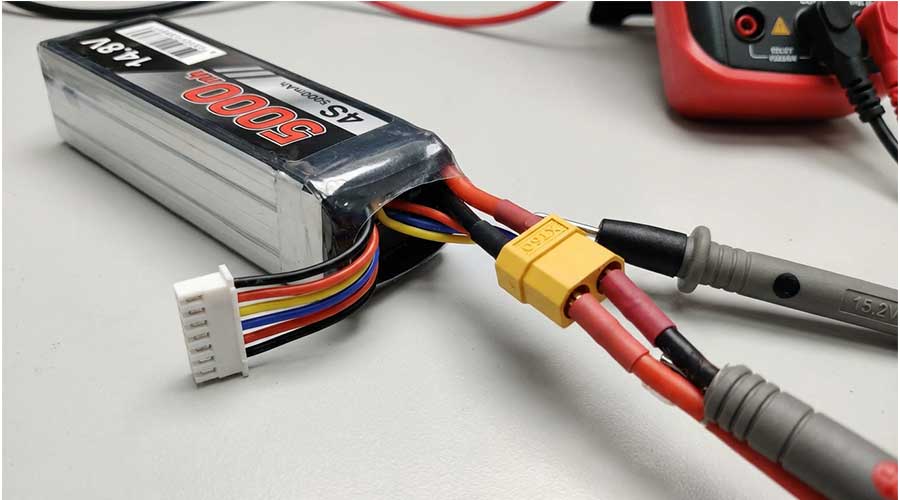
- Cells in series (S) add voltages: a 4S LiPo pack = 4 × 3.7 V nominal = 14.8 V nominal.
- Cells in parallel (P) add capacity (Ah) while keeping voltage the same.
Example (energy calculation):
Take a common 1-cell nominal: 3.7 V and a 2200 mAh cell (2200 mAh = 2.2 Ah). Energy in watt-hours (Wh) is V × Ah.
- 3.7 V × 2.2 Ah = 8.14 Wh.
- Calculation check: 37 × 22 = 814 → place decimal two places → 8.14 Wh.
For a 4S pack (14.8 V nominal) using the same 2.2 Ah cells in series:
14.8 V × 2.2 Ah = 32.56 Wh.
(148 × 22 = 3256 → decimal two places → 32.56 Wh.)
Charge & discharge: what voltages mean operationally
Charging profile
Most LiPo cells use CC-CV (constant current then constant voltage):
- CC phase: charger supplies a steady current (e.g., 0.5C or 1C) until cell reaches full voltage (4.2 V per cell).
2. CV phase: charger holds voltage at 4.2 V/cell while current tapers down to a small value (termination).
Discharge behavior and cutoff
- Under load, terminal voltage falls due to internal resistance; this is expected.
- Do not discharge below the recommended per-cell cutoff (commonly 3.0–3.3 V) — doing so can cause irreversible chemical changes.
- For high-power loads, voltage sag under load must be accounted for in system sizing.
State-of-charge (SoC) vs cell voltage: practical mapping
Cell voltage → approximate SoC (generalized, chemistry and temperature dependent):
- 4.2 V ≈ 100% SoC
- 3.95–4.05 V ≈ 80–95% SoC
- 3.7 V ≈ ~50% SoC (nominal)
- 3.4–3.6 V ≈ ~20–40% SoC
- 3.0–3.3 V ≈ ~0–10% SoC (approaching cutoff)
Note: Voltage-to-SoC is non-linear; small voltage changes near top-of-charge represent large energy changes. For accurate SoC use coulomb-counting plus periodic voltage correction (open-circuit voltage checks).
Practical examples & calculations
Example: current from C-rate
A 2200 mAh cell at 25C continuous discharge produces:
- 25 × 2.2 Ah = 55 A.
(25 × 2.2 = 55.0 A.) This demonstrates how C-rate maps to real current and why high-C cells heat more.
Example: pack sizing for a device
Device requires 50 W continuous at 12 V system: current = P / V = 50 / 12 = 4.166… A → round to 4.17 A for design margin. For a 4S LiPo pack (14.8 V nominal) delivering the same 50 W, current = 50 / 14.8 = 3.378… A → 3.38 A. Higher nominal voltage lowers current draw at the same power (beneficial for wiring and connector sizing).
Safety, balancing, and BMS requirements
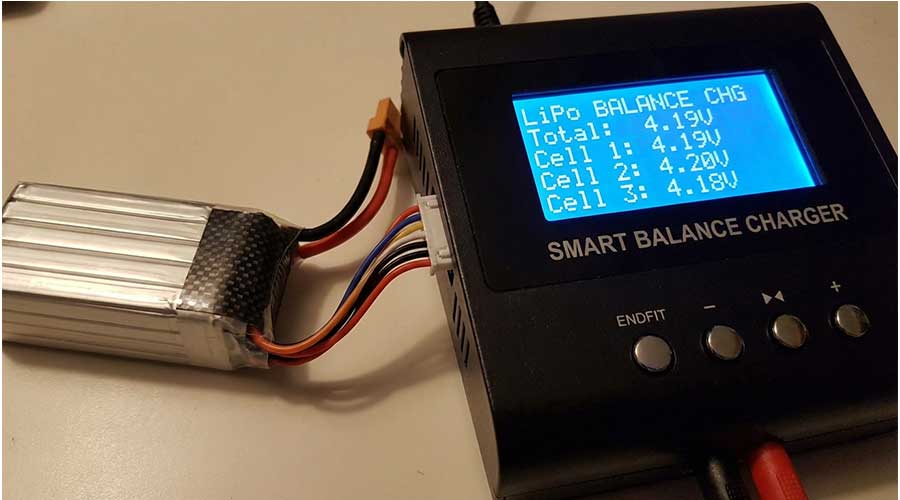
Cell balancing
Series packs require balancing circuits (passive or active) to keep per-cell voltages tightly matched. Unbalanced cells lead to one cell hitting cutoff earlier and can shorten pack life.
BMS essentials for LiPo packs
- Per-cell voltage measurement and low-voltage cutoff
- Charge/current limiting and overcurrent protection
- Cell balancing (automatic or scheduled)
- Temperature monitoring and cutoffs
- Fault logging and communication (CAN, SMBus, Bluetooth) for fleet or product telemetry
These BMS features are non-negotiable for industrial or telecom applications.
Temperature and voltage: environmental impacts
- Cold temperatures raise internal resistance and reduce effective capacity; measured voltage under load will be lower.
- High temperature accelerates aging and can increase self-discharge; keep operating temperature within manufacturer limits.
- Storage at elevated voltages and high temperature is the fastest route to calendar aging — store near 3.8–3.85 V per cell and in cool conditions.
Procurement checklist: voltage & pack questions to ask suppliers
When you request quotes or evaluate vendors, include these line items explicitly:
Electrical & performance
- Nominal cell and pack voltage (V) and max charge voltage (V)
- Rated capacity (Ah) and usable Wh at specified DoD (%)
- Continuous and peak discharge current (A) and recommended charge current (A)
Safety & BMS
- BMS features: per-cell measurement, balancing method, low-voltage cutoff, overcurrent protection, temperature sensing
- Fault detection: MOSFET diagnostics, event logs, communications interface
Mechanical & thermal
- Connector type and current rating, enclosure IP rating, recommended cooling strategy
Testing & compliance
- Sample cycle test data, recommended operating temp range, transport certification (e.g., UN38.3), relevant electrical safety certificates
Logistics
- Lead time, MOQ, warranty terms, after-sales support (local partner or service network)
How Himax Battery helps with voltage-sensitive designs (practical support)
Himax Battery provides:
- Custom series/parallel pack layouts to hit target nominal voltage and capacity.
- BMS customization with per-cell balancing and MOSFET diagnostics, plus telemetry options for fleet monitoring.
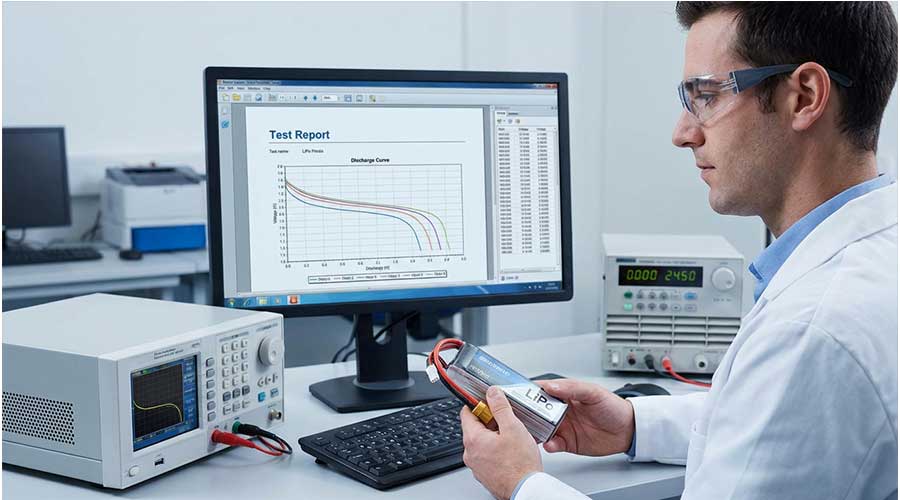
- Engineering test reports (cycle data, temperature performance) included with sample orders to validate pack behavior at your specified voltages and C-rates.
These capabilities make it easier to turn electrical requirements into reliable hardware specifications without guesswork.
Quick reference cheat sheet
- Single LiPo cell: nominal 3.7 V, full 4.2 V, storage ~3.8 V, cutoff ~3.0–3.3 V.
- Energy: Wh = V × Ah (convert mAh to Ah by dividing by 1000).
- C-rate current: I (A) = C × Ah.
- Design tip: choose system voltage to minimize current for high-power loads, but ensure all components are voltage-rated.
Conclusion
Voltage rules many practical choices: pack architecture, wiring, converter size, thermal strategy, and safety systems. Converting your product’s power and runtime requirements into explicit pack voltage and Ah specs — then validating those specs with vendor test data — will keep your design on schedule and within safety margins. If you’d like, I can convert the procurement checklist above into an RFP Excel template or generate web-ready meta tags and H1/H2 recommendations tailored for himaxbattery.com. Which would help you most?
Find articles related to lipo batteries