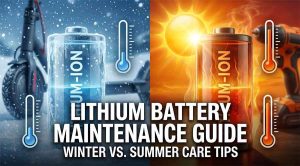
Lithium-Ion Battery Maintenance Guide: Winter vs Summer Care Tips
In everyday life, lithium batteries power a wide range of devices. From power tools and Bluetooth speakers to electric scooters and smart devices, almost all portable electronics rely on lithium batteries.
Many users notice an interesting phenomenon:
The same battery can last 3–5 years for some people, while others experience noticeable degradation in just 1–2 years.
In most cases, the difference is not the battery itself. Instead, it comes down to daily usage habits, environmental conditions, and proper lithium battery maintenance.
Seasonal temperature changes—especially during winter and summer—can significantly affect battery performance and lifespan. Without proper lithium battery maintenance, the lifespan of the same battery may differ by as much as two times.
In this guide, we’ll explore:
- Why temperature affects battery lifespan
- Lithium battery maintenance tips for winter
- Lithium battery maintenance tips for summer
- Real-world user examples
- Five key principles for extending battery life
Why Temperature Affects Lithium Battery Lifespan
Temperature is one of the most important factors affecting battery performance and longevity.
Lithium batteries rely on the movement of lithium ions through an electrolyte to charge and discharge. When temperatures are too high or too low, this process becomes less efficient.
For most lithium batteries, the recommended temperature ranges are:
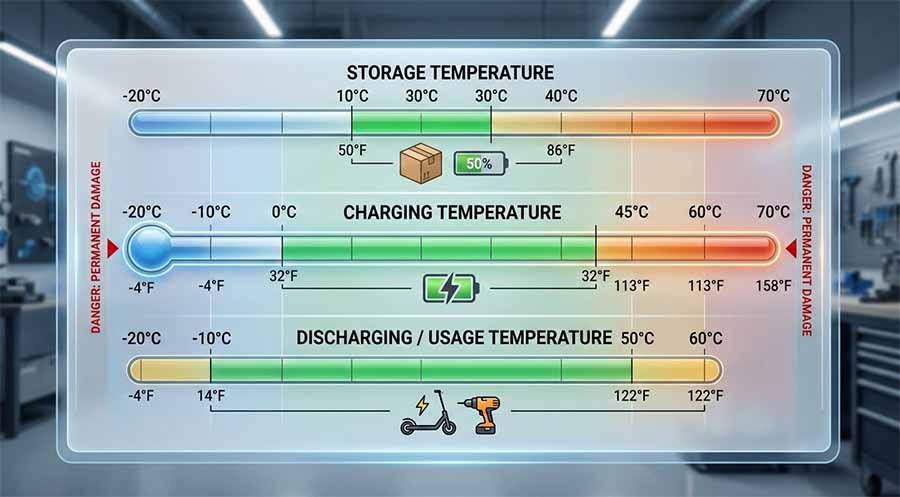
| Battery Condition | Recommended Temperature |
| Operating Temperature | 32°F – 113°F (0°C – 45°C) |
| Charging Temperature | 41°F – 104°F (5°C – 40°C) |
| Storage Temperature | 50°F – 77°F (10°C – 25°C) |
When batteries are regularly exposed to extreme temperatures, internal components can degrade faster. That’s why proper lithium battery maintenance is essential for extending battery life.
In simple terms:
- Winter: Battery capacity temporarily decreases
- Summer: Battery aging speeds up significantly
Because of this, different seasons require different lithium battery maintenance strategies.
Lithium Battery Maintenance Tips for Winter
Cold weather slows down the chemical reactions inside lithium batteries. As a result, batteries may appear to drain faster or provide shorter runtime.
Frequent charging or high-power use in freezing temperatures can also shorten battery lifespan.
Here are several effective lithium battery maintenance tips for winter.
1. Avoid Charging in Extremely Cold Temperatures
When temperatures drop below 32°F (0°C), lithium-ion movement inside the battery slows down significantly. Charging under these conditions may cause lithium plating, which can permanently damage the battery.
Recommended practice:
- Bring the device indoors
- Wait until the battery temperature reaches above 50°F (10°C) before charging
This is one of the most important lithium battery maintenance guidelines.
2. Avoid Storing Fully Charged Batteries in Cold Environments
During winter, many users store devices in garages or outdoor sheds. If a battery remains fully charged in a cold environment for a long time, its internal structure may be affected.
Recommended storage method:
- Keep battery charge between 40% and 60%
- Store in a dry indoor environment
This is another key part of proper lithium battery maintenance.
3. Let the Device Warm Up Before Use
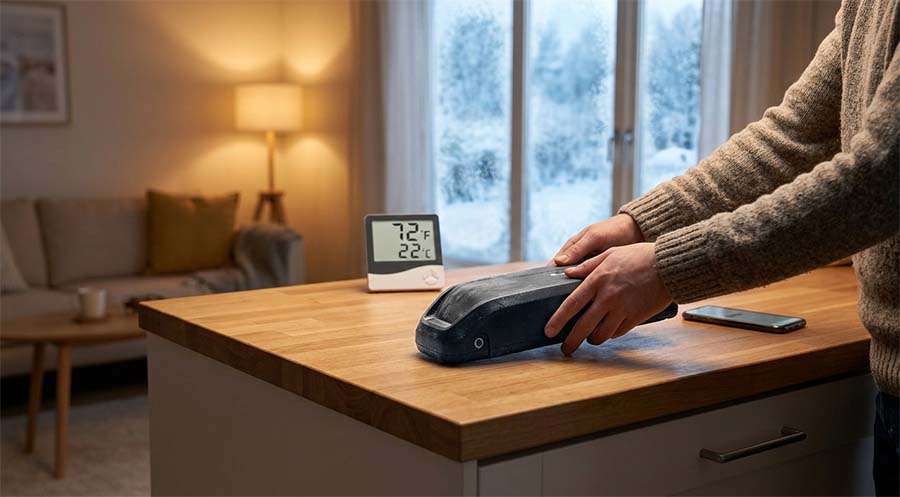
If a device has been sitting in a cold environment for an extended period, allow it to sit at room temperature for 10–20 minutes before using it.
This allows the battery to return to its optimal operating condition and helps maintain performance.
Lithium Battery Maintenance Tips for Summer
While winter mainly affects battery performance, summer heat can significantly impact battery lifespan.
High temperatures accelerate chemical reactions inside lithium batteries, which leads to faster capacity degradation. That’s why lithium battery maintenance becomes even more important during hot weather.
1. Avoid Direct Sunlight Exposure
Many people leave devices in cars, balconies, or outdoor spaces. During summer, the temperature inside a car can exceed 140°F (60°C).
In such environments, battery lifespan can shorten dramatically.
Best practices:
- Avoid leaving devices in a parked car for long periods
- Keep devices away from direct sunlight
This is one of the most basic lithium battery maintenance tips.

2. Ensure Good Ventilation While Charging
Charging a battery already generates heat. In hot environments, battery temperatures can rise even further.
If heat cannot dissipate properly, internal battery pressure may increase.
Recommended practices:
- Charge devices in a well-ventilated area
- Avoid charging on beds or sofas
- Avoid heavy device usage during charging
These simple steps can greatly improve overall lithium battery maintenance effectiveness.
3. Avoid Long-Term Storage at 100% Charge
The combination of high temperature and a fully charged battery is one of the fastest ways to damage a lithium battery.
If a device will not be used for an extended period:
- Keep battery charge at around 50%
- Recharge the battery every three months
This is a widely recommended lithium battery maintenance practice among professionals.
Real-World Examples: How Seasons Affect Battery Life
To better illustrate how temperature affects battery lifespan, here are two real-world user scenarios from the United States.
Case-1: Electric Scooter User (California)
User: Michael
City: Los Angeles
Device: Electric scooter
Battery: 36V 10Ah lithium battery
Usage habits:
- Often parked the scooter outdoors during summer
- Left the scooter exposed to direct sunlight
- Fully charged the battery after every ride
Result:
After two years, battery capacity dropped by about 40%.
Improvements:
- Parked the scooter in shaded areas
- Avoided leaving the battery fully charged for long periods
- Charged indoors
After making these changes, battery lifespan improved significantly.
This demonstrates how proper lithium battery maintenance can greatly extend battery life.
Case-2: Power Tool User (Colorado)
User: David
City: Denver
Device: Cordless drill
Battery: 20V 5Ah lithium battery
Usage habits:
- Stored batteries in the garage during winter
- Temperatures dropped to 14°F (-10°C)
- Charged batteries directly in cold conditions
Result:
Battery runtime dropped significantly after just one year.
Improvements:
- Stored batteries indoors
- Warmed batteries before use
- Charged them at room temperature
After these adjustments, battery performance improved noticeably.
This is another clear example of effective lithium battery maintenance.
5 Essential Lithium Battery Maintenance Tips to Extend Battery Life
Regardless of the season, following these five lithium battery maintenance principles can significantly extend battery lifespan:
- Avoid using batteries in extreme temperatures
- Do not store batteries fully charged for long periods
- Avoid completely draining the battery frequently
- Charge batteries in well-ventilated environments
- Store batteries at around 50% charge when not in use
By following these lithium battery maintenance tips, the lifespan of the same battery can differ by more than two times.
Why More Brands Choose HiMAX Batteries
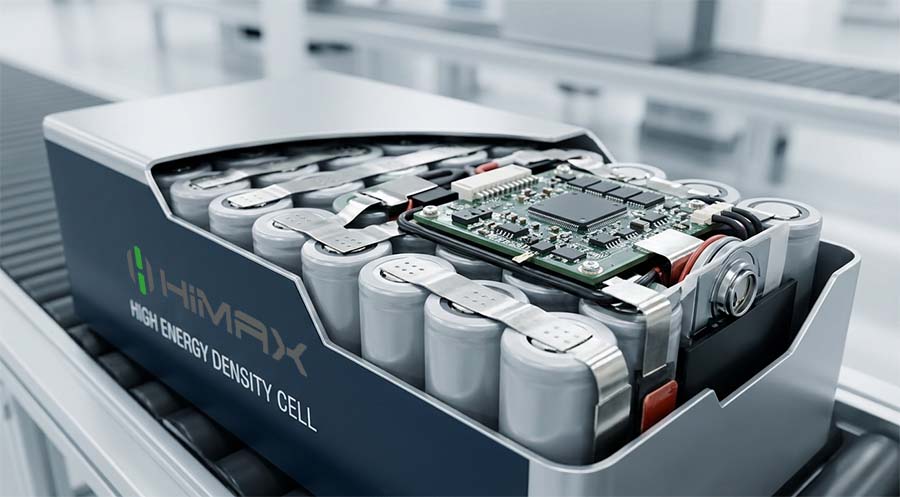
In addition to proper lithium battery maintenance, battery quality also plays a crucial role in long-term performance.
HiMAX is one of the world’s leading lithium battery manufacturers, providing high-performance battery solutions for smart devices, power tools, consumer electronics, and industrial equipment.
HiMAX batteries offer several key advantages:
- High energy density design
- Stable cycle life
- Strict safety testing standards
- Support for custom battery specifications
Whether in cold winter conditions or extreme summer heat, HiMAX batteries are designed to maintain reliable performance. If you are looking for a more reliable and durable battery solution, HiMAX is a trusted choice.
Find articles related to Battery Comparison Tips on HiMAX
- Lithium vs Lead Acid Batteries for Electric Wheelchairs
- Battery Cell vs Battery Pack: What’s the Difference
- Price Comparison of 6 Common Lithium-Ion Battery Voltages (3.7V–22.2V)
- Waterproof Battery vs Regular Battery: What’s the Difference?
- Comparing Lithium-Ion Battery Needs: Consumer Electronics vs EV
- Small LiFePO4 Battery vs Ternary Lithium – Runtime, Cost, and Lifespan Comparison, and More
- Small LiFePO4 Battery vs Ternary Lithium – Runtime, Cost, and Lifespan Comparison, and More
- Lithium Polymer Battery vs NiMH Battery: Runtime, Cost, Safety, and Applications