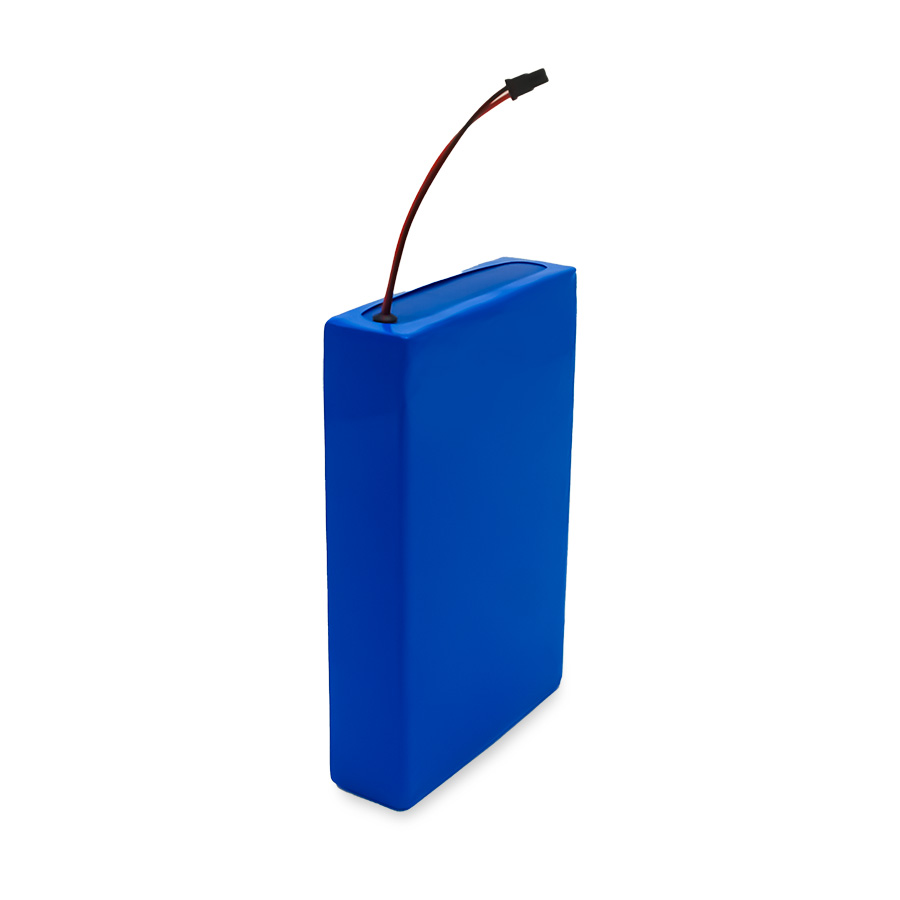
Choosing the right battery is one of the most important decisions you can make when buying or maintaining a hair clipper. A strong and reliable battery directly affects cutting power, runtime, charging speed, and overall user experience. This Hair Clipper Battery Buying Guide is designed to help both home users and professional barbers understand what really matters when selecting a hair clipper battery.
Whether you are replacing an old battery or choosing a new cordless clipper, this guide will walk you through battery types, performance factors, safety concerns, and long-term value.
Why the Hair Clipper Battery Matters More Than You Think
Many people focus on blades, motor speed, or brand reputation. However, the hair clipper battery is the true power source behind every cut. Without a stable battery, even the best clipper will perform poorly.
A high-quality cordless clipper battery delivers consistent power, prevents pulling hair, and maintains blade speed from start to finish. A weak battery causes uneven cuts, sudden shutdowns, and longer charging times.
For professional barbers, battery reliability affects work efficiency and customer satisfaction. For home users, it determines convenience and ease of use.
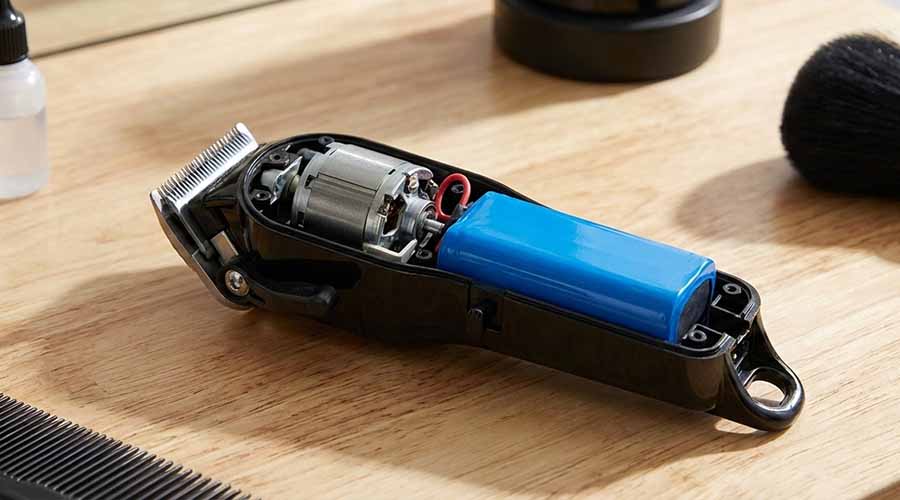
Common Types of Hair Clipper Batteries
Understanding battery chemistry is the first step in making a smart choice. Different hair clipper battery types offer different advantages.
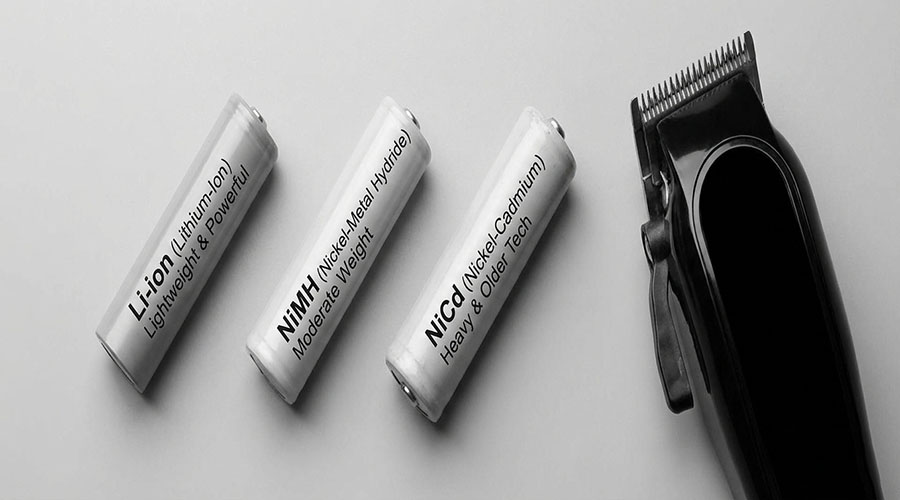
Lithium-Ion (Li-ion) Batteries
Lithium-ion batteries are the most popular choice in modern hair clippers.
They are lightweight, powerful, and efficient. A lithium hair clipper battery provides stable voltage throughout the discharge cycle. This means consistent cutting performance.
Li-ion batteries also support fast charging and do not suffer from memory effect. This makes them ideal for frequent use.
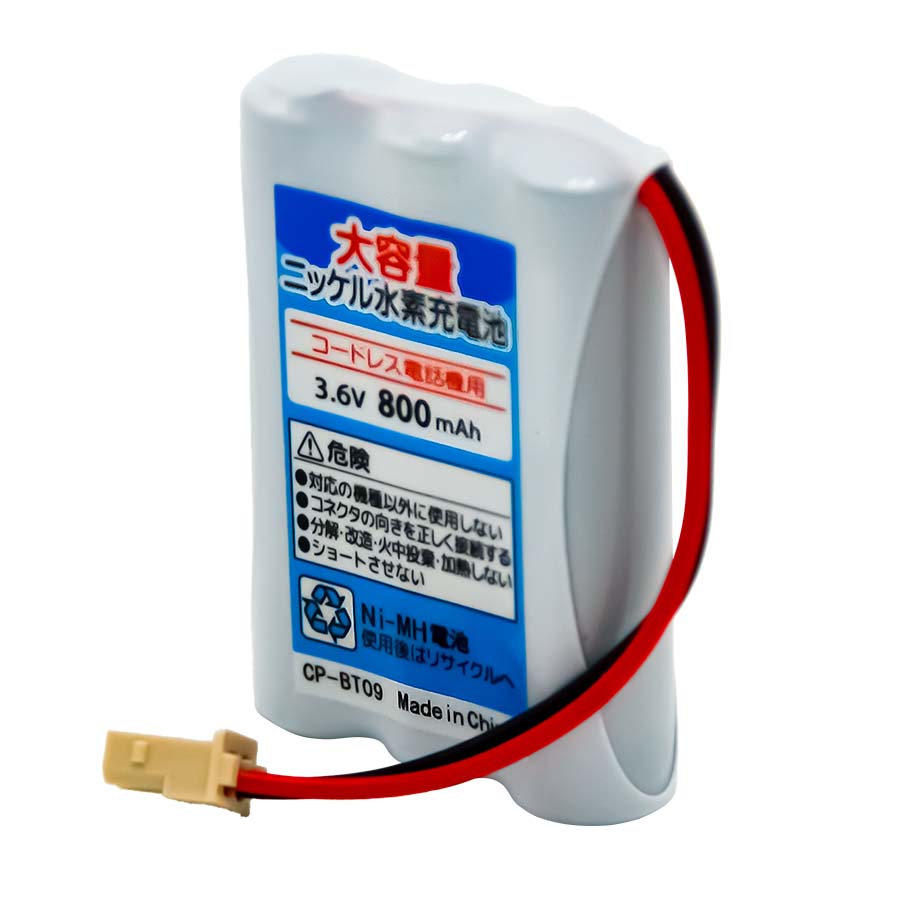
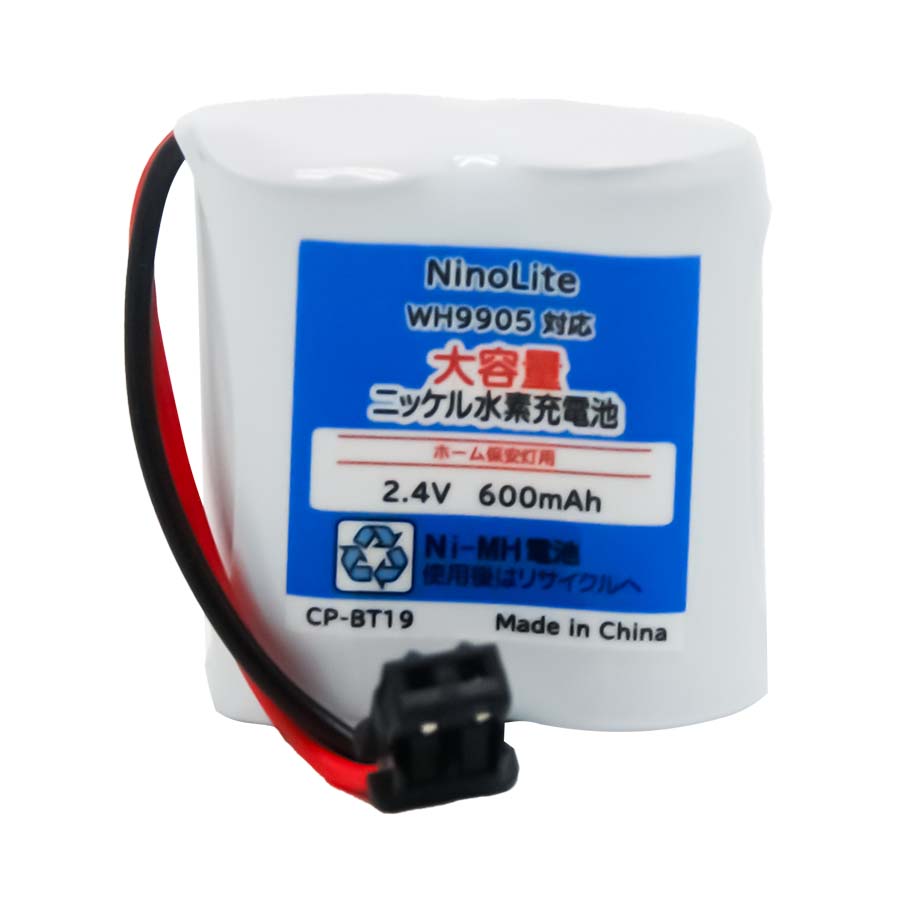
Nickel-Metal Hydride (NiMH) Batteries
NiMH batteries are older but still found in some models.
They are safer than older battery types but heavier than lithium batteries. A NiMH hair clipper battery usually offers shorter runtime and slower charging.
These batteries can develop memory effect if not fully discharged regularly.
Nickel-Cadmium (NiCd) Batteries
NiCd batteries are now rare.
They are heavy and have strong memory effect. A NiCd clipper battery also has lower energy density and shorter lifespan.
Most users should avoid this battery type unless replacing an older device.
Key Battery Specifications You Must Understand
Battery specifications determine real-world performance. Knowing these terms helps you compare products accurately.
Battery capacity is measured in milliamp hours.
A higher capacity hair clipper battery runs longer on a single charge. For home use, 1200–1800 mAh is usually enough. For professional use, 2000 mAh or higher is recommended.
Voltage affects motor power.
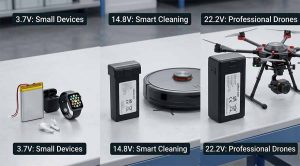
Most hair clippers use batteries between 3.6V and 7.4V. A stable voltage ensures smooth cutting and prevents motor slowdown.
Runtime tells you how long the clipper works per charge.
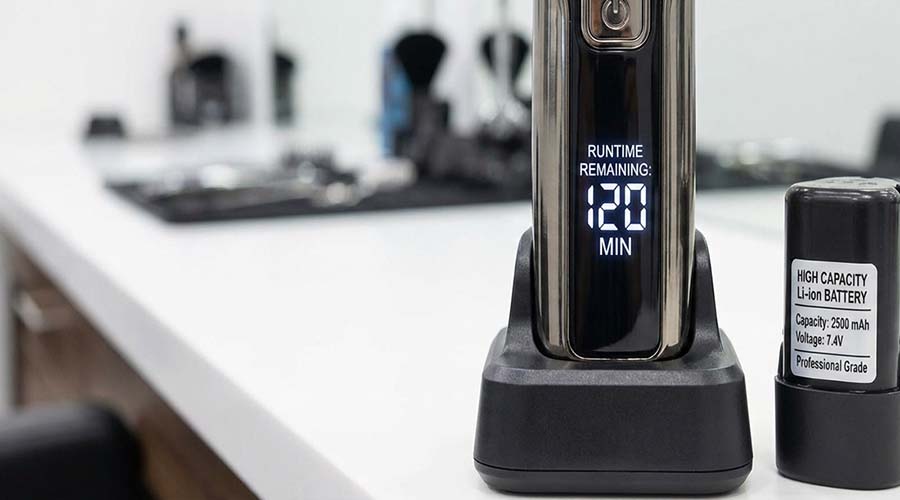
A good rechargeable hair clipper battery should offer at least 90 minutes of runtime. Fast-charging models can recharge in 1–2 hours.
Cordless vs Corded Clippers: Battery Impact
Cordless clippers rely entirely on battery quality.
A premium cordless hair clipper battery allows freedom of movement and better control. It is ideal for fades, detailing, and mobile use.
Corded clippers do not rely on batteries during operation, but many modern models include backup batteries for flexibility.
If you prefer cordless use, battery performance should be your top priority.
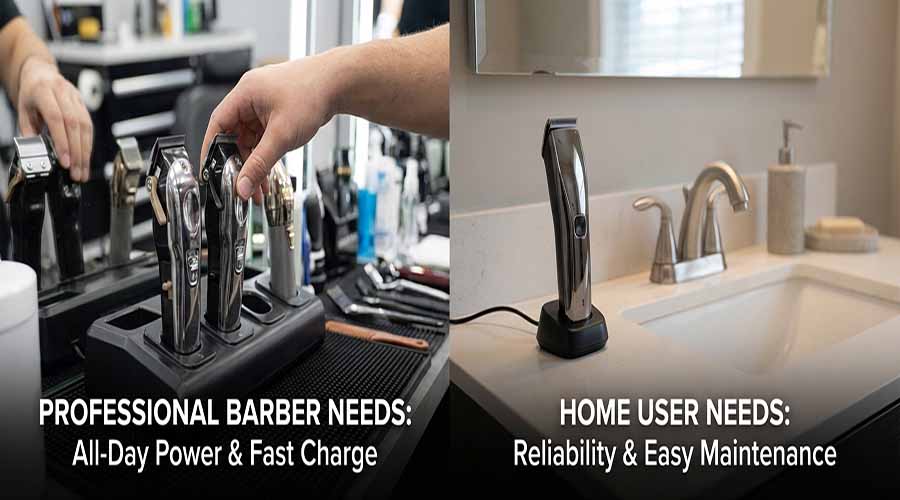
Professional Barber Needs vs Home User Needs
Not all users need the same battery performance.
Professional barbers need long runtime, fast charging, and high durability. A professional hair clipper battery must handle daily charging cycles and extended use.
Home users need reliability and safety. A home use hair clipper battery should hold charge well over time and require minimal maintenance.
Understanding your usage pattern helps you avoid overpaying or under-buying.
Battery Lifespan and Charge Cycles
Battery lifespan is measured in charge cycles.
A high-quality hair clipper battery pack usually lasts 500–800 full cycles. Lithium batteries often last longer when charged properly.
Avoid overcharging and deep discharging. These habits extend battery life and reduce capacity loss.
Signs You Need to Replace Your Hair Clipper Battery
Even the best battery wears out over time.
Common signs include reduced runtime, longer charging time, sudden shutdowns, and overheating. If your clipper struggles to maintain power, the hair clipper battery replacement may be overdue.
Replacing the battery can restore performance without buying a new clipper.
Maintenance Tips to Extend Battery Life
Proper care extends battery lifespan.
Do not store your clipper with a fully drained battery. Avoid charging overnight repeatedly. Clean the clipper to prevent heat buildup.
Simple habits help your hair clipper rechargeable battery perform better for years.
HiMAX Hair Clipper Battery Solution
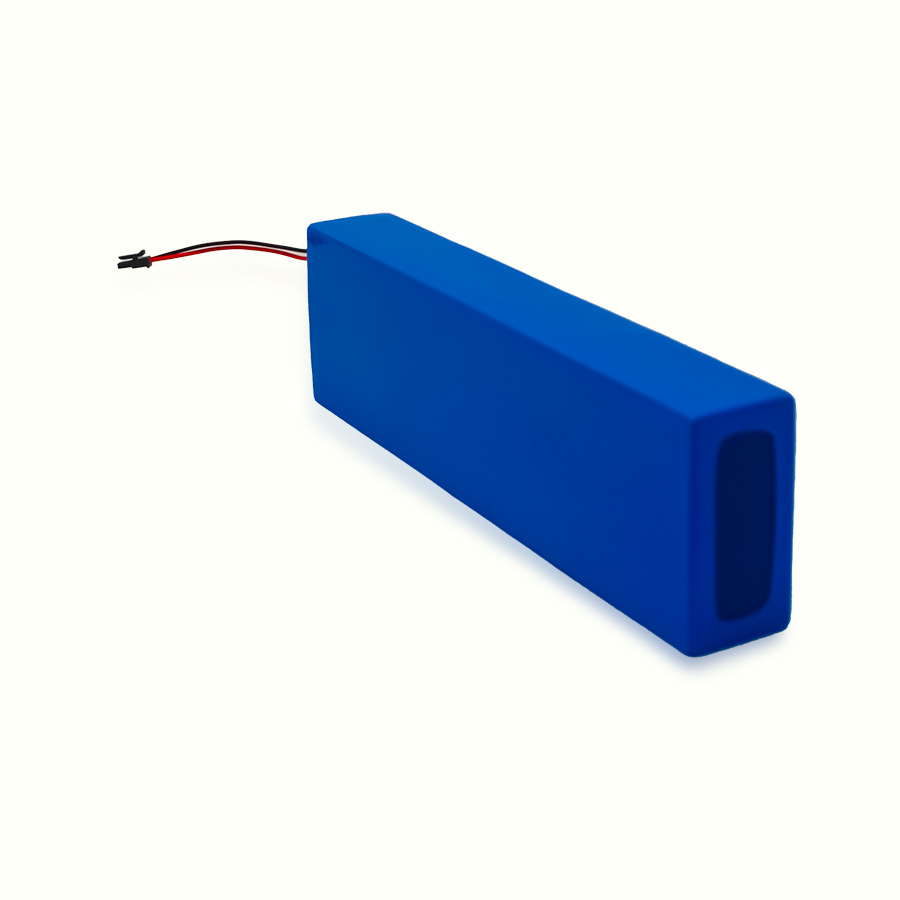
HiMAX specializes in high-performance hair clipper battery solutions designed for modern cordless grooming tools. HiMAX batteries use advanced lithium technology to deliver stable power, long runtime, and fast charging. Each HiMAX hair clipper battery pack is built with strict safety standards, ensuring durability, efficiency, and consistent cutting performance. Whether for professional barbers or premium consumer brands, HiMAX provides reliable battery solutions that power precision grooming every day.
Find articles related to lithium-ion batteries