When we talk about battery performance, we often focus on capacity (Ah) or voltage. However, there is an unsung hero in every energy storage system: the battery terminal.
Think of the battery as the heart of your device and the terminals as the major arteries. If the connection is weak, corroded, or incompatible, it doesn’t matter how powerful the battery is—the energy won’t flow efficiently.
At Himax Battery, we believe that understanding the physical connection is just as important as understanding the chemistry inside the cell. Whether you are engineering a custom LiFePO4 pack or replacing a UPS battery, this guide will cover everything you need to know about battery posts and terminals.
What Exactly is a Battery Terminal?
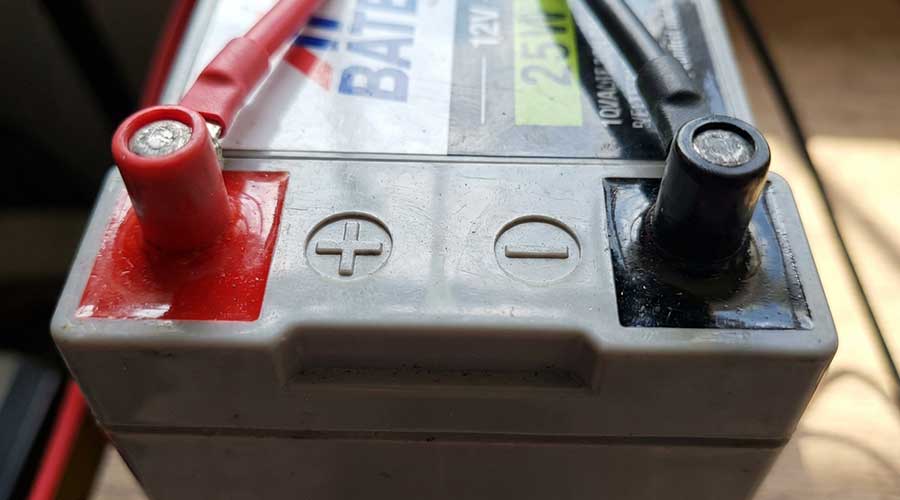
A battery terminal is the electrical contact point used to connect a cell or battery pack to a load (like a motor, light, or inverter) or a charger.
Terminals come in specific pairs to establish a circuit:
- Positive Terminal (+): Usually marked in red or with a plus sign. In lead-acid batteries, the positive post is often slightly larger in diameter than the negative one to prevent reverse polarity.
- Negative Terminal (-): Usually marked in black or with a minus sign.
Pro Tip: Never rely solely on color. Always look for the stamped symbols (+ / -) on the battery casing before connecting your equipment.
Common Types of Battery Terminals
Not all batteries connect the same way. The shape and size of the terminal dictate how much current can flow and how secure the connection will be. Here are the most common types you will encounter in the industry.
1. Faston Terminals (F1 and F2)
These are flat, blade-like terminals often found on smaller Sealed Lead Acid (SLA) batteries used in alarm systems, UPS backups, and emergency lighting.
- F1 (T1): The narrower version (approx. 4.75mm or 0.187 inches).
- F2 (T2): The wider version (approx. 6.35mm or 0.25 inches).
- The Adapter Issue: A common frustration is buying a battery with the wrong blade size. While adapters exist, we recommend specifying the exact requirement during the design phase to minimize resistance.
2. Threaded Terminals (Insert and Stud)
Common in modern Lithium Iron Phosphate (LiFePO4) batteries and larger AGM banks.
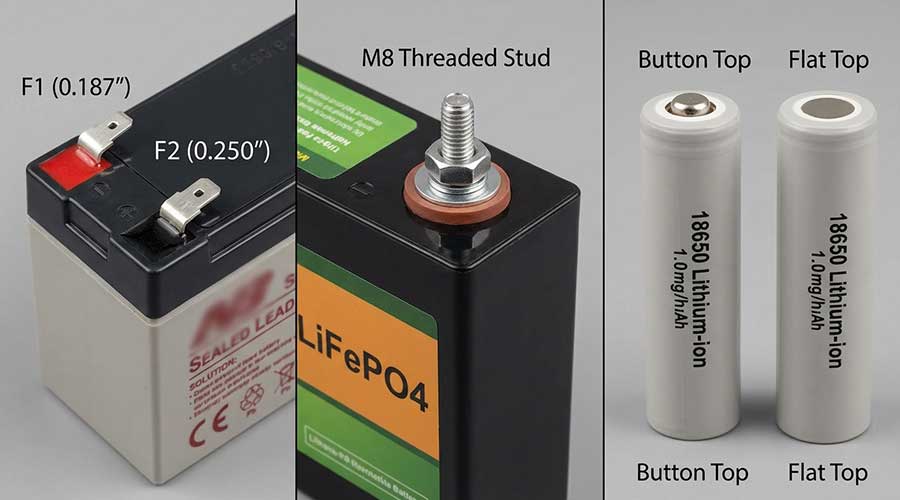
- Insert Terminals: A female thread drilled into the battery casing. You screw a bolt into the battery.
- Stud Terminals: A male bolt sticks out of the battery. You secure the connection with a nut.
- Common Sizes: M5, M6, and M8 are the industry standards. At Himax, we often utilize heavy-duty M8 terminals for our solar energy storage solutions to ensure high conductivity and structural integrity.
3. Cylindrical Cell Terminals (Button vs. Flat)
If you are dealing with individual lithium-ion cells (like the 18650 or 21700):
- Button Top: Protruding positive pole. Required for series connections in flashlights.
- Flat Top: The positive pole is flush with the casing. These are preferred for spot-welding into custom battery packs (a specialty of Himax Battery) to keep the overall pack size compact.
4. Wire Leads and Connectors
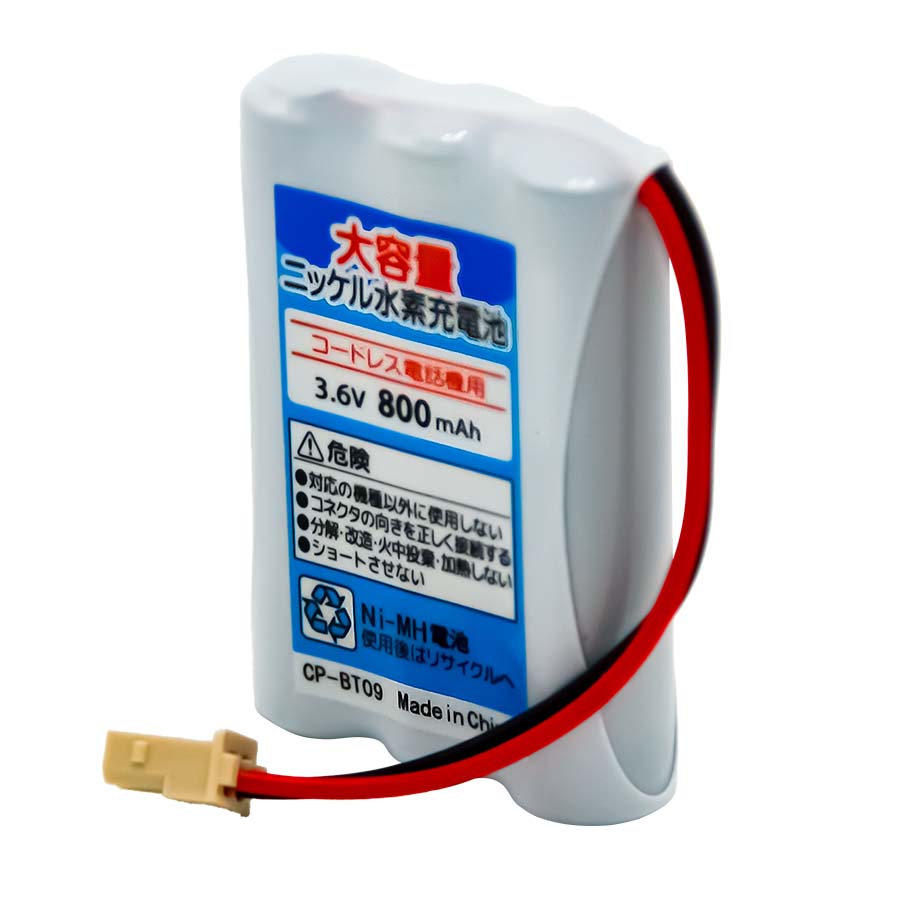
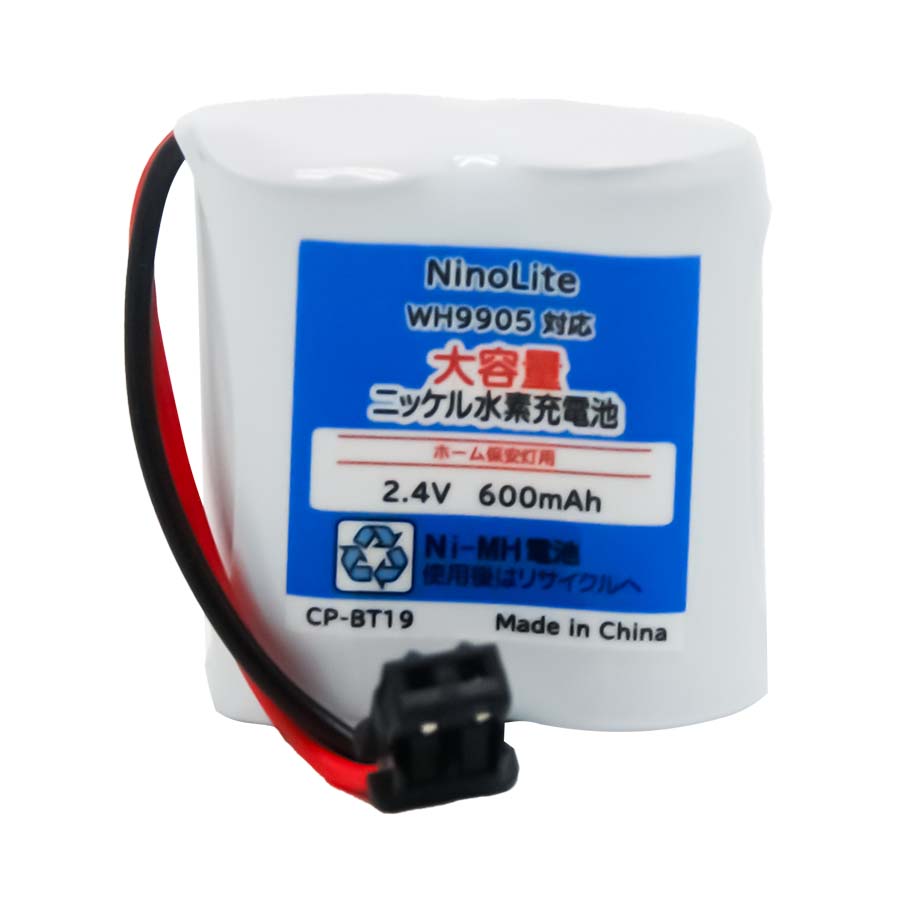
For many custom applications, standard terminals aren’t enough. Batteries may come with pre-soldered wires terminated with specific connectors:
- JST / Molex: For small electronics.
- XT60 / XT90: High-current connectors popular in drones and RC hobbies.
- Anderson Powerpoles: The gold standard for modular, high-amperage connections.
Material Matters: Lead vs. Copper vs. Aluminum
Why are terminals made of different metals? It comes down to conductivity and environment.
- Lead: The traditional choice for starter batteries. It is malleable (tightens well) and resists acid, but it is not the most conductive metal.
- Copper: The gold standard for conductivity. Copper terminals offer the lowest electrical resistance, meaning less heat generation under heavy loads. This is why high-performance lithium packs often use copper internals.
- Plated Aluminum: Lightweight and cheaper, but can suffer from oxidation if the plating is scratched.
Himax Insight: For our industrial and medical battery solutions, we prioritize high-purity copper or nickel-plated terminals to ensure stable voltage delivery, even under peak load conditions.
The Enemy of Power: Terminal Corrosion
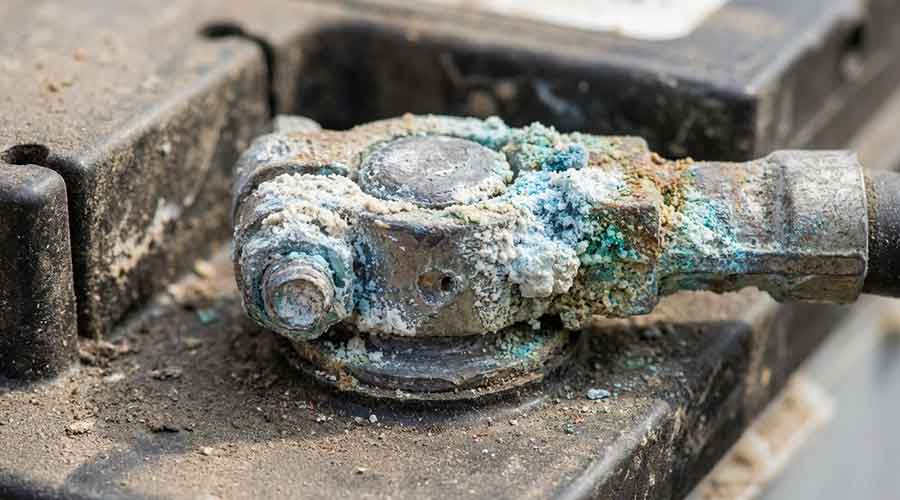
Have you ever seen a white, blue, or green crusty substance on a car battery? That is corrosion. It is caused by hydrogen gas releasing from the battery and reacting with the metal terminals.
Why it’s bad:
Corrosion acts as an insulator. It increases resistance, causes voltage drops, and can eventually melt the terminal due to excessive heat.
How to fix it:
1.Disconnect: Always disconnect the Negative (-) cable first.
2.Clean: Create a paste of baking soda and water. Scrub the terminals with a wire brush.
3.Protect: Once clean and dry, apply a thin layer of dielectric grease or terminal protection spray.
Note: Lithium batteries are sealed and generally do not “gas” like lead-acid batteries, making terminal corrosion significantly less of an issue for modern Himax LiFePO4 packs.
Safety First: Preventing Short Circuits
Batteries store massive amounts of energy. A short circuit across the terminals can result in sparks, fire, or explosion.
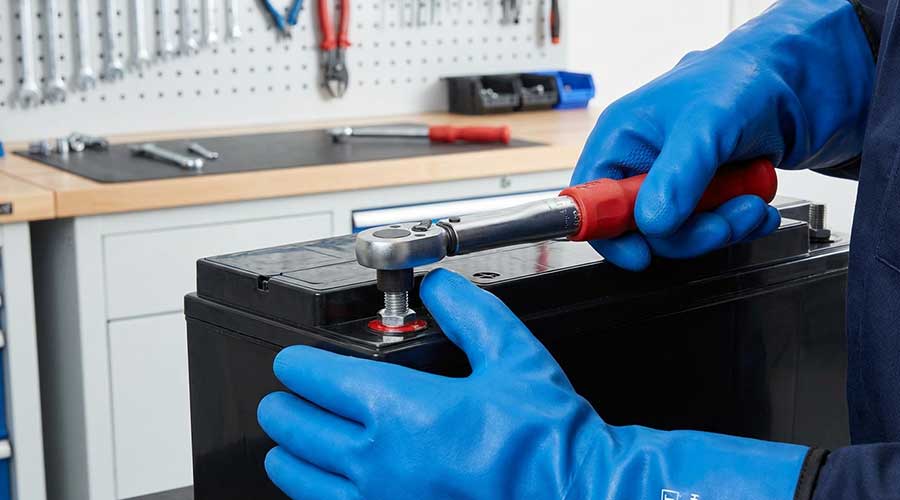
1.Insulate Your Tools: When tightening terminal bolts, use a wrench with a rubber-dipped handle. If a metal wrench touches the positive terminal and the chassis (ground) simultaneously, it will arc.
2.Cover the Terminals: Use plastic terminal caps or rubber boots when the battery is not being serviced.
4.Respect Torque Specs: Do not over-tighten threaded terminals. You can strip the soft metal threads, rendering the battery useless. Check the manufacturer’s datasheet for the correct torque (usually measured in Newton-meters).
Conclusion: Choosing the Right Connection
Selecting the right battery terminal is not just about fitment; it’s about safety and efficiency. Whether you need a vibration-resistant threaded stud for a marine application or a spot-welded flat top for a compact medical device, the connection defines the reliability of the system.
At Himax Battery, we understand that every project is unique. We don’t just sell batteries; we provide complete power solutions, including custom terminal configurations to match your exact device interface.
Need help designing a custom battery pack with specific connectors? Contact the Himax Battery team today and let’s power your innovation.
Disclaimer: Working with batteries involves risks. Always wear protective eyewear and follow manufacturer guidelines when handling battery terminals.
Find articles related to Battery