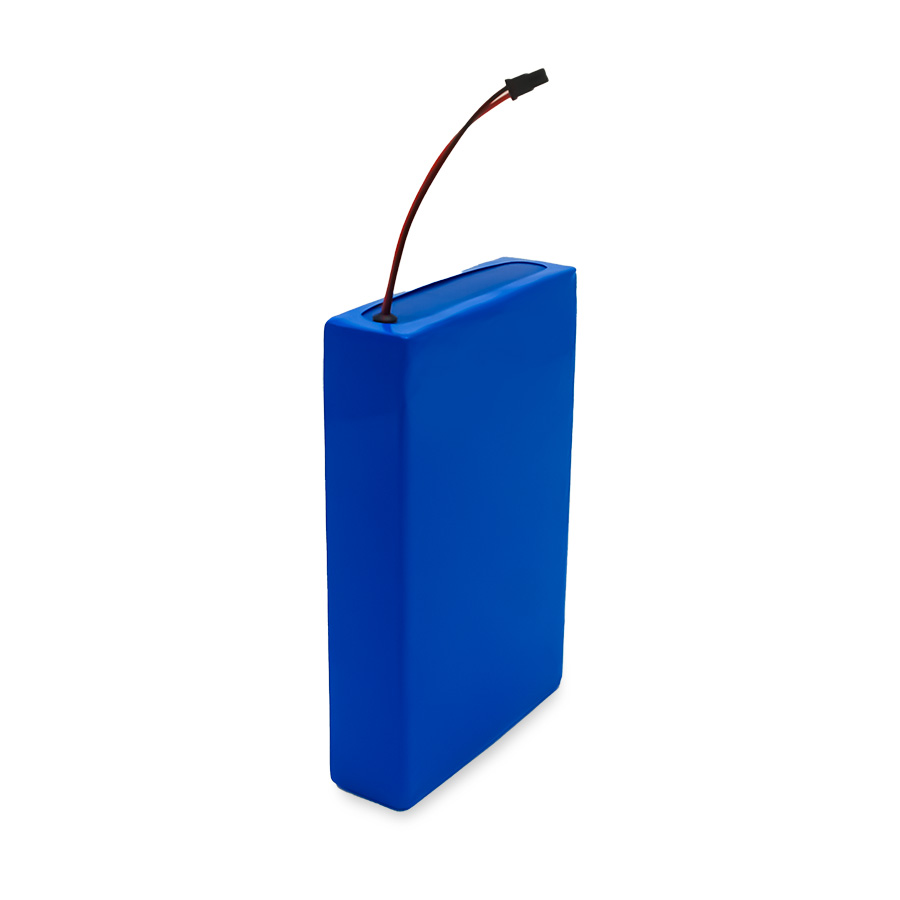
Portable Bluetooth speakers are everywhere. People use them at home, at the beach, at parties, and during outdoor trips. These speakers are small, light, and powerful. One key reason for this performance is the battery inside. Most commercial Bluetooth speakers use a 3.7V lithium ion battery. This is not a random choice. It is the result of years of engineering optimization.
In this article, we explain why the 3.7V lithium ion battery became the industry standard. We look at power needs, safety, cost, charging design, sound performance, and product durability.
Why 3.7V Became the Industry Standard
The 3.7V lithium ion battery is the nominal voltage of a single lithium-ion cell. When fully charged, it reaches 4.2V. When discharged, it drops to about 3.0V.
This voltage range fits most modern electronics. It works with:
- Low-power Bluetooth chips
- Class D audio amplifiers
- USB charging systems
Because smartphones also use 3.7V cells, the entire electronics industry optimized around this voltage. This created a strong supply chain and reduced costs.
Manufacturers prefer standardized components. The 3.7V lithium ion battery fits perfectly into this global standard.
High Energy Density in a Small Size

Bluetooth speakers must stay portable. Users want loud sound without heavy weight. This is where high energy density lithium batteries matter.
Lithium-ion chemistry stores more energy per gram than:
- Nickel-metal hydride (NiMH)
- Nickel-cadmium (NiCd)
- Lead-acid batteries
A 3.7V lithium ion battery can deliver long playback time in a compact form. A small speaker can play for 8 to 20 hours without adding bulk.
This balance of power and weight is ideal for:
- Pocket speakers
- Travel speakers
- Outdoor waterproof speakers
Without lithium-ion cells, modern mini speakers would not be possible.
Efficient Charging with USB Power
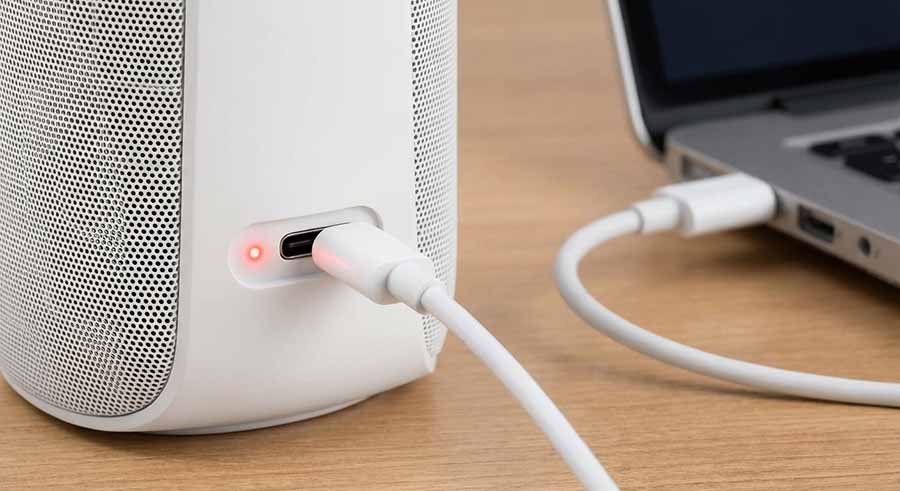
Most Bluetooth speakers charge through USB. USB power outputs:
- 5V from wall chargers
- 5V from power banks
- 5V from laptops
A 3.7V rechargeable lithium battery works perfectly with USB charging circuits. The charging chip only needs to reduce 5V to 4.2V. This process is efficient and safe.
Other battery types require complex multi-stage charging. That increases cost and failure risk.
With a 3.7V lithium ion battery, brands can use simple charging boards. This speeds up production and lowers repair rates.
Stable Discharge for Clear Sound Quality
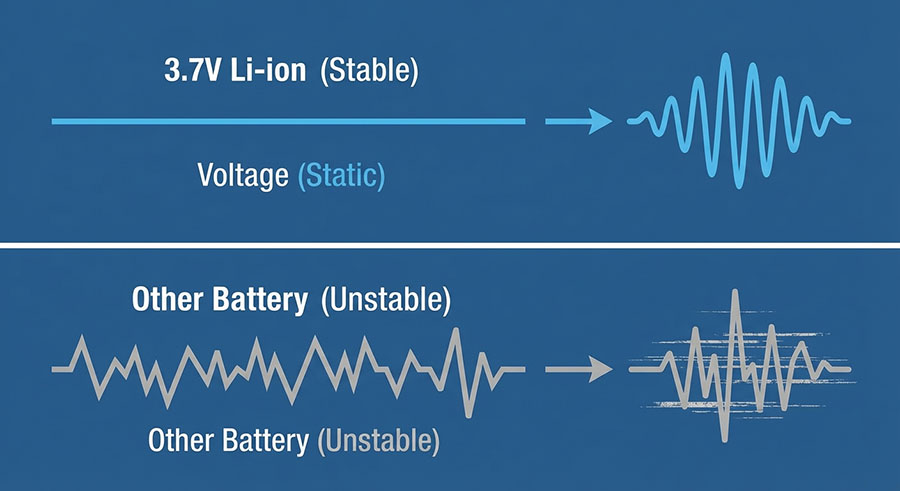
Audio quality depends on stable voltage. If battery voltage drops too fast, sound becomes distorted. The speaker may also suddenly shut off.
The 3.7V lithium ion battery provides a flat discharge curve. This means voltage stays steady for most of the battery cycle.
As a result:
- Sound remains clear
- Bass remains strong
- Bluetooth connection stays stable
This consistency is critical for premium speaker performance.
Lightweight Design for Better Portability
Weight matters in consumer electronics. Users expect Bluetooth speakers to be light.
Lithium-ion batteries are much lighter than traditional batteries. A 3.7V lithium ion battery weighs far less than equivalent NiMH or lead-acid options.
This allows brands to:
- Use metal speaker shells
- Add waterproof sealing
- Include LED lighting
All without making the product too heavy.
Most people charge their Bluetooth speakers often. Some users charge daily.
A high-quality 3.7V lithium ion battery typically supports:
- 500 to 800 full charge cycles
- Several years of daily use
NiMH batteries degrade faster. Lead-acid batteries fail even sooner. Lithium-ion gives better long-term value.
This is crucial for brand reputation and warranty performance.
Advanced Safety Protection Systems
Modern lithium-ion batteries include safety protection circuits. These protect against:
- Overcharge
- Over-discharge
- Short circuits
- Overcurrent
- Overheating
A protected 3.7V lithium ion battery makes Bluetooth speakers safe for indoor and outdoor use.
With proper cell matching and certification, lithium-ion batteries meet global safety standards like:
- UL
- CE
- FCC
- UN38.3
- RoHS
This allows global sales without legal risks.
Cost Efficiency for Mass Production
Bluetooth speakers are mass-market products. Cost control is critical.
The 3.7V lithium ion battery benefits from:
- Huge global manufacturing scale
- Mature supply chains
- Automated production lines
Because of this, the cost per unit is low. Even high-quality cells remain affordable.
Other battery chemistries require specialized manufacturing. They cost more and have limited suppliers.
This is why nearly all major speaker brands rely on 3.7V lithium batteries.
Wide Compatibility with Speaker PCB Designs
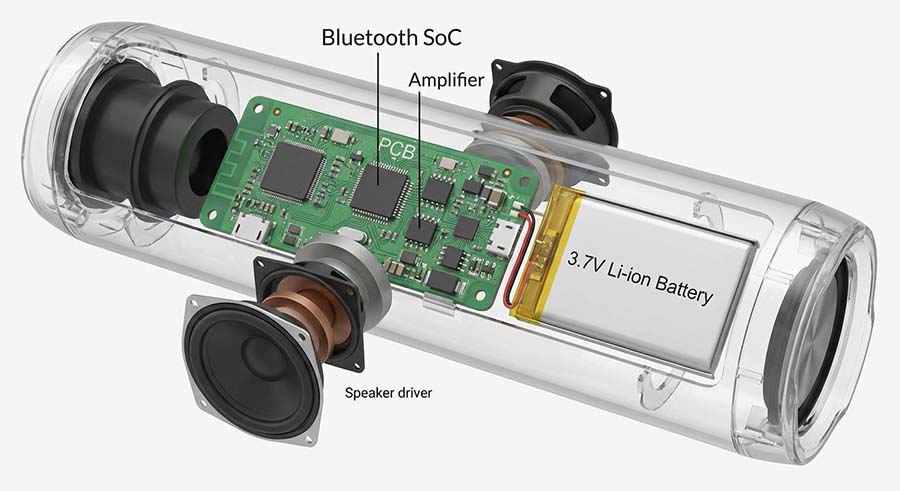
Speaker circuit boards are designed around 3.7V systems. These include:
- Bluetooth SoC chips
- Audio amplifiers
- Power management ICs
- LED driver circuits
The 3.7V lithium ion battery integrates easily into these PCB designs. Engineers can reuse proven designs across many models.
This reduces:
- Development time
- Testing cost
- Failure risk
For commercial production, this design stability is extremely valuable.
Environmental Advantages Over Older Batteries
Lithium-ion batteries contain fewer toxic metals than older chemistries. NiCd batteries contain cadmium. Lead-acid batteries contain lead.
A modern 3.7V lithium ion battery is:
- More recyclable
- Less environmentally harmful
- Lighter for transportation
This supports global environmental regulations and green branding.
Why Not Use Higher Voltage Batteries?
Some people ask why not use 7.4V or 11.1V battery packs.
Higher voltage systems need:
- More battery cells
- More balance circuits
- Higher insulation standards
This increases:
- Cost
- Weight
- Safety complexity
For most Bluetooth speakers, 3.7V offers enough power. Higher voltage is unnecessary for portable audio.
Why Not Use Alkaline or AA Batteries?
Disposable batteries are cheap, but they have major problems:
- Low energy density
- High long-term cost
- Unstable voltage
- Environmental waste
Users also prefer rechargeable devices. A 3.7V lithium ion battery gives better performance and convenience.
This is why almost no modern Bluetooth speakers use AA batteries.
Application Matching in Different Speaker Sizes
Small pocket speakers usually use:
- One 3.7V lithium ion battery
- Capacity from 500mAh to 1200mAh
Medium speakers use:
- One or two 3.7V cells
- Capacity from 2000mAh to 4000mAh
Large speakers may use:
- Multi-cell 3.7V packs
- Smart battery management systems
This modular scaling makes the 3.7V lithium ion battery suitable for almost all speaker sizes.
HiMAX 3.7V Lithium Ion Battery for Bluetooth Speaker Applications
HiMAX specializes in high-performance 3.7V lithium ion battery solutions for Bluetooth speakers, consumer electronics, and smart devices. Each HiMAX battery cell is built with:
- High-purity lithium materials
- Precision winding processes
- Multi-layer safety protection
- Stable voltage output
- Long cycle lifespan
HiMAX offers customizable capacities, battery sizes, connector types, and protection board designs to meet different Bluetooth speaker requirements. From compact mini speakers to high-output portable sound systems, HiMAX delivers reliable power solutions that support consistent sound performance and long-lasting user experience.
If you want stable power, strong sound output, and long service life for your Bluetooth speaker products, HiMAX 3.7V lithium ion batteries are a professional-grade energy solution you can trust.
Find articles related to Sump Pump Battery
- A Guide to Selecting Backup Batteries for Industrial Water Pumps
- How to choose a reliable drone battery manufacturer?
- Why are NiMH batteries more recommended for commercial cordless phone systems
- Enterprise Selection Guide for Solar Street Light Energy Storage Batteries
- Electric Mobility Scooter and Wheelchair Battery Buying Guide