Understanding the difference between a “3.7 V” 18650 and a “4.2 V” 18650 clears up a lot of confusion — and it helps you pick the right cell or pack for your design. This guide explains the technical facts in plain American English, gives real-world comparisons (including a quick energy example), and finishes with practical selection tips for engineers and product managers. Wherever helpful, we show how Himax Battery helps with custom 18650 solutions and testing.
What “3.7 V” vs “4.2 V” actually means
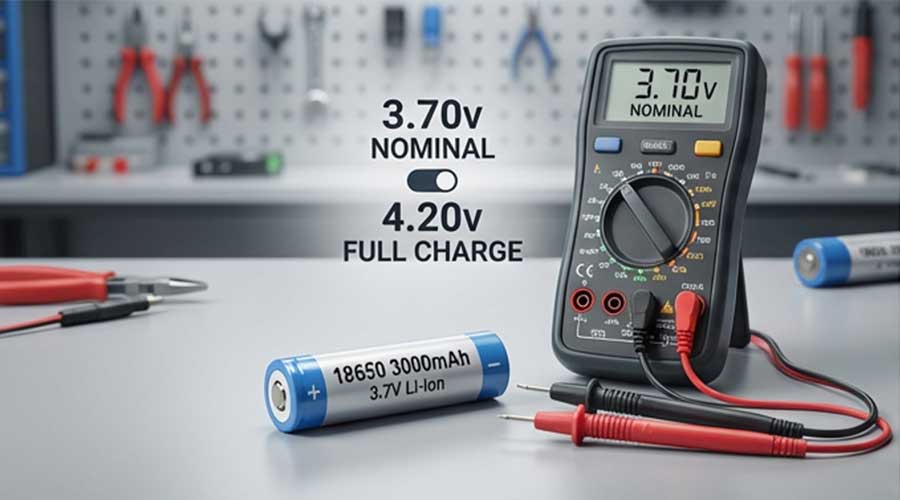
·Nominal voltage (3.6–3.7 V): Most lithium-ion 18650 cells are marketed with a nominal voltage around 3.6–3.7 V. Nominal is a convenient average voltage used for capacity and pack calculations — it is not the voltage you’ll always measure.
·Full-charge voltage (≈4.20 V): A fully charged typical Li-ion 18650 will measure about 4.20 V across the cell. Chargers and BMS are set to this limit because Li-ion cells cannot tolerate overcharge without damage or safety risk.
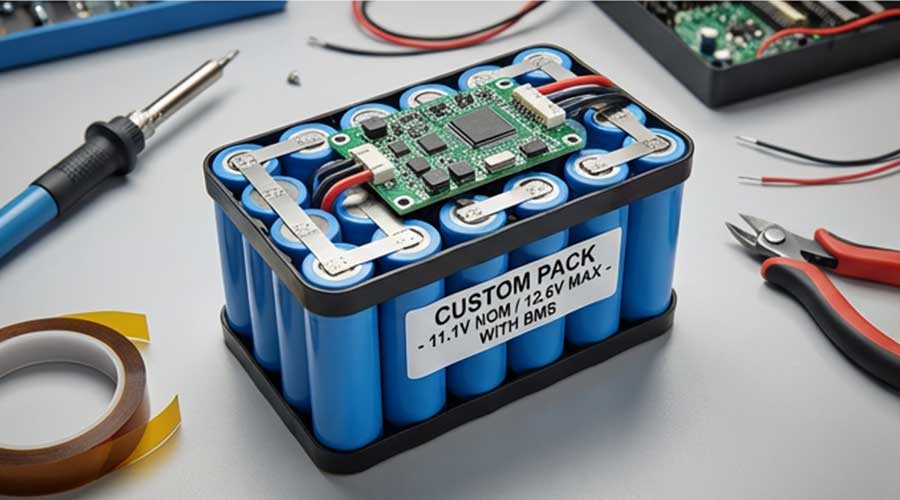
·Why both numbers exist: Saying “3.7 V” is useful for pack nominal voltage math (e.g., 3 cells in series ≈ 11.1 V). Saying “4.2 V” tells you the maximum charge voltage and what the charger/BMS must enforce. Both are correct — they just describe different voltage concepts.
Voltage vs energy — a short example
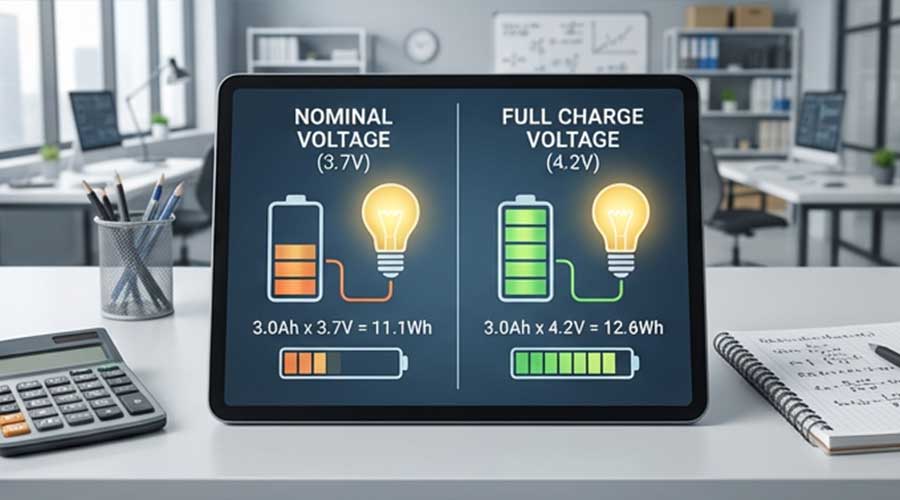
Voltage matters to energy because energy (watt-hours, Wh) = voltage × amp-hours (Ah). That means a cell measured at a higher voltage stores more energy at that instant.
Example (clear, exact numbers):
·Cell capacity: 3000 mAh = 3.0 Ah
·Energy at nominal 3.7 V: 3.0 Ah × 3.7 V = 11.1 Wh.
·Energy at full charge 4.2 V: 3.0 Ah × 4.2 V = 12.6 Wh.
That’s an increase of 1.5 Wh, or ≈13.5% more energy at full charge vs nominal. (This is a snapshot — usable energy depends on cut-off settings, load, and the cell’s discharge curve.)
Practical differences you’ll see in a product
1.Runtime & peak power
oA higher charged voltage (4.2 V) gives more instantaneous energy and a slightly higher peak power capability for the same Ah rating. But real-world runtime also depends on the device’s power draw curve and the pack’s internal resistance.
2.Marketing vs reality
oSome makers list 3.6 V, some list 3.7 V (and a few 3.8 V variants exist) — this is largely a naming/marketing convention and does not mean the chemistry is fundamentally different. Always check the cell datasheet for full-charge, nominal, and cut-off voltages.
3.Cycle life & longevity
oCharging to the absolute maximum (4.20 V) yields maximum capacity per cycle but slightly accelerates calendar and cycle aging versus more conservative top-off voltages. Many designs trade a bit of runtime for better long-term life by charging to a lower top voltage (e.g., 4.05 V). If long cycle life is critical, ask the cell supplier for lifecycle data at different maximum voltages.
4.Safety & BMS requirements
oBMS and charger accuracy matter: Li-ion cells must not be overcharged and should not be deeply over-discharged. Design your BMS cutoff and balancing strategy to the cell’s recommended limits. Certified packs lower risk in commercial products.
So — which should you pick?
Use this quick decision map:
·If your device expects the largest possible runtime from each cell and you accept slightly faster aging: design for cells charged to 4.20 V with a precise charger/BMS and good thermal management.
If cycle life, long-term warranty, or safety margin matters more than a few percent of runtime: consider charging to a lower top voltage (e.g., 4.0–4.1 V) or choose a cell chemistry/grade specified for long cycle life. Ask for test data.
·If you must match a legacy system or off-the-shelf charger: follow the system’s voltage spec (don’t mix cells with different full-charge voltages in the same pack). Mixed chemistry or mixed-voltage-marking cells create balancing and safety problems.
Other selection considerations beyond voltage
·Internal resistance (IR): affects peak current and heat. Lower IR = better high-current performance.
·Cell grade & consistency: for production, select cells with consistent capacity, IR, and cycle-life specs.
·Form factor & mechanical constraints: 18650 is standardized physically, but protective sleeves, PCM/BMS placement, and pack welding all change how a pack integrates.
·Certifications & shipping: for commercial supply, expect UN38.3, CE, RoHS and any regional requirements. Certified packs make logistics easier.
How Himax Battery helps (practical support for engineers)
At Himax Battery we support OEMs and product teams who must balance runtime, weight, cost, and safety:
·Cell sourcing & grade selection: we help choose the right 18650 chemistry and grade for your application (high energy, high power, long life).
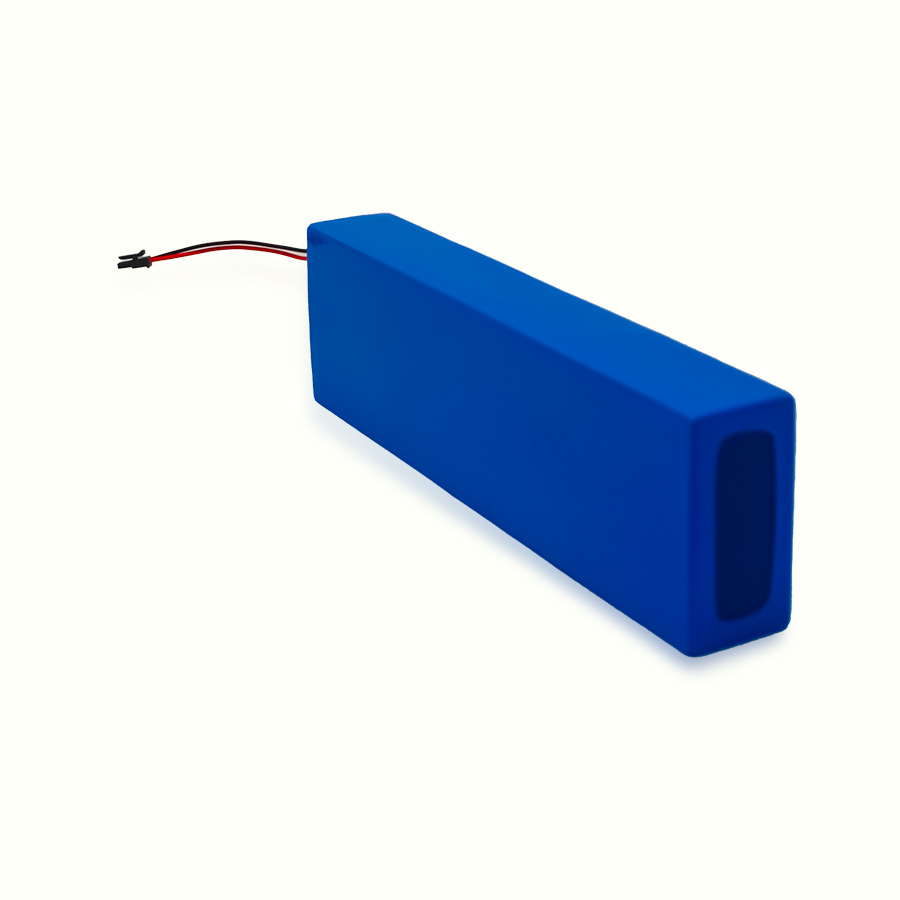
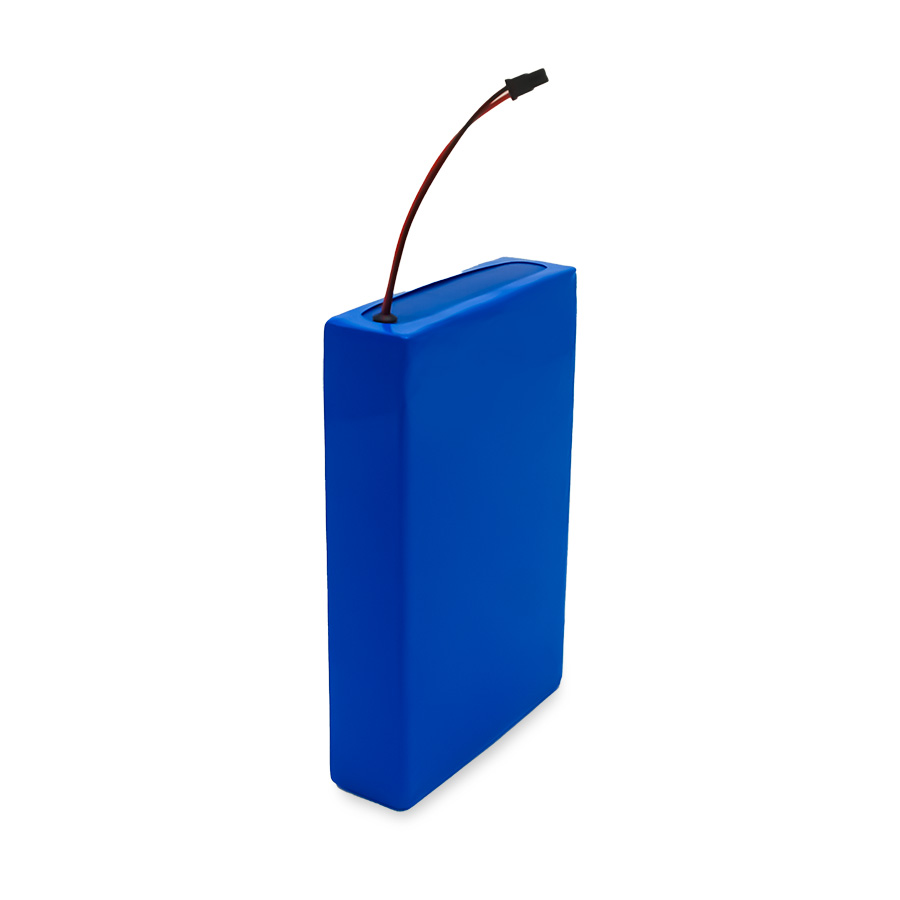
·Custom pack design: tailored series/parallel layouts, protective housings, and BMS/PCM integration to match your charger and system voltage.
·Testing & validation: cycle life testing, IR matching, and charge/discharge characterization at the voltages you plan to use.
·Certification help: pre-sales quality control and support for UN38.3 and CE processes so your supply chain stays compliant.
If you want, we’ll prepare a short pack spec (cells, nominal pack voltage, charger spec, BMS cutoffs) you can hand directly to your hardware team — and provide engineering samples for verification.
Quick FAQ
Q: Can I charge a “3.7V” battery to 4.2V?
A: Yes — “3.7V” is typically the nominal rating; most 18650s are designed to charge to ~4.20 V. But check the cell datasheet and never exceed the cell’s specified maximum charge voltage.
Q: Will charging to 4.2V shorten battery life a lot?
A: It shortens life relative to more conservative top-off voltages, but the tradeoff is small for many consumer products. For applications requiring thousands of cycles, specify lifecycle testing at your intended charge limit.
Q: Is 4.2V dangerous?
A: Not if the charger/BMS and the cell are properly specified and implemented. Overcharge beyond recommended limits is what causes danger — that’s why accurate charging and protective electronics are essential.
Find articles related to 18650 Battery Pack