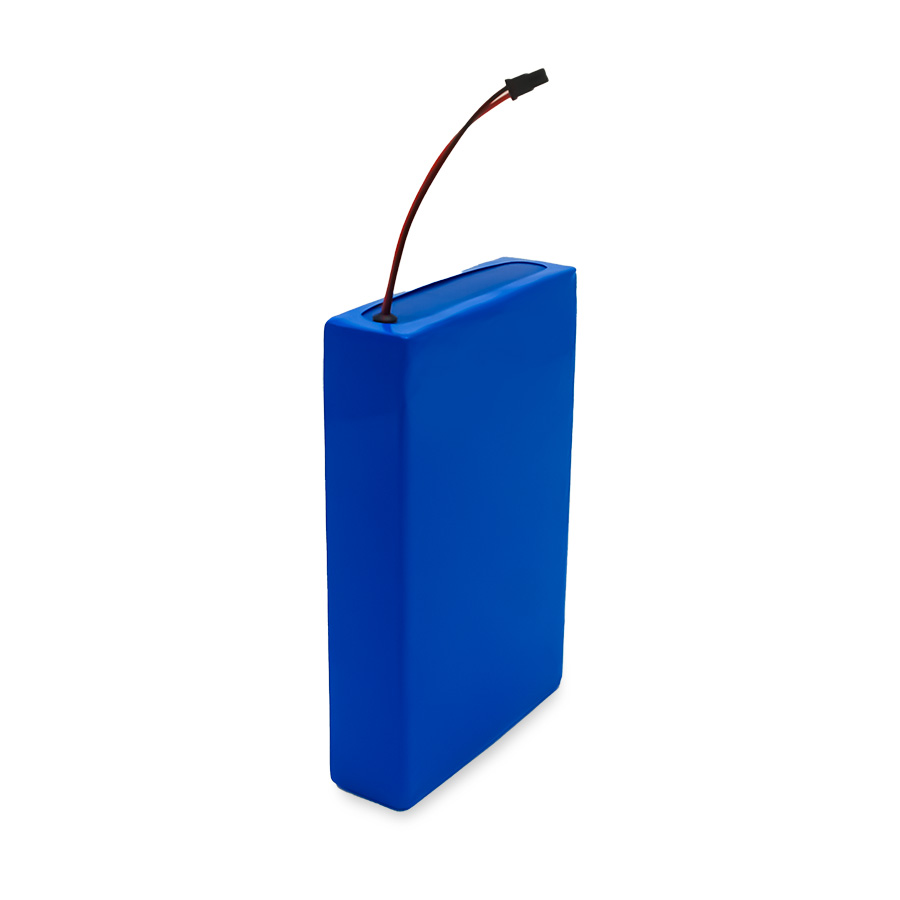
Reliable outdoor lighting is essential for businesses, industrial facilities, campuses, and municipalities that depend on stable illumination for safety, security, and everyday operations. As more organizations adopt solar street light systems to reduce energy costs and environmental impact, the choice of energy storage batteries has become a central decision. A solar lighting system is only as strong as its battery. Without dependable storage, even the most efficient solar panels cannot deliver consistent nighttime lighting.
Understanding the Role of Batteries in Solar Street Lighting
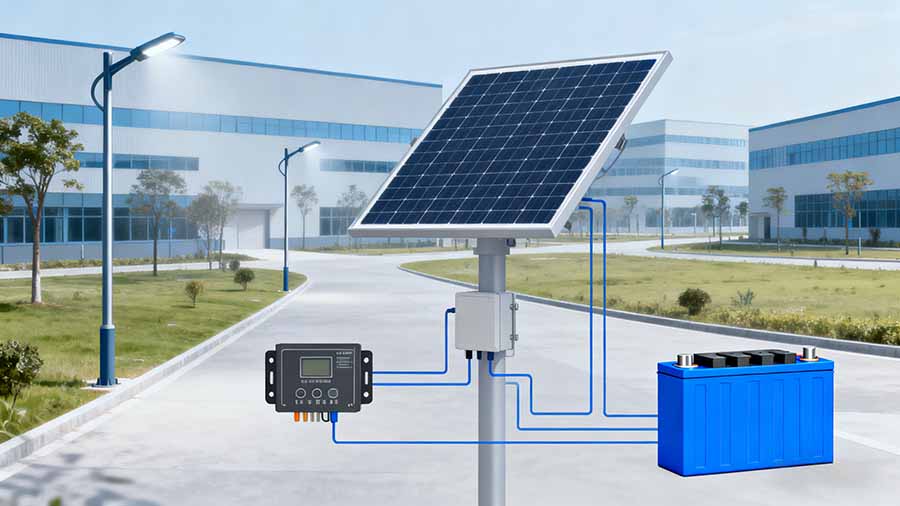
A solar street light system relies on three main components: solar panels, a charge controller, and a battery. The battery is responsible for storing daytime energy and supplying stable power throughout the night. Many businesses underestimate this part of the system, but Solar Energy Battery Storage is the anchor of long-term performance.
A high-quality battery ensures:
- Stable nighttime illumination
- Longer system lifespan
- Reduced maintenance costs
- Better performance under harsh weather
When the battery is weak or poorly matched, the street light may dim early, shut off before dawn, or degrade quickly. For enterprises planning wide-scale deployments, these failures can become expensive.
Common Types of Batteries Used in Solar Street Lights
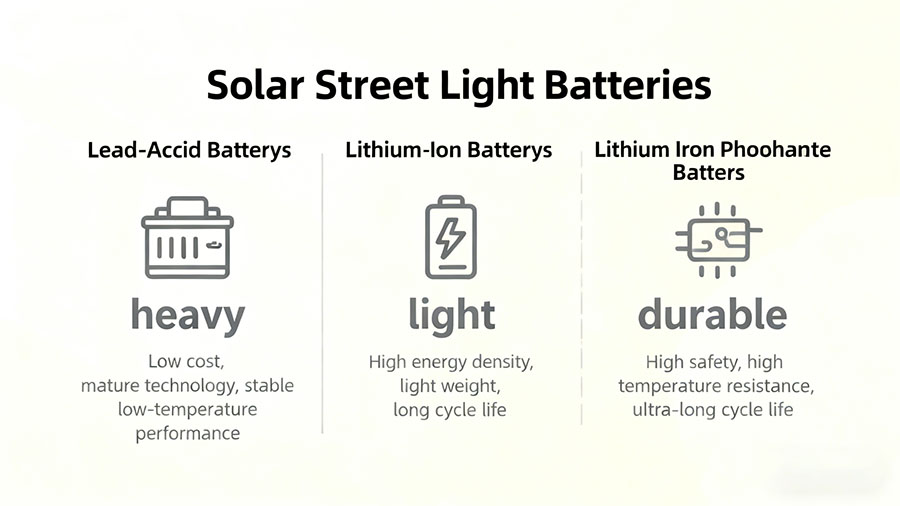
Different battery chemistries offer different advantages. Choosing the right type depends on the application, environmental conditions, and performance goals.
Lead-Acid Batteries (AGM and Gel)
Lead-acid batteries have been used for decades and are popular for budget-focused projects. AGM and Gel batteries are sealed, maintenance-free versions that offer safe and simple operation. They work well in mild climates but are heavier and have shorter lifespans compared to modern lithium options.
Lead-acid batteries are often used in basic solar lighting systems but may not be ideal for enterprise-scale projects that value durability and long service life.
Lithium-Ion Batteries (Li-ion)
Li-ion batteries deliver excellent energy density, meaning they store more power in a lighter, smaller design. Their longer service life and efficient charging make them popular for modern solar lighting.
They perform well in most environments and offer good cost-to-performance value.
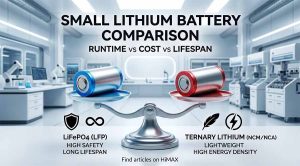
Lithium Iron Phosphate Batteries (LiFePO4)
LiFePO4 is widely regarded as the most reliable solution for Solar Energy Battery Storage in outdoor lighting. Advantages include:
- Long cycle life (2,000–4,000+ cycles)
- Superior heat tolerance
- Improved charging stability
- Strong safety performance
For commercial and municipal lighting, LiFePO4 batteries are often the best long-term investment.
Key Performance Metrics Enterprises Should Evaluate
Selecting the right solar street light battery requires understanding several critical performance indicators. Each factor directly impacts service life, lighting efficiency, and long-term ROI.
Capacity determines how long your street light can operate before requiring a recharge. Enterprises should match battery capacity to:
- LED wattage
- Expected nighttime duration
- Solar resource level in the location
A larger capacity ensures better autonomy during cloudy days.
DoD measures how much of the battery’s stored energy can be used without damaging it.
For example:
- Lead-acid batteries: typically 40–50% DoD
- Lithium batteries: typically 80–95% DoD
Higher DoD means more usable energy every night. This makes lithium options far more practical for solar light power storage applications.
Charge and Discharge Efficiency
Efficient batteries convert a higher percentage of solar energy into usable stored power. Lithium batteries are generally 95% efficient or higher, while lead-acid batteries are closer to 70–80%.
Higher efficiency results in:
- Better performance on cloudy days
- Faster charging
- Less wasted solar power
Cycle life represents how many full charge-and-discharge cycles a battery can handle before its capacity drops severely.
Approximate cycle life:
- Lead-acid: 300–800 cycles
- Li-ion: 1,000–2,000 cycles
- LiFePO4: 2,000–4,000+ cycles
For long-term enterprise deployments, cycle life is one of the most important considerations.
Environmental and Operational Considerations
Different installation environments place different demands on Solar Energy Battery Storage systems. Enterprises should consider the following.

Extreme cold or heat can reduce battery performance.
General observations:
- Lead-acid batteries struggle in low temperatures.
- Li-ion batteries handle moderate temperatures well.
- LiFePO4 batteries excel in high-temperature environments.
For desert climates or tropical regions, LiFePO4 is the safer, more stable choice.
Lithium batteries are much lighter than lead-acid.
If your lighting poles have small battery boxes, lightweight LiFePO4 units may be the only suitable option.
Lead-acid batteries may require periodic replacement every 2–3 years.
Lithium batteries require minimal maintenance and can last 5–10 years depending on usage and environment.
Enterprises seeking long-term, low-touch solutions should strongly consider lithium-based options.
Safety Requirements for Enterprise Solar Projects
Safety is crucial for large lighting infrastructures. Batteries should meet certifications and protection standards.
Key safety considerations include:
- Overcharge and over-discharge protection
- Temperature control mechanisms
- Short-circuit protection
- Thermal runaway prevention
- Waterproof and dustproof casings (often IP65+)
LiFePO4 batteries are known for high thermal stability, making them popular in off-grid renewable energy storage systems.
Matching Battery Specifications to System Requirements
To ensure optimal performance, enterprises should confirm the compatibility of the battery with:
- Solar panel power output
- LED wattage
- Charge controller type
- System voltage (commonly 12V or 24V)
- Expected runtime hours
Improper pairing can lead to undercharging, overheating, or system shutdowns. A well-matched off-grid solar battery system ensures stable, dependable lighting year-round.
Cost Considerations and Long-Term ROI
Although lithium batteries have a higher upfront cost, they deliver more value over their lifetime due to:
- Longer lifespan
- Lower maintenance
- Higher energy efficiency
- Fewer replacements
- Reduced downtime
When calculated over 5–10 years, lithium and LiFePO4 solutions often cost significantly less than lead-acid systems.
Enterprises should evaluate cost based on lifecycle performance rather than initial purchase price.
How to Choose the Best Battery for Enterprise-Level Solar Street Lighting
Here is a simple step-by-step selection process:
- Define lighting needs
Determine wattage, nighttime duration, and geographic conditions. - Set performance expectations
Decide if long service life, high efficiency, or ultra-low maintenance is the priority. - Select the right battery chemistry
For most enterprise projects, LiFePO4 offers the best balance of performance and durability. - Check compatibility with existing components
Ensure voltage, charging parameters, and physical dimensions align. - Evaluate safety and certifications
Look for built-in protection and environmental durability. - Estimate total cost of ownership
Consider lifespan, replacement cycles, and long-term maintenance.
HiMAX Solar Energy Battery Storage: Reliable Power for Enterprise Lighting
HiMAX provides high-performance Solar Energy Battery Storage solutions designed specifically for commercial, municipal, and industrial solar street lighting systems. Our LiFePO4 batteries deliver long cycle life, strong temperature endurance, and efficient power delivery to ensure stable illumination throughout the night. With customizable capacities, built-in protection systems, and durable IP-rated designs, HiMAX batteries help enterprises reduce long-term maintenance costs while maximizing system reliability. If your project requires dependable, scalable, and safe solar energy storage, HiMAX offers a proven solution built for professional applications.
Find articles related to Sump Pump Battery